
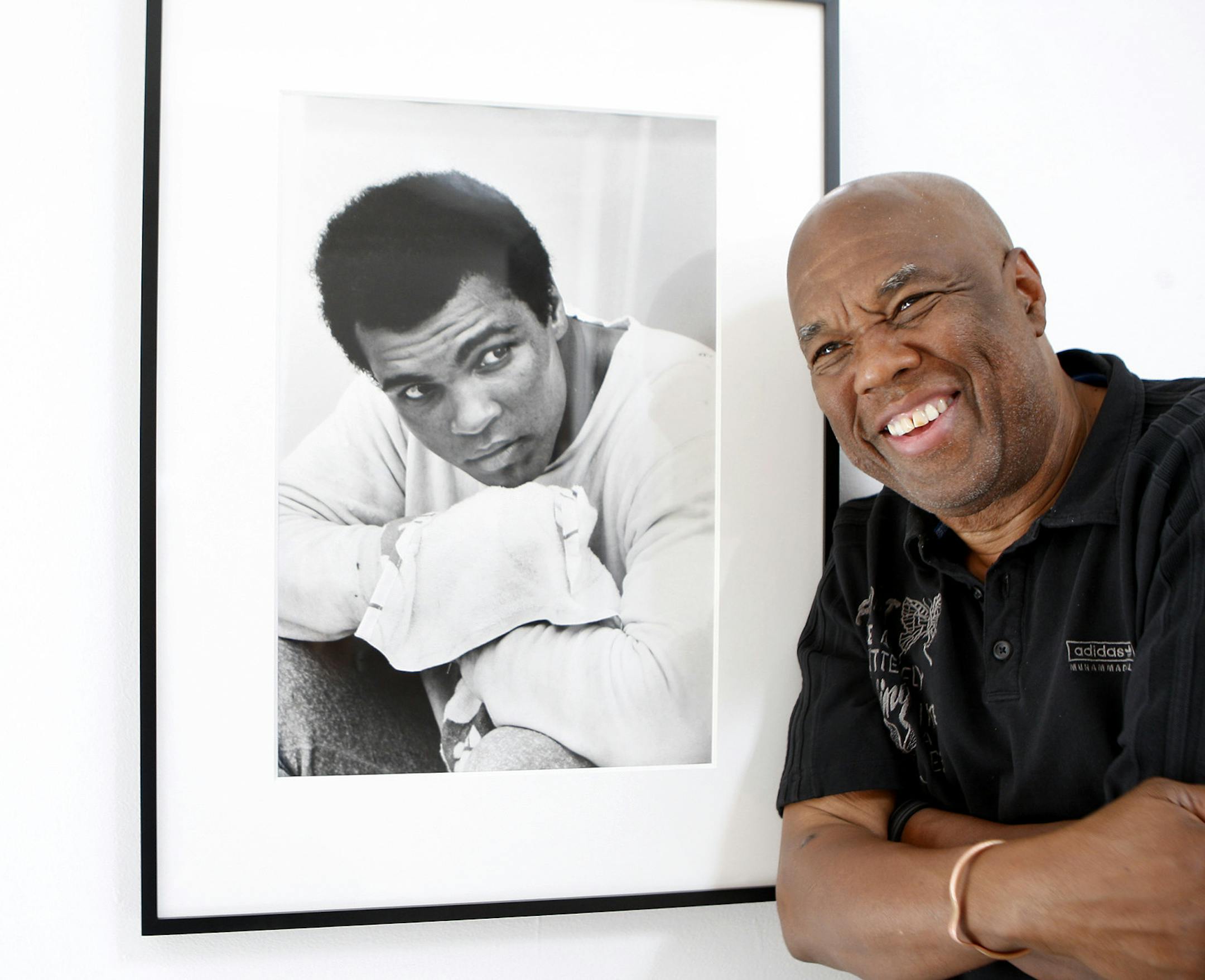
Also noted: Howard Bingham, Muhammad Ali's best friend and photographer

December 18, 2016 at 3:21AM
Howard Bingham, a close friend and longtime photographer of Muhammad Ali who was also known for his community activism, in May 2008. Bingham died on December 15, 2016, at 77. (Brian Vander Brug/Los Angeles Times/TNS)
Howard Bingham, a close friend and longtime photographer of Muhammad Ali, died Thursday. (The Minnesota Star Tribune)

Howard Bingham, 77, a photographer who shot millions of images of Muhammad Ali and became a well-known figure in his own right through his long and abiding friendship with the boxing champion, died Thursday at a Los Angeles hospital.

For more than 50 years, until Ali's death in June, each man described the other as his closest friend. But unlike others in Ali's entourage, Bingham was never on the boxer's payroll, never a yes man.

Instead, he had an independent career as a photographer, working on contract for Life magazine in the 1960s. He contributed to Sports Illustrated, Ebony, Look, Newsweek, People and Playboy and worked on the sets of Hollywood movies, shooting still photographs for such productions as "The Candidate" (1972) and "All the President's Men" (1976).

Yet the subject he photographed more than any other was Ali. Through public triumphs and private travails, Bingham was at Ali's side, recording the boxer's rise to prominence in the early 1960s, his victories in the ring, his conversion to Islam and his refusal to serve in the Army during the Vietnam War.

Later, as Ali became perhaps the most famous person in the world, Bingham accompanied him on charitable missions, on visits to world leaders and in private moments at home. They spent an average of 100 days a year together and spoke on the phone almost every day. Their shorthand greeting for each other was "Hi, Bill."

During the long years of Ali's decline, as the debilitating effects of Parkinson's disease became all too apparent, Bingham became something of a gatekeeper for Ali.

He coordinated Ali's poignant appearance at the opening ceremony of the Summer Olympic Games in Atlanta in 1996, when Ali falteringly lifted a torch to light the Olympic flame.

"Millionaires could not have done the things that I have done because of my friendship with Ali," Bingham told Newsday in 1993. "I've met presidents, kings and queens, Bill Cosby, Malcolm X, Nelson Mandela. I feel very fortunate just to have been his friend."
Over the years, Bingham shot an estimated 4 million images of Ali. He photographed the young boxer as he met Malcolm X, who helped engineer Ali's conversion to Islam. He was in Ali's training camp and was ringside for nearly all of his fights, including his dramatic 1974 upset of George Foreman in the "Rumble in the Jungle" and his epic 1975 bout with Joe Frazier in the Philippines, the "Thrilla in Manila."

Howard Lenoid Bingham was born May 29, 1939, in Jackson, Miss.

Larry Colburn, 67, who became an 18-year-old U.S. hero when he intervened with two comrades to halt the massacre of unarmed Vietnamese civilians by U.S. soldiers in 1968, elevating an innocuous hamlet named My Lai into a watchword for the horrors of war, died Tuesday at his home in Canton, Ga.

The cause was liver cancer.

Colburn was the last surviving member of a three-man helicopter crew that was assigned to hover over My Lai on Saturday morning, March 16, 1968, to identify enemy positions by drawing Viet Cong fire.

Instead, the men encountered an eerie quiet and a macabre landscape of dead, wounded and weaponless women and children as a platoon of U.S. soldiers, ostensibly hunting elusive Viet Cong guerrillas, marauded among defenseless noncombatants.

The crew dropped smoke flares to mark the wounded, "thinking the men on the ground would come assist them," Colburn told Vietnam Magazine in 2011.

Audaciously and on his own initiative, the pilot, Chief Warrant Officer Hugh Thompson Jr., swooped down and landed the copter.

Thompson confronted the officer in command of the rampaging platoon, Lt. William L. Calley, but was rebuffed. He then positioned the helicopter between the troops and the surviving villagers and faced off against another lieutenant. Thompson ordered Colburn to fire his M-60 machine gun at any soldiers who tried to inflict further harm.

"Y'all cover me!" Thompson was quoted as saying. "If these bastards open up on me or these people, you open up on them. Promise me!"

"You got it boss," Colburn replied. "Consider it done."

Seymour M. Hersh, the independent journalist who later uncovered the My Lai Massacre, said of Colburn in a phone interview Friday that "for a door gunner in Vietnam to point his machine gun at an American officer" under those circumstances "was in the greatest tradition of American integrity."

Lawrence Manley Colburn was born on July 6, 1949, in Coulee Dam, Wash.

Benjamin A. Gilman, 94, a longtime Republican congressman from New York who chaired the House International Relations Committee and who helped arrange prisoner exchanges, died Saturday in Wappingers Falls, N.Y.

Gilman, a World War II veteran and former state legislator, was first elected to the U.S. House in 1972. He served 15 terms. Sometimes called a Rockefeller Republican, he was known for his moderate and even liberal views on some social issues, such as organized labor and support for abortion rights and family planning, before his party's positions hardened into a more conservative conformity.

He was a founder of the House Human Rights Caucus and worked behind the scenes to help free political prisoners, including Natan Sharansky, from the former Soviet Union and other oppressive regimes. Gilman often traveled to Haiti to observe rebuilding efforts and programs to improve the country's educational and legal systems.

As an assistant attorney general in New York in the 1950s, Gilman first took note of the social problems associated with drug abuse. It became one of his signature issues in the House.

Benjamin Arthur Gilman was born Dec. 6, 1922, in Poughkeepsie, N.Y.

news services

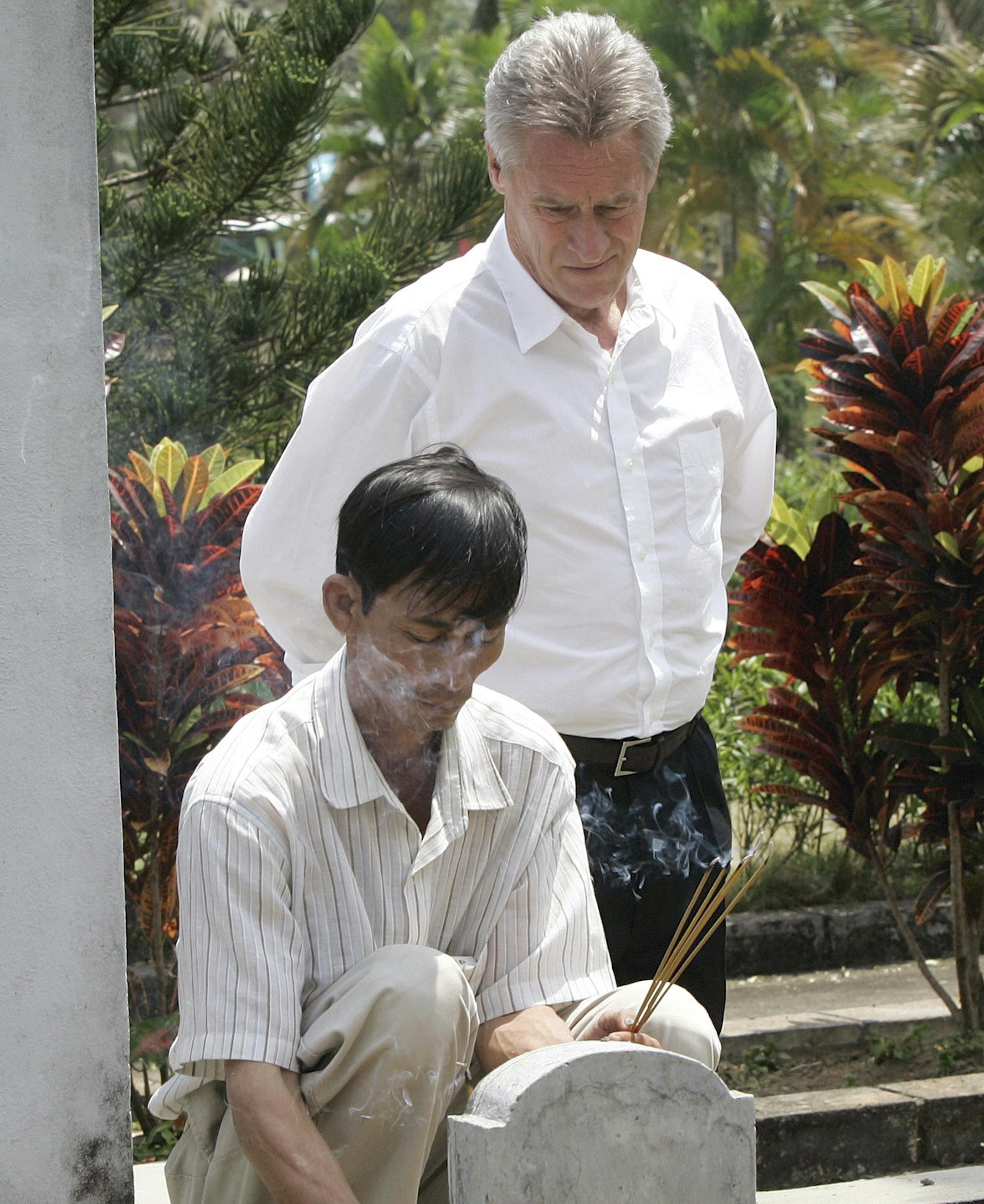
FILE - In this Saturday, March 15, 2008 file photo, My Lai Massacre survivor Do Ba, 48, left, of Ho Chi Minh city, places incense at his family's grave site during the 40 year anniversary of the incident in My Lai, Quang Ngai Province, Vietnam, accompanied by former U.S. Army officer Lawrence Colburn, 58, of Canton, Ga., who rescued Do Ba during the massacre. Colburn, the helicopter gunner who helped end the slaughter of hundreds of unarmed Vietnamese villagers on March 16, 1968, during the Viet
My Lai Massacre survivor Do Ba and Lawrence Colburn, who rescued Do Ba, were reunited in Vietnam in 2008. (The Minnesota Star Tribune)
about the writer

about the writer

More from Minnesota Star Tribune

See More
card image
J. SCOTT APPLEWHITE, ASSOCIATED PRESS/The Minnesota Star Tribune

The "winners" have all been Turkeys, no matter the honor's name.

In this photo taken Monday, March 6, 2017, in San Francisco, released confidential files by The University of California of a sexual misconduct case, like this one against UC Santa Cruz Latin Studies professor Hector Perla is shown. Perla was accused of raping a student during a wine-tasting outing in June 2015. Some of the files are so heavily redacted that on many pages no words are visible. Perla is one of 113 UC employees found to have violated the system's sexual misconduct policies in rece