
Also noted: Harlem promise led to dreams come true

April 16, 2017 at 2:32AM
FILE — Eugene Lang with the graduates of Public School 121 in New York, Oct. 18, 1985. Lang, an investor whose impulsive promise to the East Harlem sixth-grade class that he would pay for their college education inspired a foundation, led to the support of more than 16,000 children nationwide and made him something of an American folk hero, died April 8, 2017, at the age of 98. (Chester Higgins Jr./The New York Times)
Eugene Lang with the graduates of Public School 121 in New York in 1985. He made good on his impulsive promise to the kids. (The Minnesota Star Tribune)

Eugene M. Lang, 98, an investor whose spur-of-the-moment promise to an East Harlem sixth-grade graduating class that he would pay for their college education, inspired a foundation, led to the support of more than 16,000 children nationwide and made him something of an American folk hero, died April 8 at his home in ­Manhattan.

Lang, a self-made businessman who flew coach class and traveled on subways and buses, contributed more than $150 million to charities and institutions during his lifetime, including a single $50 million gift in 2012 to Swarthmore College in Pennsylvania, his alma mater, and $20 million to Eugene Lang College, part of the New School in ­Manhattan.

But he will be best remembered for his impulsive gesture in June 1981, when he was invited to deliver the commencement address to 61 sixth-graders at Public School 121.

"I looked out at that audience of almost entirely black and Hispanic students, wondering what to say to them," he recalled. He had intended to tell them, their families and their teachers that he had attended PS 121 more than a half-century earlier, that he had worked hard and made a lot of money and that if they worked hard, maybe they could be successful, too.

But, he said, "It dawned on me that the commencement banalities I planned were completely irrelevant."

"So I began by telling them that one of my most memorable experiences was Martin Luther King's 'I Have a Dream' speech, and that everyone should have a dream," he said. "Then I decided to tell them I'd give a scholarship to every member of the class admitted to a four-year college."

There was stunned silence, peppered with a few audible gasps. Then students, parents and teachers cheered and mobbed him. He told them that he would earmark $2,000 for each of them toward college tuition and that he would add more money each year that they stayed in school.

The gesture received national publicity, and he was invited to the White House by President Ronald Reagan. But he was aware, he said, that simply providing students from poor or troubled homes with a scholarship would not ensure success; many would drop out along the way.
He "adopted" the class, treating them to trips and restaurant meals, counseling them through crisis after crisis, and intervening with school officials. Soon, Lang founded the I Have a Dream Foundation, setting up its office in Manhattan. He hired a project coordinator and established a year-round program of academic support with a mentor and tutoring for each student.

At least half of the original 61 sixth-graders — they called themselves Dreamers — enrolled in public and private colleges, although the New York Daily News later reported that some students had misunderstood the offer as a promise to pay tuition even at expensive colleges and were bitter. Lang often found jobs for those who passed up college.

Eugene Michael Lang was born on March 16, 1919.

Linda Hopkins, 92, whose soaring, gospel-rooted voice was heard on Broadway in the 1970s in "Inner City" and the one-woman show "Me and Bessie," and in the 1980s in the long-running revue "Black and Blue," died April 10 in Milwaukee.

Hopkins had been performing gospel, blues and rhythm and blues for more than 40 years when she took the stage in "Inner City," a musical based on a book of urban Mother Goose tales by Eve Merriam. The show had a short run, but Hopkins' rendition of "Deep in the Night" and other songs made a lasting impression.

In 1972, Hopkins received the Tony Award for best performance by a featured actress in a musical.

With Will Holt, she conceived and wrote "Me and Bessie," a tribute to the great blues singer Bessie Smith, whose songs she had been performing for years. With spare accompaniment, she held the stage for an entire evening, performing more than 20 of Smith's songs.

The show, which opened at the Ambassador Theater in October 1975, ran for 453 performances. It was the longest-running one-woman show in Broadway history up to that time.

Hopkins returned to Broadway in 1989 in "Black and Blue," joining with blues singers Ruth Brown and Carrie Smith to evoke the glory years of the Harlem nightspot the Cotton Club in the 1920s and '30s. She was nominated for a Tony for best performance by an actress in a leading role in a musical, but she lost to Brown, her co-star.

Hopkins was born Melinda Helen Matthews on Dec. 14, 1924, in New Orleans.

Dr. Mark Wainberg, 71, a microbiologist who identified a drug that later became critical to treating people infected with HIV, and who later became a leading advocate for giving millions of people with HIV and AIDS in Africa greater access to antiretroviral drugs, died April 11 after struggling in the waters off Bal Harbour, Fla.

His son, Zev, said that he and his father had been swimming in rough surf when he appeared to be drowning. His son pulled him to shore and performed CPR before paramedics arrived. He died at a nearby hospital.

The AIDS pandemic was spreading quickly in the 1980s when Wainberg — who spent much of his career at McGill University in Montreal — began to study HIV, the virus that causes AIDS. He spent time working with Dr. Robert Gallo, the co-discoverer of HIV, who provided Wainberg with the cells and antibodies to grow the virus in his laboratory at McGill.

Then, in 1989, after studying the properties of a new anti-viral drug called 3TC, or Lamivudine, he found that it was effective against HIV. It soon became an important part of the AIDS cocktail of drugs that is still used to treat infected patients.

But as he studied how HIV mutates to resist various drugs, Wainberg made finding a cure his goal.

Mark Arnold Wainberg was born in Montreal on April 21, 1945.

news services

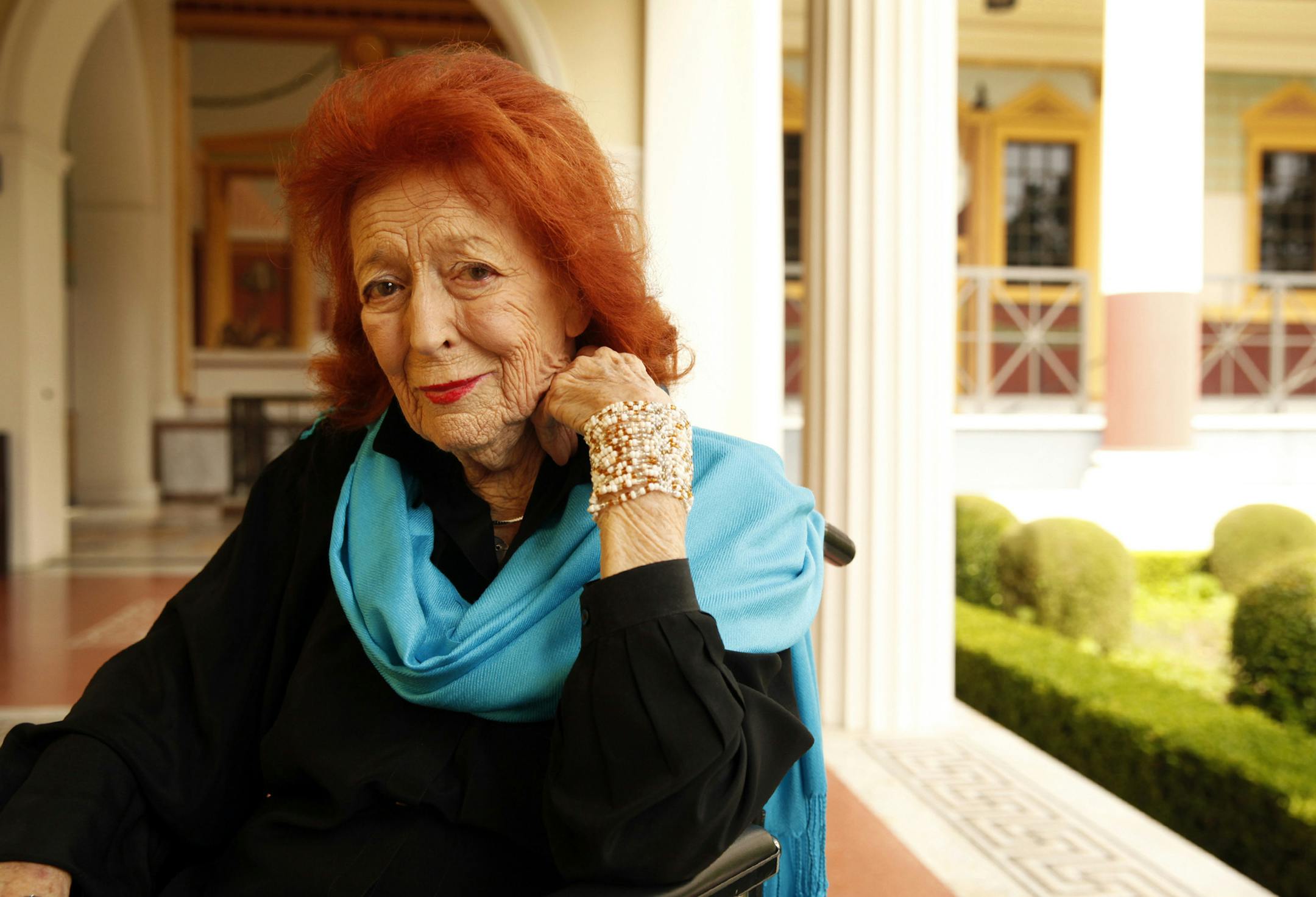
Theodora "Teddy" Getty Gaston, the last wife of J. Paul Getty, at the Getty Villa located on the Pacific Coast Highway in Pacific Palisades on Aug. 16, 2013. Gaston died April 8, 2017 at the age of 103. (Al Seib/Los Angeles Times/TNS)
Theodora “Teddy” Getty Gaston, the last wife of J. Paul Getty, at the Getty Villa located on the Pacific Coast Highway in Pacific Palisades on Aug. 16, 2013. Gaston died April 8, 2017 at the age of 103. (Al Seib/Los Angeles Times/TNS) (The Minnesota Star Tribune)
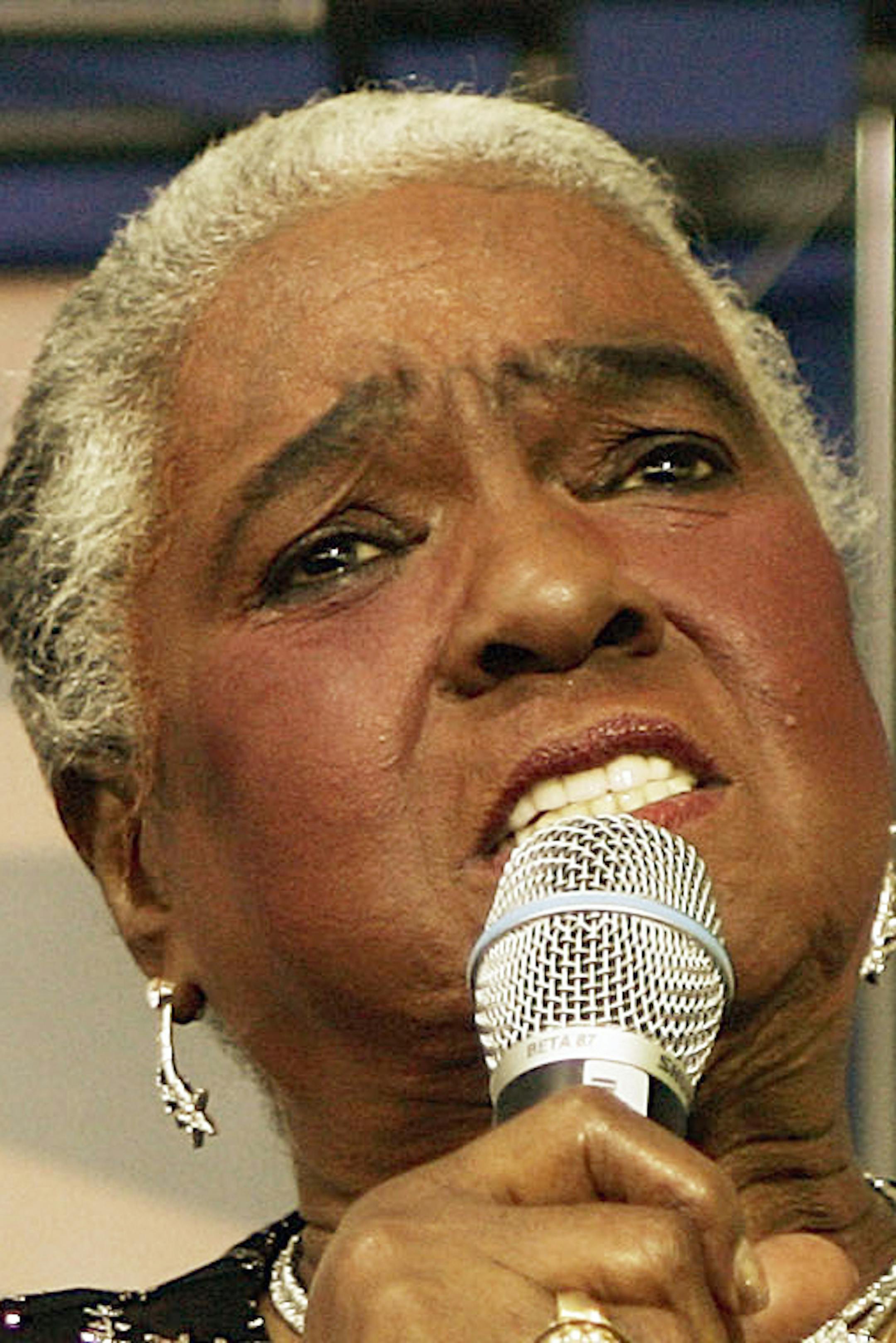
FILE - In this Jan. 25, 2006 file photo, jazz and blues singer Linda Hopkins performs during a ceremony unveiling a new postage stamp honoring Hattie McDaniel, the first African American to win an Academy Award for her role in "Gone With the Wind,"in Beverly Hills, Calif. Hopkins, who won a Tony Award in 1972 for the musical "Inner City," has died Monday, April 10, 2017, in Milwaukee, Wis., according to her great-niece Hazel Lindsey. She was 92. (AP Photo/Damian Dovarganes, File)
Hopkins (The Minnesota Star Tribune)
about the writer

about the writer

More from Minnesota Star Tribune

See More
card image
J. SCOTT APPLEWHITE, ASSOCIATED PRESS/The Minnesota Star Tribune

The "winners" have all been Turkeys, no matter the honor's name.

In this photo taken Monday, March 6, 2017, in San Francisco, released confidential files by The University of California of a sexual misconduct case, like this one against UC Santa Cruz Latin Studies professor Hector Perla is shown. Perla was accused of raping a student during a wine-tasting outing in June 2015. Some of the files are so heavily redacted that on many pages no words are visible. Perla is one of 113 UC employees found to have violated the system's sexual misconduct policies in rece