

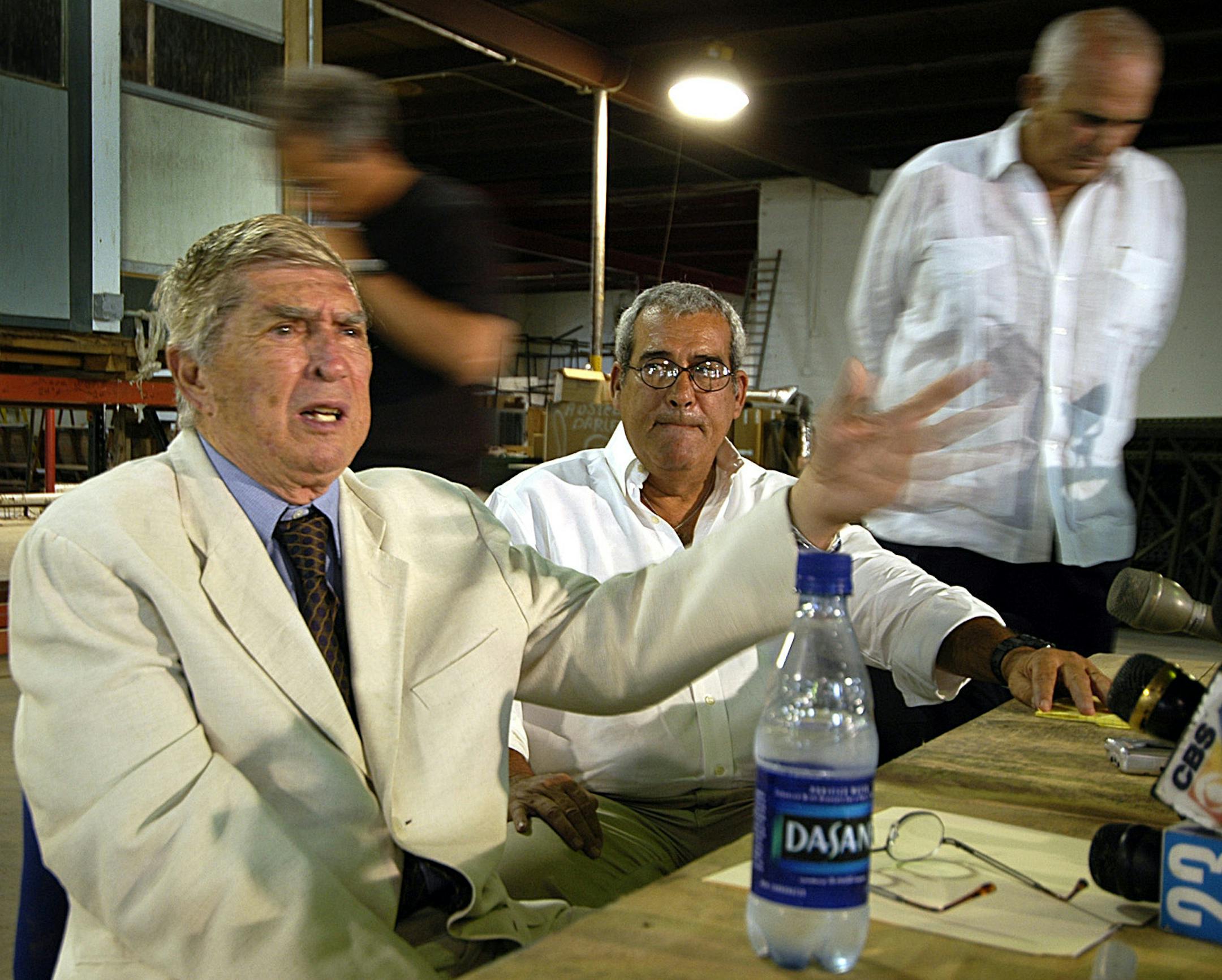
Luis Posada Carriles, the anti-Castro militant and former CIA operative who made headlines for decades for his failed attempts to topple the Cuban dictator, died May 23 in Miramar, Fla. He was 90.
Posada spent nearly 60 years on a quixotic and often bloody mission to bring down Fidel Castro by any means possible. He was accused of using bombs and bullets in a crusade that took the lives of innocents but never did manage to snare that Cuban leader, who died at 90 in 2016.
Posada hopped from country to country, finding refuge in jungles, arming rebels, surviving stints in prison and living on the run off the largess of Cuban exile supporters, then dying a free man at a home for aging military veterans.
"My old tired heart has made enough rounds," Posada said in a jailhouse interview with the Miami Herald in Panama in 2003. "I'm going to eat my steak, drink my wine and struggle for my country. That will be my life's end."
But others saw it differently.
"He was an international terrorist of the first order," said Peter Kornbluh, the director of the Cuba Documentation Project at the National Security Archive, who spent decades collecting declassified documents on Posada's ventures.
Patricia Morison, an actress who combined ravishing beauty with cool sophistication, was promoted as the "Fire and Ice Girl" when she landed in Hollywood in the late 1930s. She appeared opposite some of the most popular stars of the era — from Spencer Tracy to "Tarzan" actor Johnny Weissmuller — but her career stalled from typecasting as a well-coiffed vamp.
Morison, who died May 20 at age 103, did not emerge to public recognition until returning to her Broadway roots in 1948 to perform in Cole Porter's "Kiss Me, Kate," which became one of the most popular stage musicals of all time.


