Michael Boosalis still laughs when recalling his "one day in the Navy." In 1944, Boosalis was a 16-year-old "snotty-nosed punk" who sneaked out of his house and down to the Great Northern Depot to join the service.
He wasn't in line long before his "Old Man" appeared, yanking him out of line and back to reality, cursing a blue streak in Greek.
Four months later, President Franklin Roosevelt signed a law making it legal for those who were at least 16 1/2 to help with the war effort. Now that he had Uncle Sam's blessing, Boosalis' father "couldn't get me down there fast enough."
Boosalis, 81, is a warm and emotional man, a teller of tales, a great-grandfather and grateful American who cherishes his war contributions and decades of postwar work in construction. "We were building America," he said.
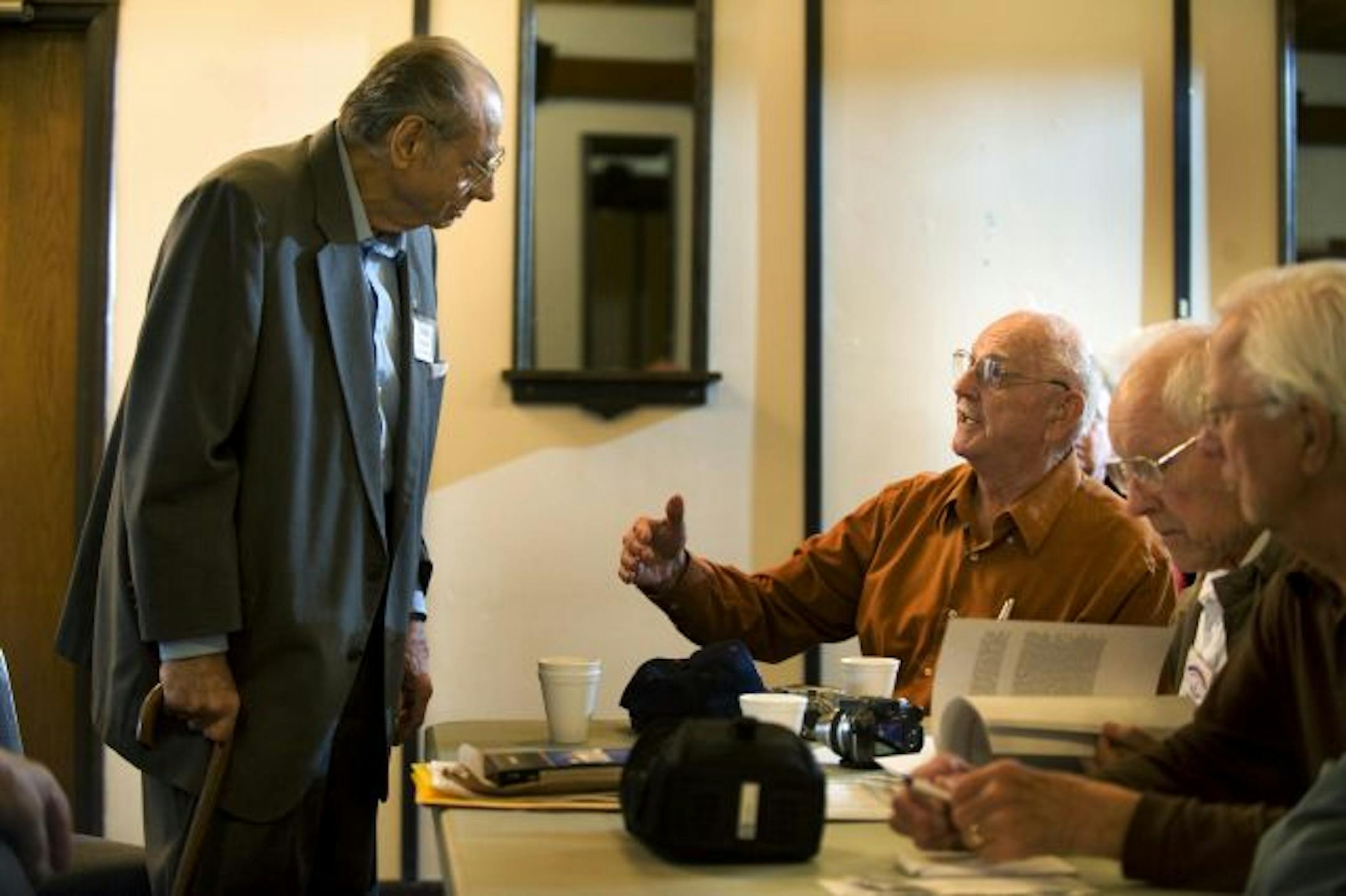
But on a recent Monday at the American Legion Post No. 435 in Richfield, the mood was subdued. Nearly 30 men had come to this monthly gathering of the Viking Chapter to share stories and photographs, drink coffee (donations welcome) and plan a summer picnic. Like most World War II vets, they are in their 80s and their ranks are shrinking fast. Unlike the others, these men still carry a special burden.
"Memorial Day came and went and, again, they forgot us," Boosalis says of the recent Armed Forces celebration in Washington. "It's heartbreaking to us. We're old fogies now. What else we got?"
Boosalis was a member of the Merchant Marine, the seamen who sailed the cargo ships that delivered essential supplies and personnel all over the world for U.S. and Allied forces. Bombs, gasoline, guns and ammunition, food, planes, medicine, and millions of barrels of oil.
"You can't believe the stuff we hauled overseas," Boosalis said.