

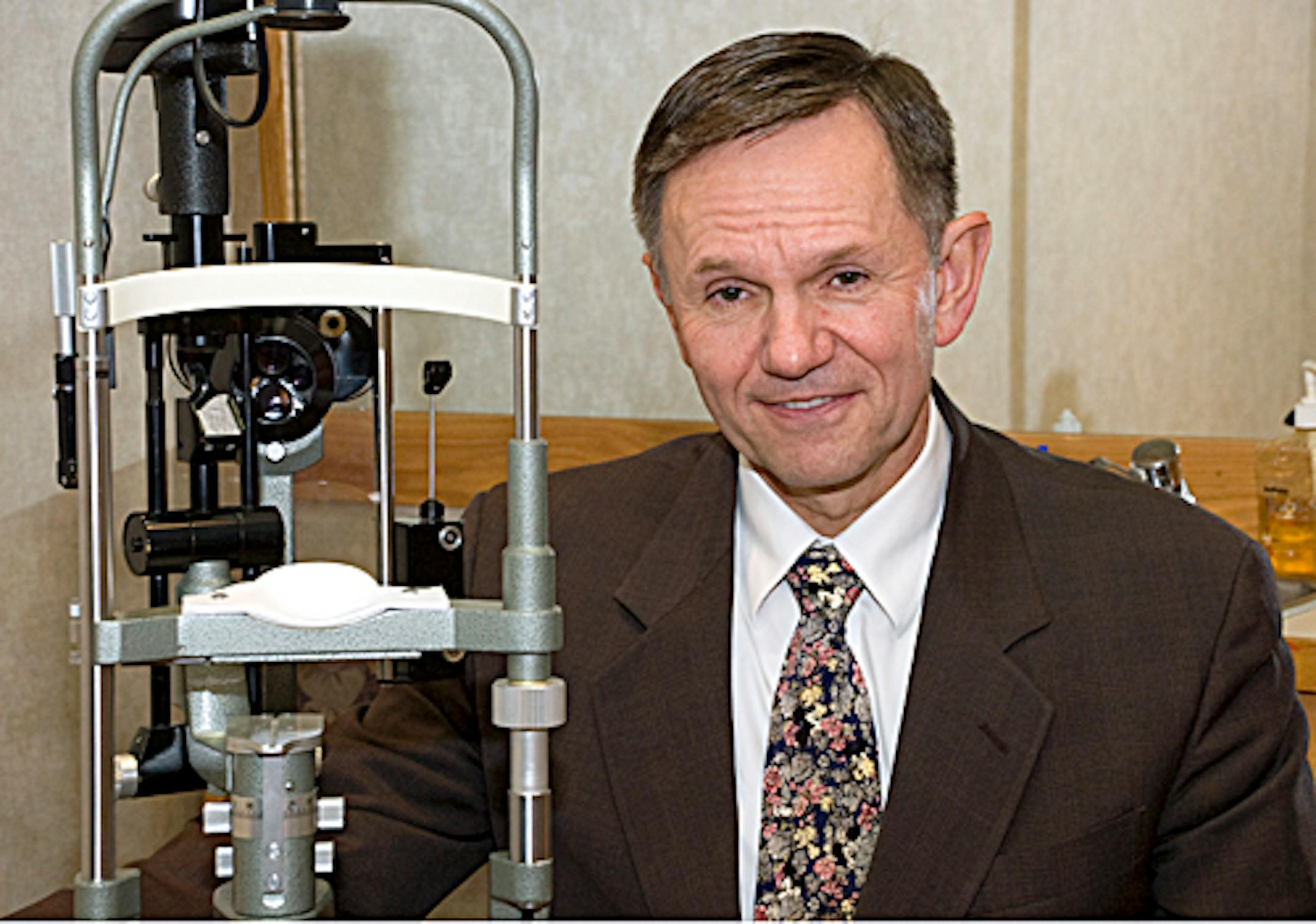
Q: What's a typical workday like for you?
A: I see about 35 patients in the clinic on a typical day, mostly with eye disorders such as lazy eye, crossed eyes, tear drainage problems or eyelid lumps. I look at everything in the eye - from how the muscles work to how the eye focuses. Other days I start in surgery. I also treat adults who have eye muscle disorders resulting from strokes.
Q: How does your role fit into the bigger healthcare picture?
A: A lot of what I do comes by referral from pediatricians and other primary care providers and optometrists. All specialties kind of fit like the rim of a wheel, where the spokes lead back to the hub, or the primary care provider.
Q: Who do you interact with during the course of the day?
A: Every patient I have is really two: the child and the parent. Parents are the ones who are going to carry out most of what we prescribe. I also interact with support staff, including an orthopist, who is a technician trained to do eye muscle measurements, and a certified ophthalmic medical technologist, who takes preliminary measurements and determines the patients' glasses needs. I also interact with our reception staff and colleagues.
Q: Why did you become a pediatric ophthalmologist?
A: My father was an orthopedic surgeon. I had a pretty good idea when I was really young that I wanted to be a doctor. In medical school, I thought about what I really liked to do. I like precision, rather than doing big surgeries. I like the surgical specialty and neurology, physics and other aspects of vision. I also wanted a specialty that has some primary care in it so people can refer themselves.


