

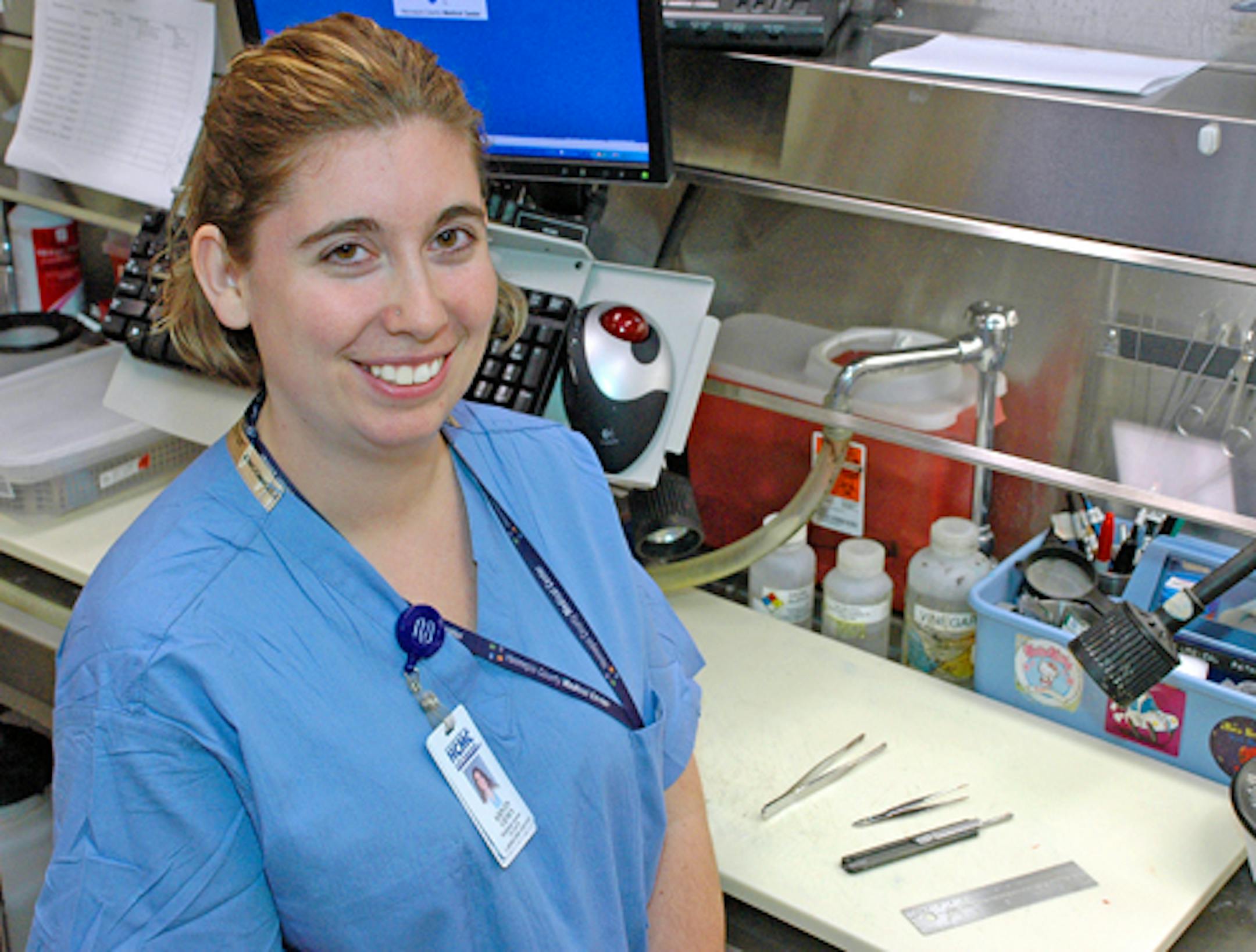
Q: What's a typical workday like for you?
A: I review the surgery schedule to see what type of specimens we'll receive. I look up clinical history of the patients with the more involved cases. Then I start dissecting specimens. When I receive a specimen for frozen section from the operating room, I must examine that immediately and prepare a slide for the pathologist to report to the surgeon in 20 minutes. I also monitor turn-around time to make sure we report our results out in a timely manner.
Q: How does your role fit into the bigger healthcare picture?
A: I select the pieces of tissue from the specimens for the pathologists to examine under the microscope so they can give a diagnosis to the surgeon. The pathologists base a portion of their final reports on my gross description of specimens, so my report affects the kind of treatment the patient will receive.
Q: Who do you interact with during the course of the day?
A: I interact with surgeons to relay information to pathologists. I also interact with histology technicians, transcriptionists, surgical technicians and operating room nurses.
Q: Why did you become a pathologists' assistant?
A: I always knew I wanted to work in the medical field. I found pathology fascinating; I really liked learning about diseases and disease processes, but knew I didn't want to go to medical school. My undergraduate degree was in clinical laboratory science and I could take that further into pathology without having to go the whole med school route.


