

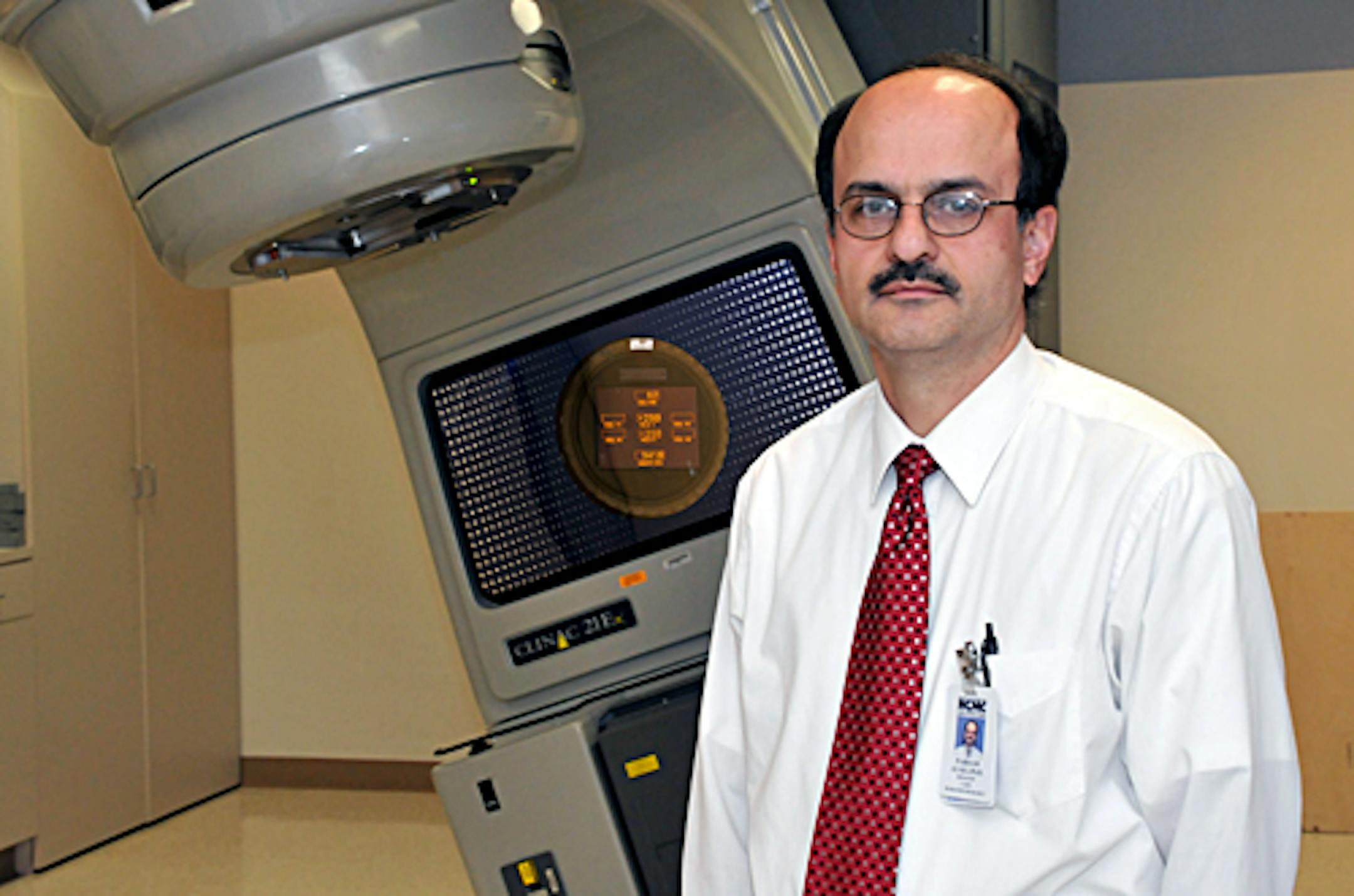
Q: What's a typical workday like for you?
A: I go over patient charts and make sure the dosimetrist has made the correct calculations to deliver the prescribed dose of radiation to the patient. I make sure the equipment that delivers radiation is functioning properly. I oversee more complex treatments and am called in whenever any technical difficulties with the radiation equipment or complications arise. I am also responsible for radiation safety issues, making sure the hospital staff, patients and general public are safe.
Q: How does your role fit into the bigger health care picture?
A: I am an essential part of the team that delivers radiation therapy to patients who are undergoing treatment using this modality to fight their cancer.
Q: Who do you interact with during the course of the day?
A: I interact with radiation oncologists, medical dosimetrists, radiation therapists, other health care professionals, and occasionally, patients.
Q: Why did you become a medical physicist?
A: I had a background in physics and an interest in health care, and I was looking for an applied branch of physics. Through my research for a career, I found medical physics, which applies physics principles to medicine, so it seemed to be a good fit.


