

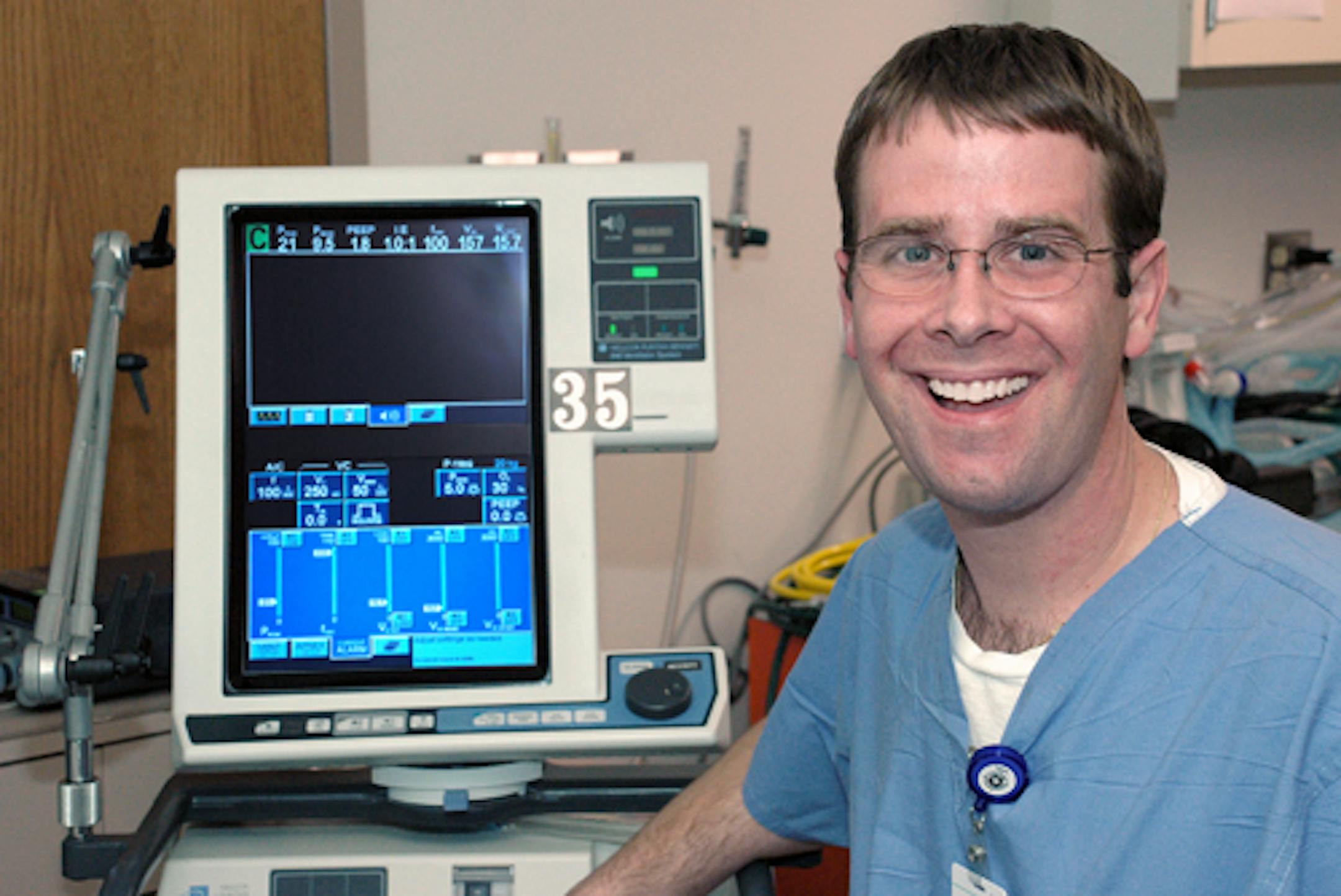
Q: What's a typical workday like for you?
A: I am one of seven people who are responsible for biomedical equipment maintenance and repair for Regions Hospital, HealthPartners clinics and Gillette Children's Specialty Healthcare. We prioritize repair calls by urgency, verify the problem, troubleshoot and make repairs on-site or bring the equipment to our work area. We are responsible for ensuring the proper working order of 15,000 pieces of medical equipment, such as bedside monitors, pulse oximeters, ventilators, ultrasounds and x-ray equipment. We also perform electrical safety checks and preventive maintenance, and attend training sessions on repair and maintenance of new equipment.
Q: How does your role fit into the bigger healthcare picture?
A: It's all about patient safety and cost effectiveness. The equipment must work properly to perform accurate diagnoses and deliver treatment effectively. By performing the repairs, preventive maintenance and safety checks in-house, we help the hospital and clinics minimize costs.
Q: Who do you interact with during the course of the day?
A: I interact with any medical staff members who work with medical equipment, including surgeons, nurses, patient care assistants, laboratory staff, sonographers and respiratory therapists.
Q: Why did you become a biomedical equipment technician?
A: High technology and the medical field interest me. I was always interested in learning how equipment works, and I liked the challenge of fixing all sorts of things. I attended biomedical school and learned the theory of operation of basic equipment such as monitors and lab equipment. On the job, we continuously learn about new medical technology, how it works and how to perform maintenance and repair.


