Ali: A life in the ring

June 5, 2016 at 4:05AM
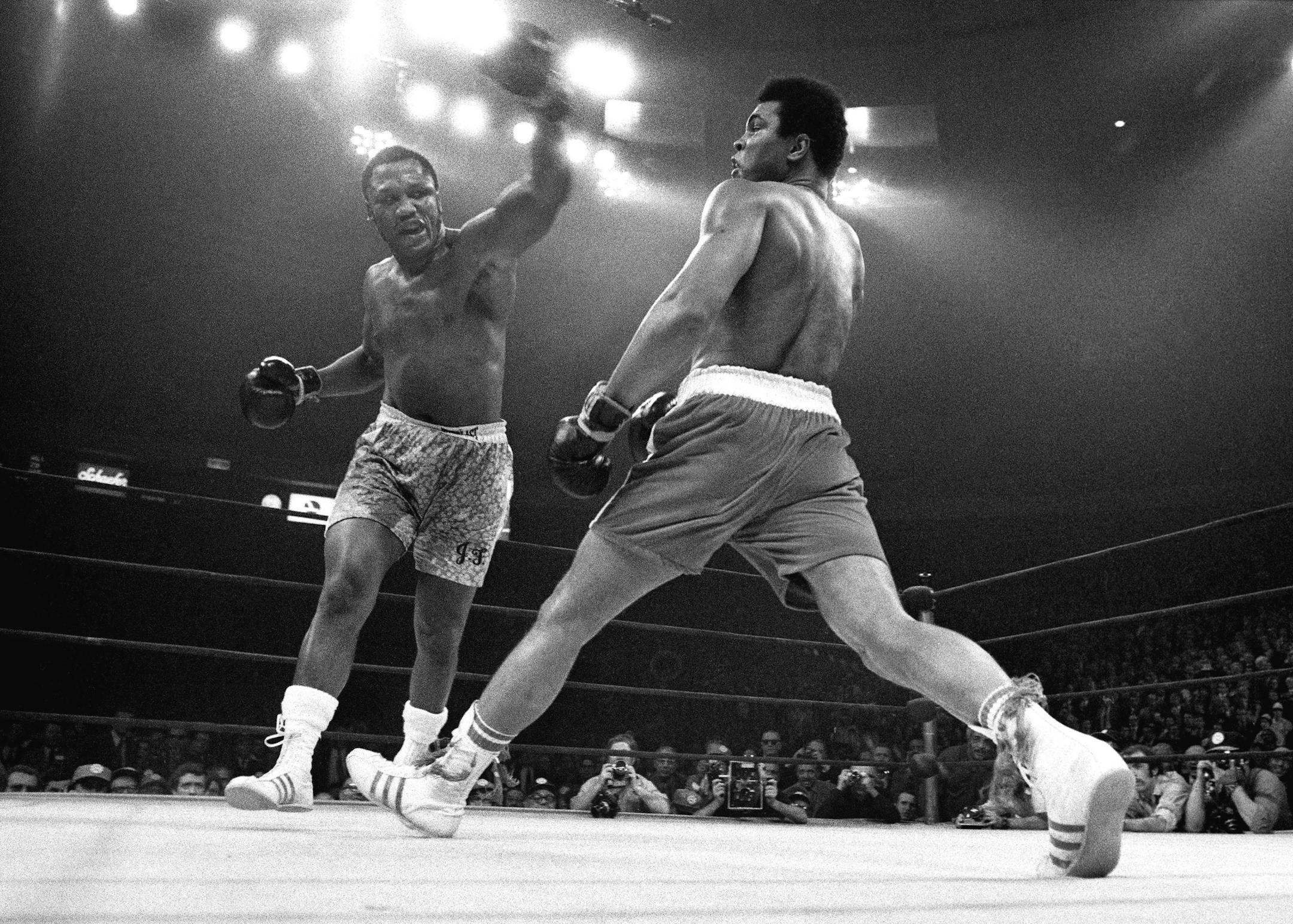
FILE — Muhammad Ali evades a left from Joe Frazier during their title bout, the “fight of the century,” at Madison Square Garden in New York, March 8, 1971. Five years after being stripped of his titles for refusing to register for the draft, Ali suffered the first defeat of his career here. Ali died in Phoenix on June 3, 2016. He was 74. (Larry C. Morris/The New York Times)
Muhammad Ali danced around a left thrown by Joe Frazier during their heavyweight title bout on March 8, 1971, at Madison Square Garden. The bout was dubbed “The Fight of the Century.” Ali suffered the first defeat of his career. (The Minnesota Star Tribune)

Ali A life in the ring

Jan. 17, 1942

Born Cassius Marcellus Clay on Jan. 17, 1942, in Louisville, Ky.

Sept. 5, 1960

At age 18, won the light heavyweight Olympic gold medal at the Rome Games.

Oct. 29, 1960

Made his professional boxing debut, defeating Tunney Hunsaker in six rounds in Louisville.

Feb. 25, 1964

In his last fight as Cassius Clay, became heavyweight champion for the first time when Sonny Liston quit on his stool after the sixth round before a stunned crowd in Miami Beach. "I'm king of the world! I'm pretty! I'm a bad man! I shook up the world! I shook up the world! I shook up the world!" Ali said.

May 25, 1965

Some of the observers in Lewiston, Maine, contended Liston went down from a perfect punch midway through the first round; others called it a phantom punch. In any case, the result was an Ali victory that produced one of the most famous photographs in sports history. The fight's official paid attendance was 2,434 — the lowest for a heavyweight title fight in modern history.

Feb. 6, 1967

"What's my name?" Ali demanded as he repeatedly punched Ernie Terrell in the face. "What's my name?" Terrell had refused to call Ali by his new name, insisting he was still Cassius Clay. It was a mistake he would come to regret through 15 long rounds.

April 28, 1967

With the United States at war in Vietnam, Ali refused to be inducted into the armed forces, saying, "I ain't got no quarrel with those Vietcong."

June 20, 1967

Was convicted of violating the Selective Service Act. His boxing license was revoked, and he was stripped of his titles. The case was appealed.
Oct. 26, 1970

Returning to the ring after 3½ years, stopped Jerry Quarry in three rounds in Atlanta despite efforts by Georgia Gov. Lester Maddox to block the bout.

March 8, 1971

In a classic 15-round battle, lost to Joe Frazier at New York's Madison Square Garden in what was labeled "The Fight of the Century." It was the first defeat for Ali.

June 28, 1971

The Supreme Court reversed the 1967 conviction for refusing Army induction.

Oct. 30, 1974

At age 32, Ali was heavyweight champion for the second time, stopping George Foreman in the eighth round in the "Rumble in the Jungle" in Zaire (now the Democratic Republic of Congo). Absorbing Foreman's blows until the young champion was spent, the "rope-a-dope" stratagem was born.

Oct. 1, 1975

Most in boxing agree that the "Thrilla in Manila" was Ali's last great performance. Ali won his third meeting with Frazier but took a terrific beating. "What you saw," he said slowly, "was next to death."

Sept. 15, 1978

Just seven months after losing to the untested and largely unknown Leon Spinks, Ali won back his title in the rematch in front of 70,000 fans at the Superdome.

Dec. 11, 1981

In his final fight lost a 10-round decision to Trevor Berbick in the Bahamas. "Father Time caught up to me," he said. Over three decades, he finished with a record of 56-5 with 37 knockouts and was the first man to win heavyweight titles three times.

July 19, 1996

With his hands trembling so uncontrollably that the world held its breath, he lit the Olympic torch for the Atlanta Games in a performance as riveting as some of his fights.

June 3, 2016

Died at age 74 after being hospitalized in the Phoenix area with respiratory problems earlier in the week.


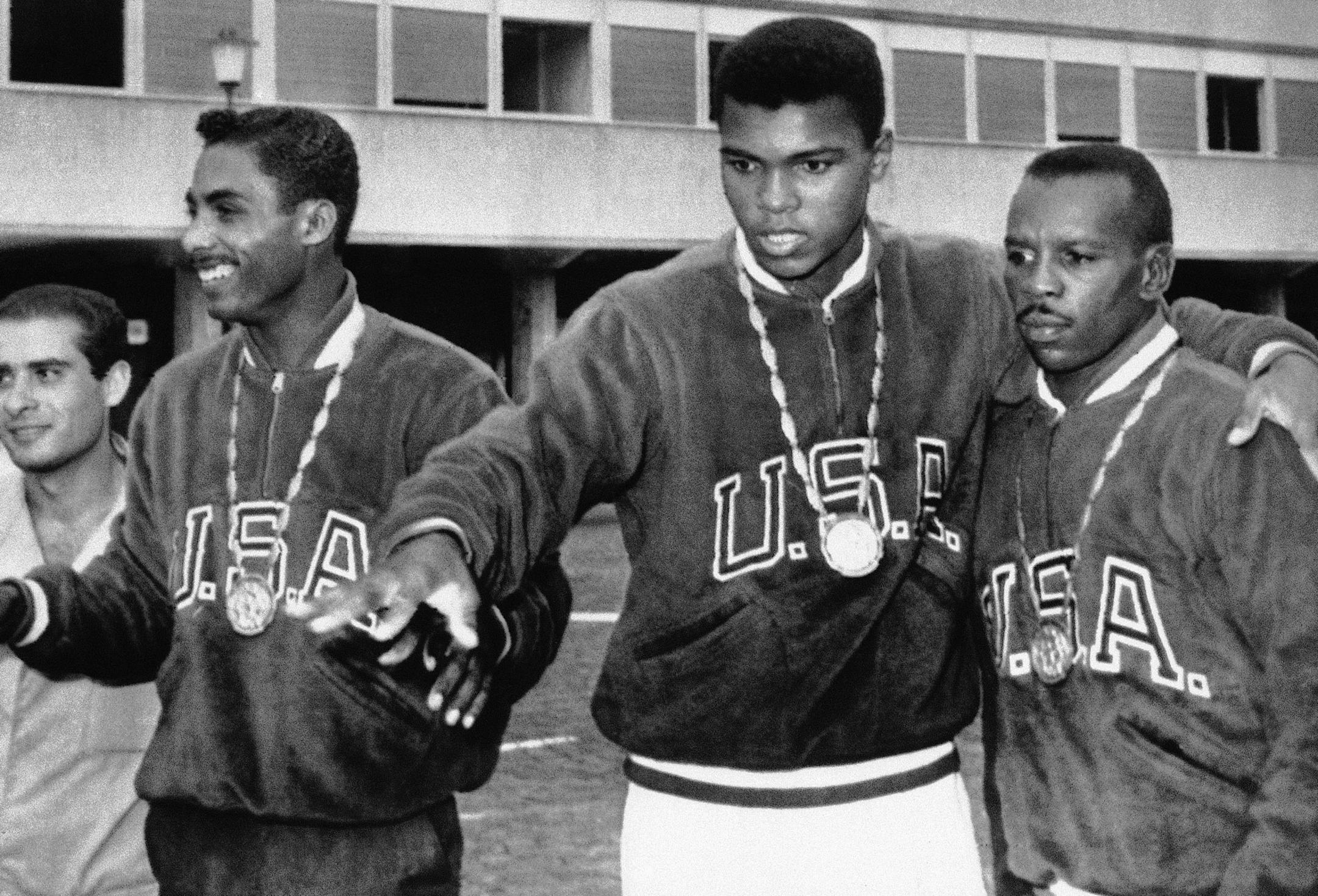
A trio of U.S. boxers wear gold medals at the Olympic village in Rome, Sept. 6, 1960. From the left are: Wilbert McClure of Toledo, Ohio, light middleweight; Cassius Clay of Louisville, Kentucky, light heavyweight; and Edward Crook of Fort Campbell, Kentucky, middleweight. (AP Photo) ORG XMIT: APHS281682
Ali (then Cassius Clay), light middleweight Wilbert McClure, left, and middleweight Edward Crook all won boxing gold at the 1960 Olympic Games. (The Minnesota Star Tribune)
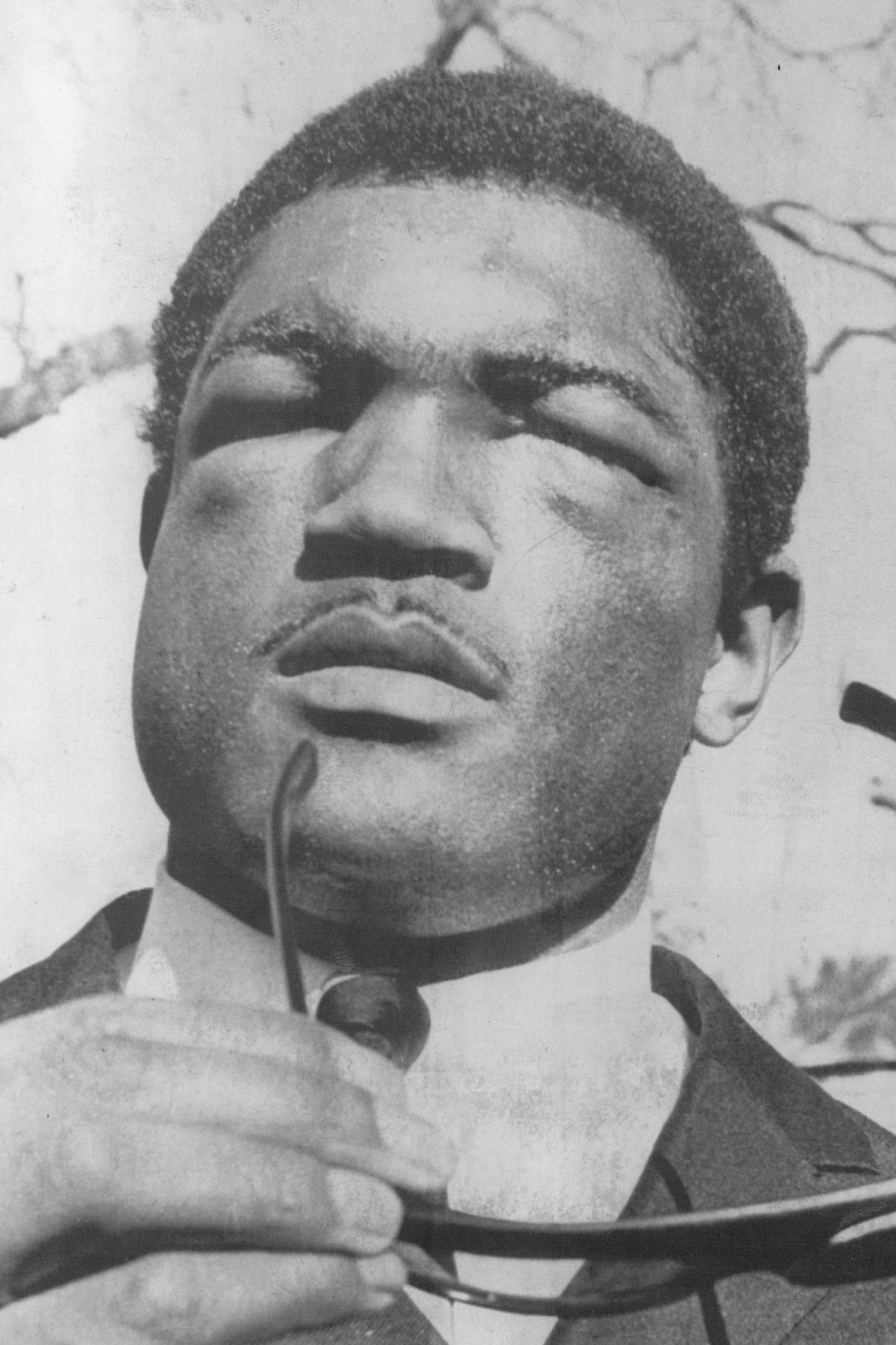
February 8, 1967 Ernie Terrell displayed badly swollen eyes Result of fight with champion Cassius Clay Monday February 7, 1967 Associated Press
Ernie Terrell displayed badly swollen eyes after his fight with Muhammad Ali. (The Minnesota Star Tribune)
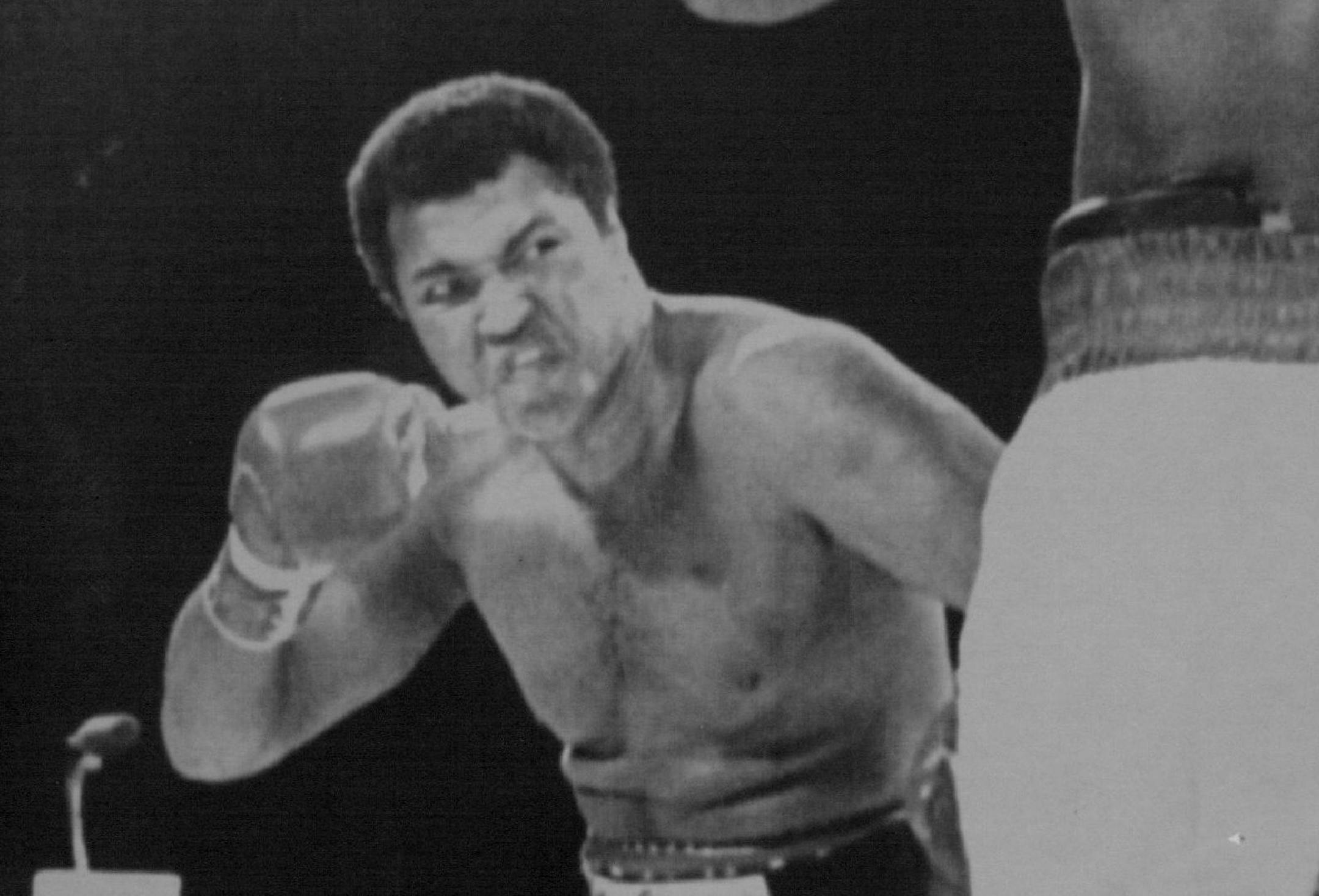
Muhammad Ali in 1981
Muhammad Ali’s boxing career came to an end with a loss to Trevor Berbick. (The Minnesota Star Tribune)
about the writer

about the writer

More from Minnesota Star Tribune

See More
card image
J. SCOTT APPLEWHITE, ASSOCIATED PRESS/The Minnesota Star Tribune

The "winners" have all been Turkeys, no matter the honor's name.

In this photo taken Monday, March 6, 2017, in San Francisco, released confidential files by The University of California of a sexual misconduct case, like this one against UC Santa Cruz Latin Studies professor Hector Perla is shown. Perla was accused of raping a student during a wine-tasting outing in June 2015. Some of the files are so heavily redacted that on many pages no words are visible. Perla is one of 113 UC employees found to have violated the system's sexual misconduct policies in rece