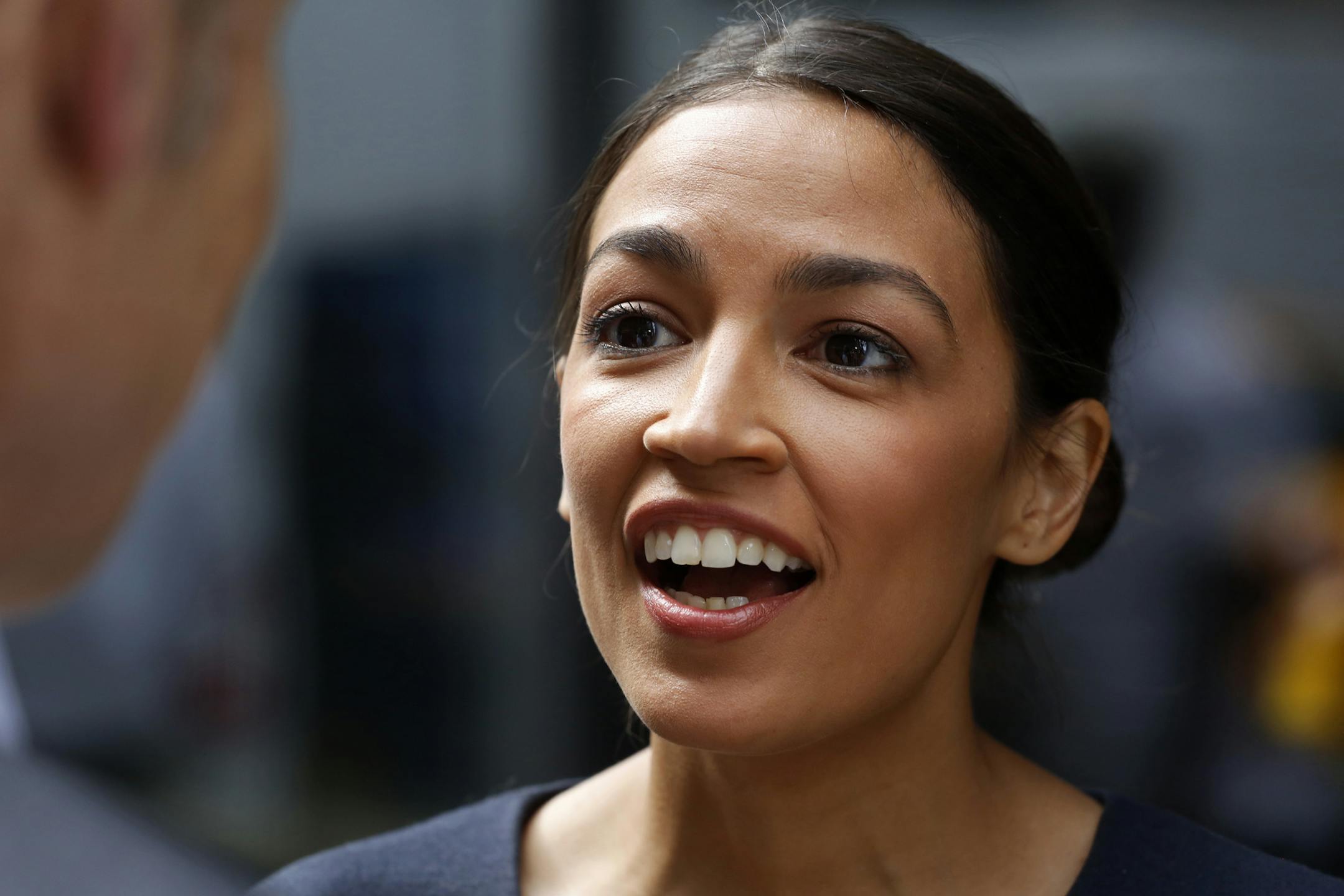
In the spring of 2017, before she ended the 20-year congressional career of Rep. Joe Crowley, D-N.Y., and upset her city's most powerful political machine, Alexandria Ocasio-Cortez was working behind a bar. She had helped launch Flats Fix, a tacos and craft cocktail spot in Manhattan, while pondering what to do next.
"I was taking brunch orders, with the A/C off, and people from progressive political groups were calling me," she said last week in an interview.
She'd organized for Sen. Bernie Sanders in New York, but he lost the presidential primary. She'd rallied at Standing Rock, the site of Native American protests against a natural gas pipeline that would cut through their North Dakota land. She'd worked with Bronx Progressives and the Democratic Socialists of America to lobby Crowley's office; she was cheered when the congressman endorsed the House's "Medicare for All" legislation.
In May, encouraged by the activists she'd been working with, the 28-year-old Ocasio-Cortez filed to challenge Crowley. It was a long shot, but it was at least a way to build a political movement. "If [the district] can be more educated, more organized, more invested than we were a year ago," she told WYNC in November 2017, "then this campaign will have been 100 percent worth it."
Ocasio-Cortez now looks to be on her way to Congress, running in a district that gave 78 percent of its vote to Hillary Clinton and that Republicans aren't seriously contesting. There, she could be the youngest woman elected by either political party. Before this year, Crowley had never come close to losing in New York's 14th Congressional District. Republican reaction to Ocasio-Cortez's win was mostly about Crowley's defeat and how his party's establishment had lost to a self-described socialist.
That was what Ocasio-Cortez had set out to do — replace the party establishment, and the Queens Democratic Party machine controlled by Crowley, with a new establishment and a new electorate. Justice Democrats and Brand New Congress, among the progressive groups that had urged her to run, ended up staffing her campaign. She wasn't inclined to back House Democratic Leader Nancy Pelosi for speaker, name-checking one of the House's most left-wing members as a better choice.
"I'd like to see new leadership, but I don't even know what our options are," she said. "I mean, is Barbara Lee running? Call me when she does!"
Ocasio-Cortez's politics are substantially to the left of most of the party, and even Sanders. In her campaign videos and posters, designed by friends from New York's socialist circles, she came out for the abolition of ICE, universal Medicare, a federal jobs guarantee and free college tuition. The ads also made it clear that she was a different candidate — a young Latina from the Bronx, not a white man from Queens. The posters, which she said were designed to look "revolutionary," were bilingual and centered her face; her viral campaign video, created by a socialist team called Means of Production, began with her saying that "women like me aren't supposed to run for office," over an image of her getting ready for the day in a busy apartment building.