
After Lake Calhoun, what about other place names with racist roots?

July 26, 2020 at 1:34AM
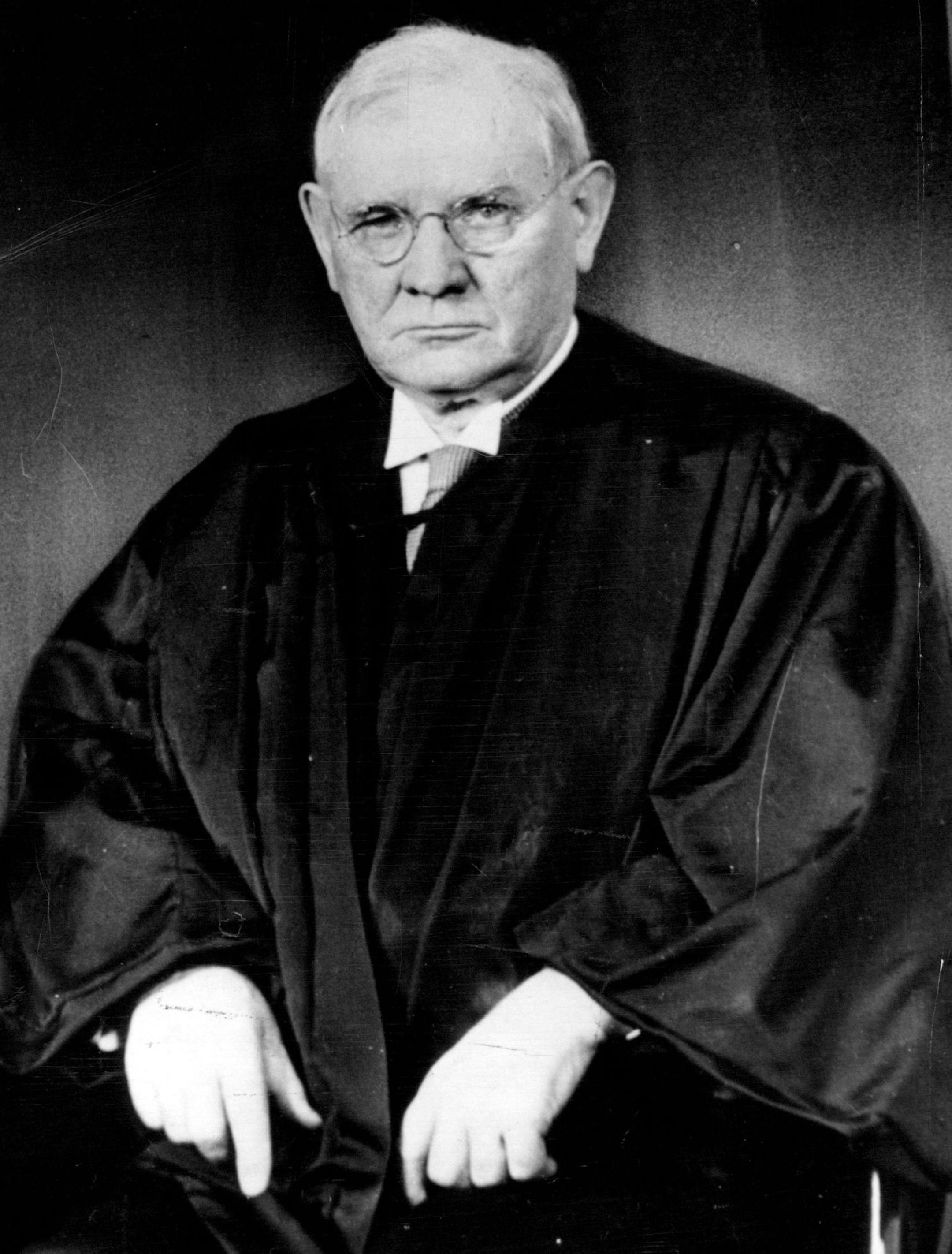
March 16, 1958 Only Minnesotan to serve on the supreme court of the United States was Pierce Butler of St. Paul, shown at right in his judicial robes. He was an associate justice from 1922 until his death in 1939. A number of other Minnesotans have held lesser posts in the federal judicial system. October 11, 1987 Minneapolis Star Tribune
This Pierce Butler (not the South Carolina senator) was the first Minnesotan to serve on the U.S. Supreme Court. (The Minnesota Star Tribune)

Driving down Pierce Butler Route several times a week, Kay Hatlestad wondered how the St. Paul road came to share the name of one of America's largest slaveholders.

She did not think the South Carolina senator should be honored, given that he inserted a clause in the Constitution requiring that enslaved people who escaped to another state be returned to their masters.

So Hatlestad turned to Curious Minnesota, our community-driven reporting project fueled by questions from readers, to ask: "Why do we have a street named after Pierce Butler? And why haven't we changed it?"

Her inquiry comes amid a national reckoning over locations named for historical figures with racist legacies. The Minnesota Supreme Court ruled in May that the state had the authority to rename Lake Calhoun — a tribute to John Calhoun, a champion of slavery — to its original Dakota name Bde Maka Ska.

The other Pierce Butler

In the case of Butler, however, the road is actually named for the first Minnesotan to serve on the U.S. Supreme Court. That Pierce Butler, a justice from 1923 to 1939, was born in St. Paul in 1866 ­— 44 years after the Southern slaveholder died.

"I had no idea," Hatlestad said. "That does kind of raise the question: What can we do to make it clear which Pierce Butler we're commemorating?"

Reader Michaela Day also wrote in to ask, "Why are war criminals and proponents of genocide like Ramsey and Sibley still honored in Minnesota?"

Alexander Ramsey was governor of Minnesota in the early 1860s, and the first governor to volunteer troops to fight for the Union during the Civil War. But he also appointed his predecessor, Henry Sibley, to command troops in the U.S.-Dakota War.

"The Sioux Indians of Minnesota must be exterminated or driven forever beyond the borders of Minnesota," Ramsey declared. Sibley created the military commission that in 1862 sentenced 303 Dakota men to death — 38 were hanged in Mankato.

"The reason we have so many places named after Ramsey and Sibley has to do with their role as founders of the territory and the state of Minnesota, their influence as political leaders and businessmen, and the fact that they were pretty roundly praised by contemporaries in the 1800s and by historians through much of the 20th century," said Bill Convery, director of research at the Minnesota Historical Society.

He noted that a historian in the 1920s referred to each of them as the George Washington of Minnesota, and an obituary for Sibley in 1891 described him as a savior of the Northwest from an Indigenous massacre. Historians at the time crafted the story of the founding and settlement of Minnesota as one of the triumphs of white civilization, Convery said, and both men were central in that victory.

But dissenting voices gained traction after the civil rights movement, he added.

"As time went on, that role in the Dakota War has become a stain, not a cause for celebration," Convery said.

In 2017, students at Ramsey Middle School in Minneapolis successfully campaigned to change its name to Justice Page Middle School, after Alan Page, the state's first Black Supreme Court justice. In Mankato, Megan Schnitker has helped bring attention to the name of Sibley Park, near the site of the 1862 mass hanging. She wants all sides of history presented.

"He's portrayed as this amazing war hero, but he did some pretty terrible things," said Schnitker, who heads the Mahkato Revitalization Project to revitalize Indigenous culture. "I understand war is war, but at the same time the people he conquered are still here and they lost relatives that they can name."

Maya Rao • (612) 673-4210

about the writer

about the writer

Maya Rao

Reporter

Maya Rao covers race and immigration for the Star Tribune.

See Moreicon

More from Minnesota Star Tribune

See More
card image
J. SCOTT APPLEWHITE, ASSOCIATED PRESS/The Minnesota Star Tribune

The "winners" have all been Turkeys, no matter the honor's name.

In this photo taken Monday, March 6, 2017, in San Francisco, released confidential files by The University of California of a sexual misconduct case, like this one against UC Santa Cruz Latin Studies professor Hector Perla is shown. Perla was accused of raping a student during a wine-tasting outing in June 2015. Some of the files are so heavily redacted that on many pages no words are visible. Perla is one of 113 UC employees found to have violated the system's sexual misconduct policies in rece