

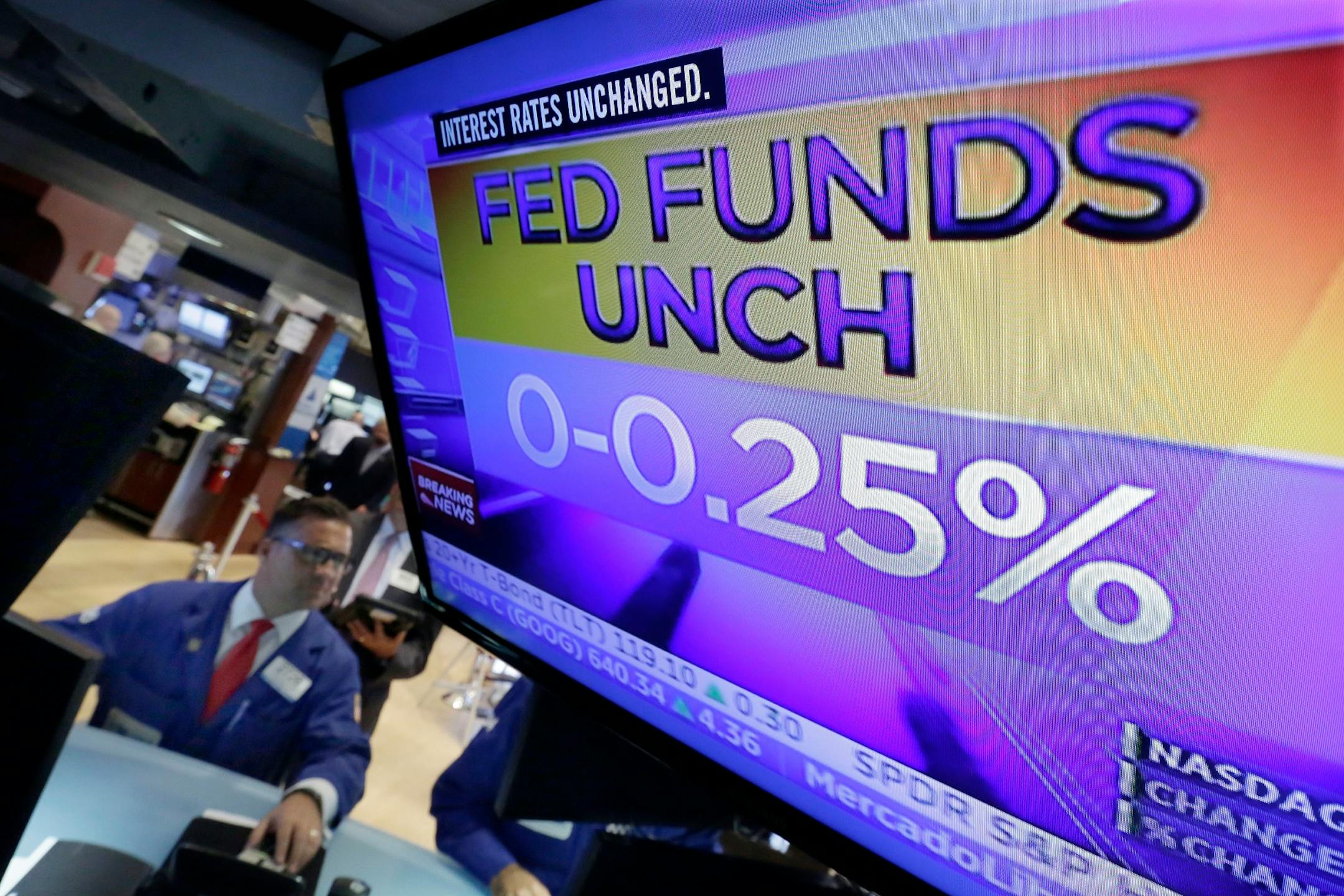
WASHINGTON – When the Federal Reserve drove its target interest rate near zero in late 2008, it sparked an economic debate about the risks of having nowhere lower to go, and in particular the financial bubbles it might stoke.
Six years later, few bubbles are in sight, but a new risk has emerged: that the zero has become an effective anchor on interest rates that is proving far more difficult to abandon than the Fed expected.
Three major central banks have hit the zero limit, the Fed, the European Central Bank and the Bank of Japan. None has successfully escaped it, and the ECB looks set to extend its money-printing program.
Though Fed officials insist the United States can and will eventually break ranks with the rest of the pack and raise rates, their latest decision to hold on Thursday came laced with caution about the new butterfly-effect economy — where a market ripple in China could tighten financial conditions in the United States and change the course of the Fed.
It is a situation that could leave the Fed stranded in its hunt for a rate liftoff until the entire global economy is growing in sync, and the horizon is clear of risks.
"There may be labor slack and we may not have hit the inflation target, but where is it written that everything has to line up before you even begin to get rid of emergency measures?" said Erik Weisman, chief economist with MFS Investment Management. "These conditions are never going to be met entirely."
This week's decision to yet again delay a rate hike "is the beginning of the Fed taking on board the idea that excess global capacity is playing a bigger role in determining domestic wages and prices," said Steven Ricchiuto, chief economist with Mizuho Securities USA.
During her news conference Fed Chairwoman Janet Yellen referred repeatedly to global events that had affected the U.S. economy, undermined inflation and threatened to hurt domestic growth.


![Attendees of Frostbike made their way through the convention Saturday at the Quality Bike Products campus in Minneapolis. ] (AARON LAVINSKY/STAR TRIBUNE) aaron.lavinsky@startribune.com Frostbike 2016 was held at the Quality Bike Products Campus on Saturday, Feb. 27, 2016 in Bloomington, Minn.](https://arc.stimg.co/startribunemedia/NH2BSHB74ND2V6GF2G2HI5X4MM.jpg?&w=252&ar=3:2&fit=crop)
