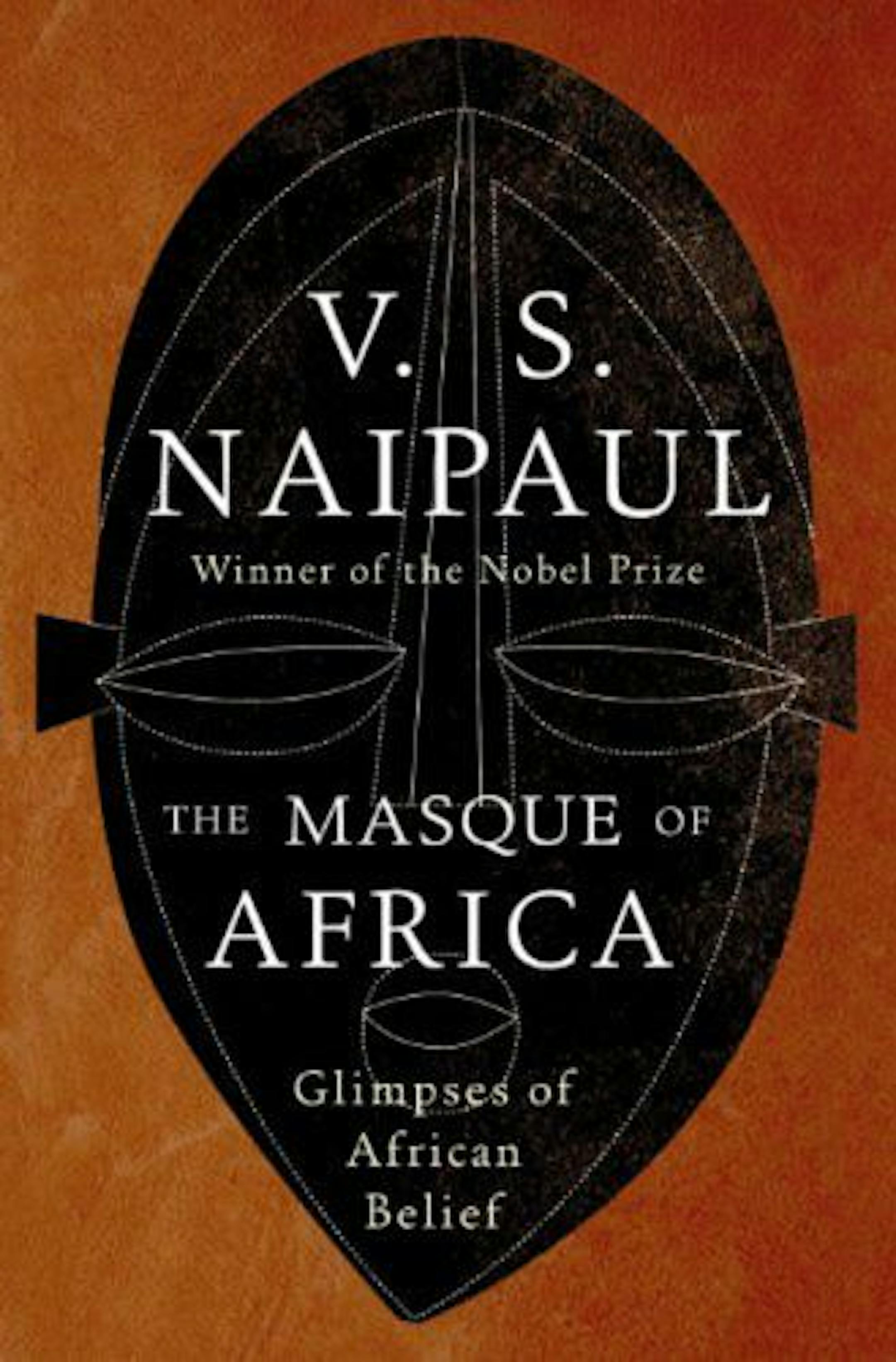
At some point while I was reading V.S. Naipaul's new book, "The Masque of Africa," it became hard not to picture the venerable Nobel Prize winner in a pith helmet and khakis, doddering around the continent looking for bits of religious trivia he could take home and put on his mantel. This was not, of course, his stated purpose, which was, instead, to investigate the current state of "belief" in Africa, and to see how the modern world is intermingling with the older one on which it rests.
To this end, Naipaul travels to Uganda, Nigeria, Ivory Coast, Ghana, Gabon and South Africa, an impressive itinerary for the nearly 80-year-old. Along the way, he spend time with witch doctors, politicians, businessmen, professors and the like, all the while peppering them with questions about their rituals and religions and historical events.
Those events are something in which Naipaul is steeped: The writings of Mungo Park, John Hanning Speke, Henry Morton Stanley and others who first wrote about the continent. In a way, this is refreshing since that context is sometimes lacking in writing about Africa. But in the end, Naipaul seems perhaps too steeped in it, almost as if he sees himself as direct descendant to those explorers, painting his discoveries with the same broad brush, reaching vast conclusions that are not especially illuminating: "Their faith mattered to them." "Religious beliefs dictate culture." "Uganda is Uganda."
Throughout "The Masque of Africa," all the shades of Naipaul are on display: the master storyteller, the thoughtful humanist, the bored misanthrope, and the misty-eyed colonist. The book is by turns interesting (when he meets Winnie Mandela or dines with Jerry Rawlings), maddening (his insistence on referring to "Africans" throughout), appalling (his suggestion that a certain Ghanaian's rational thinking descended directly from a Danish ancestor), and tiresome, as he endlessly describes the decay, wretchedness and decline everywhere he looks.
Sadly, this is not the book it could have been: an intelligent, humane inquiry into the strange mingling of old and new. Rather it reads as a kind of trifold lament: for the horror of what was, for the loss of what used to be and for the tragedy of what has come to pass. Having spent some time in Africa years ago, Naipaul should have been in a good position to reflect on the changes, and perhaps even make some sense of them. But by the end, one wonders why he left home at all.
Frank Bures is a writer in Minneapolis.