Adventure in the Andes

A hike in Ecuador's Andean highlands - with stops at historic estates along the way - gives travelers an up-close, slowed-down glimpse of a country rich in scenery and culture.

January 16, 2011 at 12:57AM
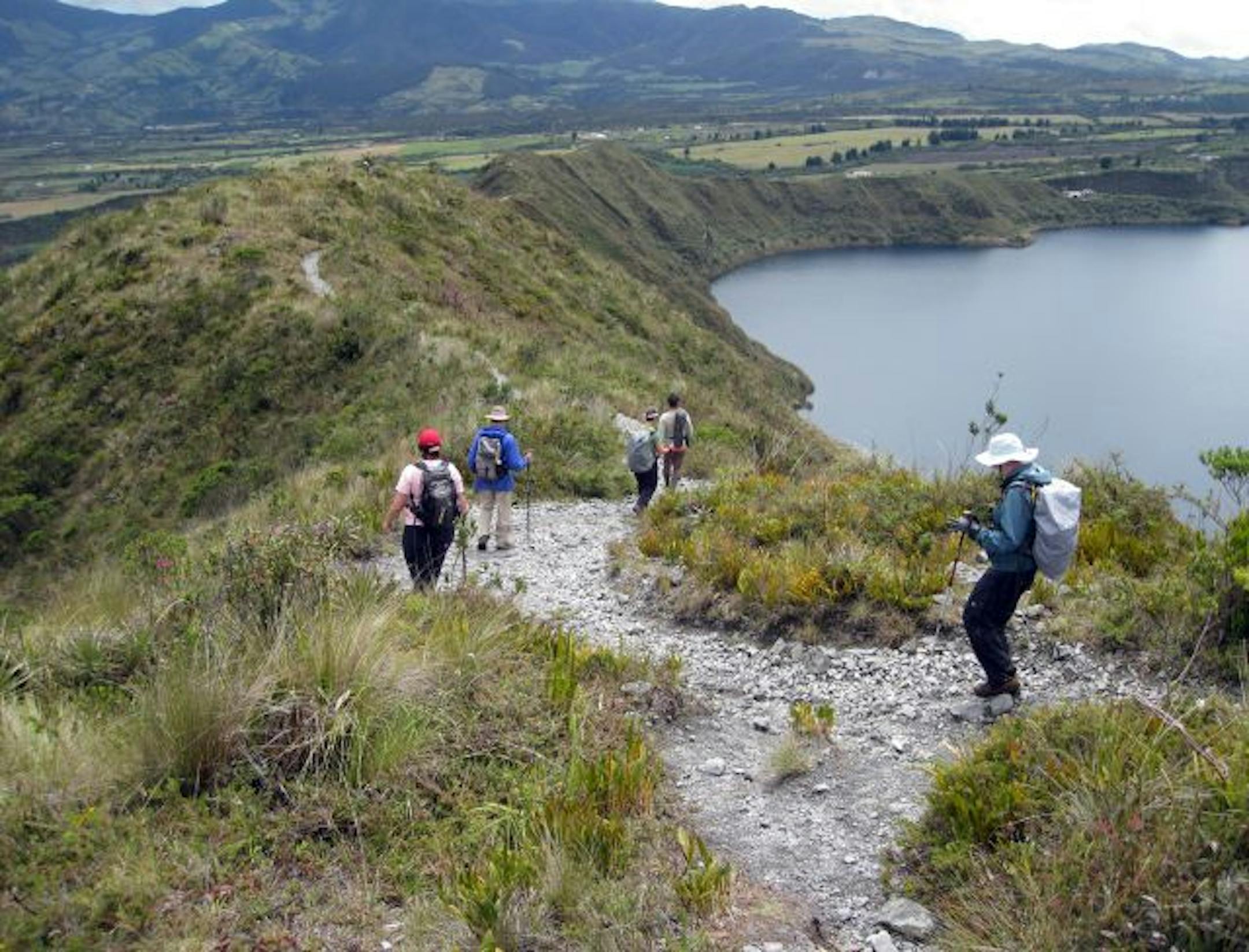
Hikers navigate the six-mile trail rimming the Laguna de Cuicocha, a lake formed in a volcanic crater in the Ecuadoran Highlands.
Hikers navigate the six-mile trail rimming the Laguna de Cuicocha, a lake formed in a volcanic crater in the Ecuadoran Highlands. (Star Tribune/The Minnesota Star Tribune)

For five hours, we'd hiked through rain, mud, eucalyptus forests and corn and fava bean fields in the hilly Andean highlands a few hours north of Quito. Here, nearly 10,000 feet high along the equator, the sun rises and sets at 6 o'clock. Every day. All year.

It was now pushing 7 p.m. And darkness wasn't the only thing falling fast. As the afternoon sprinkle thundered into a steady downpour, little irrigation ditches swelled into raging torrents. First, my boots slipped, dropping me on my butt and coating my rain pants with ooze. When that nearly happened again, I overcompensated with a graceless slapstick face plant, covering my front side with goo.

So when we finally arrived at Hacienda Zuleta, a lovely inn dating back to Spanish invaders in 1691, the wide-eyed staff looked at me like the alien I was and said, "Qué paso?"

What happened was this: With soggy boots but sunny dispositions, we had completed Day 1 of our weeklong highlands hike from hacienda to hacienda, mixing at-times grueling 12-mile days with luxurious nights. Roaring adobe fireplaces awaited us each night in our rooms, as did fuzzy hot-water bottles between the sheets and sumptuous meals of potato-cheese Locro soup and baked, farm-raised trout plucked from nearby lagoons.

To celebrate my wife's 50th birthday, we signed up with Vermont-based Country Walkers, a 31-year-old travel company that organizes walking tours to 75 locations from Austria to New Zealand. Hoofing it, we quickly learned, is a wonderful way to slow down and experience a country.

On our second day, after traipsing up a small volcano, we stumbled upon a baptism letting out and walked among indigenous farmers dressed in their finest purple skirts, pure white blouses and felt fedora hats, passing around Dixie cups of schnapps-like liquor as a band played festive music on drums, guitars and accordion.

We smiled back at kids walking home from school, accepted directional advice from farmers pointing big hoes and sucked the thin air on the rims of volcano-crater lakes. We climbed as high as 14,700 feet, but Sixto, our fretting bus driver with a wry sense of humor, schlepped all our stuff -- leaving us unburdened, carrying only the light loads of our daypacks, cameras and water bottles.

An offering of M&Ms
The faces of Ecuadorans we met usually started with looks of curious wonder, like the tiny woman wrapped in rain-protective plastic looking over her weed-free hillside of corn and beans as five trekkers from the United States and their Colombian-born guide suddenly appeared from the mist. "A donde vas?"

She wondered not only where we were going, but what the heck we were doing splashing through her rain-soaked fields. Minutes later, after wishing us luck and accepting some trail mix, her face broke into a smile. Looking back, we saw her eyeing our M&Ms with skepticism before popping them into her mouth.

Our guide, Andres Trujillo, is a bird-watching phenom who plays drums in a Quito rock band. "Just pretend you're 8 years old again," was his sage-like advice as we tromped through the rain and mud.

Our fellow hikers included a retired CIA secretary who had lived in Vietnam, Turkey and China; a longtime census worker from Seattle, and a physical therapist from Maui. All were in their late 60s. I whispered to my wife on the bus ride out of Quito that, given their age, the week ahead might be tamer than we'd hoped.

Then Cam, the census worker, told us how she celebrated her retirement by riding her bike from Yorktown, Va., to Seattle. James, the physical therapist, had hiked across the Gobi Desert in Mongolia and Mary Jo, the CIA worker, eschewed offers of helping hands to leap across a muddy stream on her own.

"I'm a mountain goat," she said.

So much for too tame.

All told, we stayed at three historic haciendas -- Zuleta, Cusín and Pinsaquí -- on a trail that links eight of the great estates dating back to orders of Spanish kings in the 17th and 18th centuries.

While Cusín provided us our own adobe cottage surrounded by majestic gardens and Pinsaquí's back story includes South American liberator Simon Bolivar sleeping and signing treaties there, Zuleta was our hands-down favorite.

Honoring his grandfather

Perched at 9,600 feet on 4,000 acres in a lush valley between soaring Andean volcanic peaks, Zuleta is kind of an Ecuadorean cross between Camp David and Disney World, merging a former politician's retreat with a mind-boggling array of amusements.

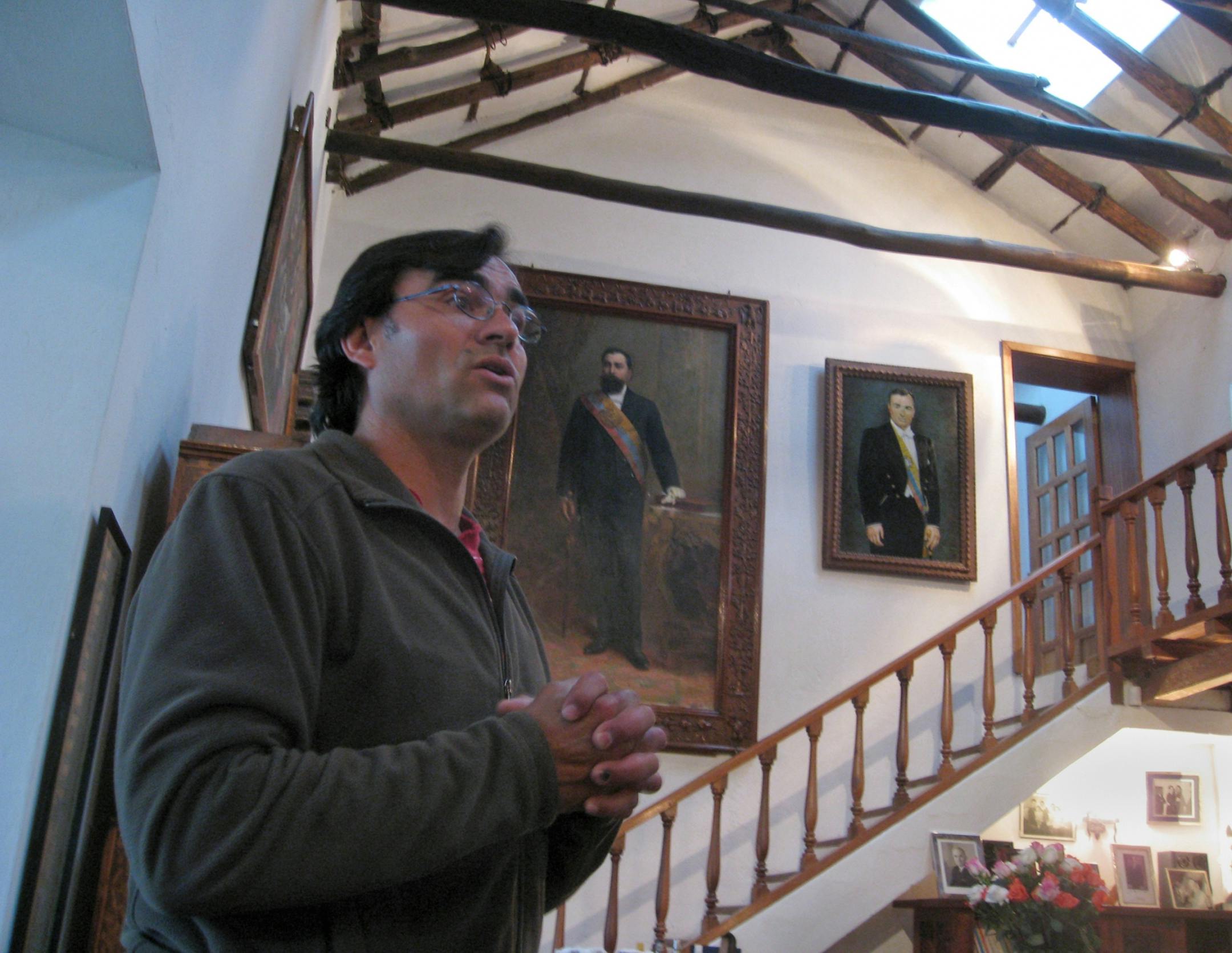
Fernando Polanco Plaza, the hacienda's 48-year-old champion and protector, greeted us with equal amounts of charm, humor and storytelling zeal. His grandfather, Galo Plaza Lasso, served as Ecuador's popular, progressive president 60 years ago. Fernando has created a nonprofit in his grandfather's name to preserve the place's history and fund a local library, school and other offshoots. Hacienda Zuleta has been in his family since 1898 and the spread features 16 rooms filled with antiques and roses; a low-slung cheese factory; a quaint chapel from the 1700s; an organic garden punctuated with artichokes, peppers and herbs; trout ponds; pre-Incan ruins; an embroidery shop run by local artisan women, and Fernando's passion: an Andean condor rehabilitation project.

With only an estimated 50 of the Boeing-sized vultures left, Zuleta has taken in a few injured birds and houses them in massive cages a few miles out in the valley. Condors are scavengers, not raptors, so they eat only carrion such as dead horses from the hacienda. That sometimes lures wild condors to the cage tops.

We weren't so lucky. Wild condors require clear, sunny days to soar out of their cliffside nests and search for dead stuff. Rain clouds kept them in the cliffs during our stay.

Unlikely soccer spectators

On our second and final night at Zuleta, Fernando invited us to eat dinner at his grandfather's table between photos of the late president with Harry Truman and original paintings donated by Ecuador's preeminent artist, Oswaldo Guayasamín. Fernando regaled us with tales of growing up in Washington when his grandfather served as ambassador and secretary general of the Organization of American States until 1975. He recalled cringing when his grandparents dropped him off in a limousine for a Boy Scout camping trip, his backpack so heavy with cans of meats that he toppled over backward.

The next morning, Fernando offered us his homemade granola, bacon cooked to our desired crispness, and omelets with whatever fresh herbs and vegetables we wanted from the garden. His farewell was premature, though, because his hacienda dogs, Feto and Dominga, followed us for five miles down the cobbled streets, requiring Fernando's family to track us down via cell phone to fetch the pooches.

By then, we'd come across a soccer match pitting the kids from Zuleta and the neighboring village of Cocha -- with cows looking on. A handwritten chalky sign along the field proclaimed: "Bienvenidos Hermanos Deportistas." But the brothers of sport weren't the only ones who felt welcome.

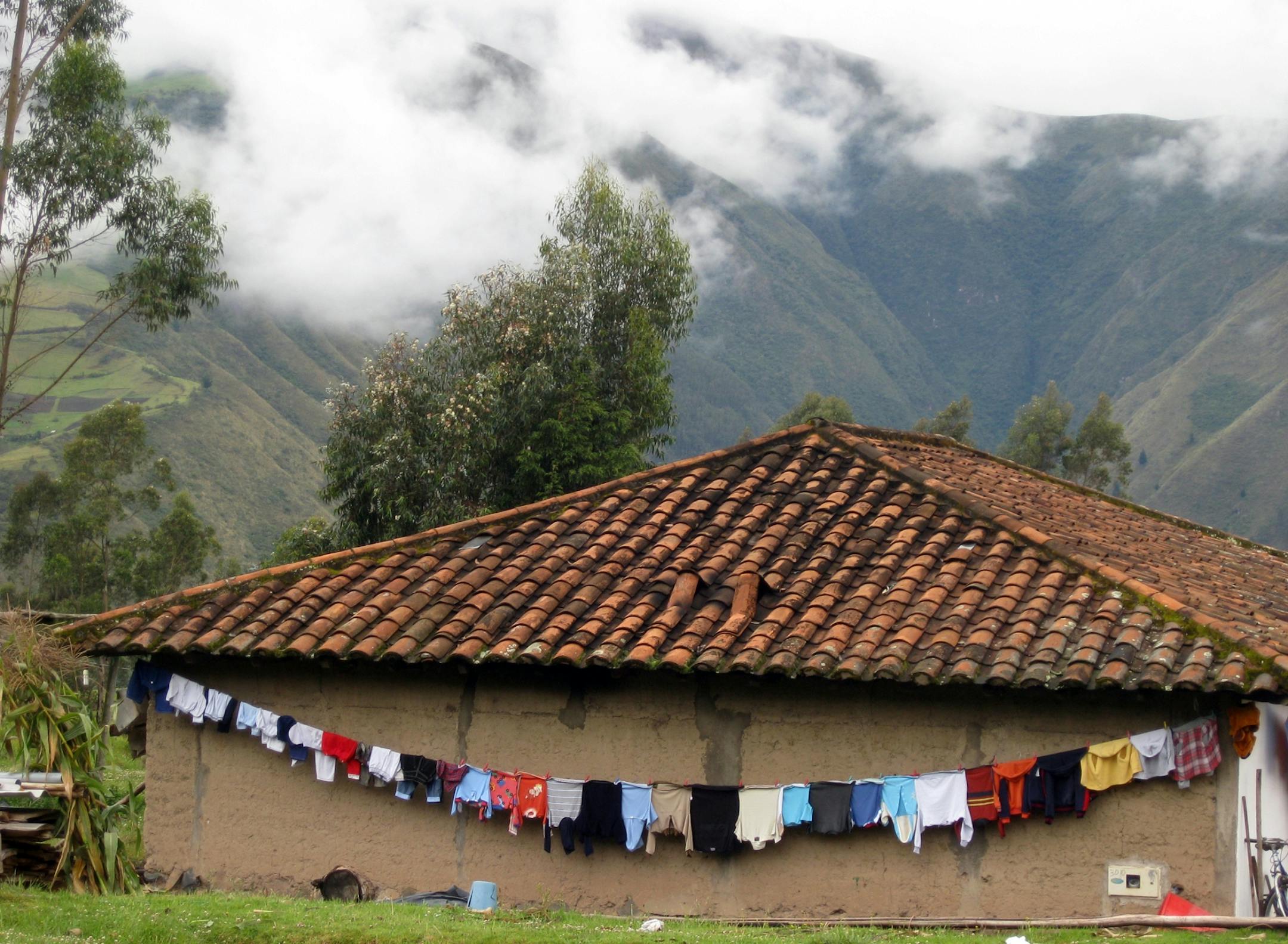
As we hiked on down the cobbled street, through the quilted hillsides of corn and bean farms and past the tidy homes with tiled roofs and colorful laundry hanging on the line, a gentle rain began to fall. It wasn't like the soakers that drenched us the prior two days.

We breathed deeply, the air crisp and clean and the countryside passing by at just the right pace.

Curt Brown • 612-673-4767

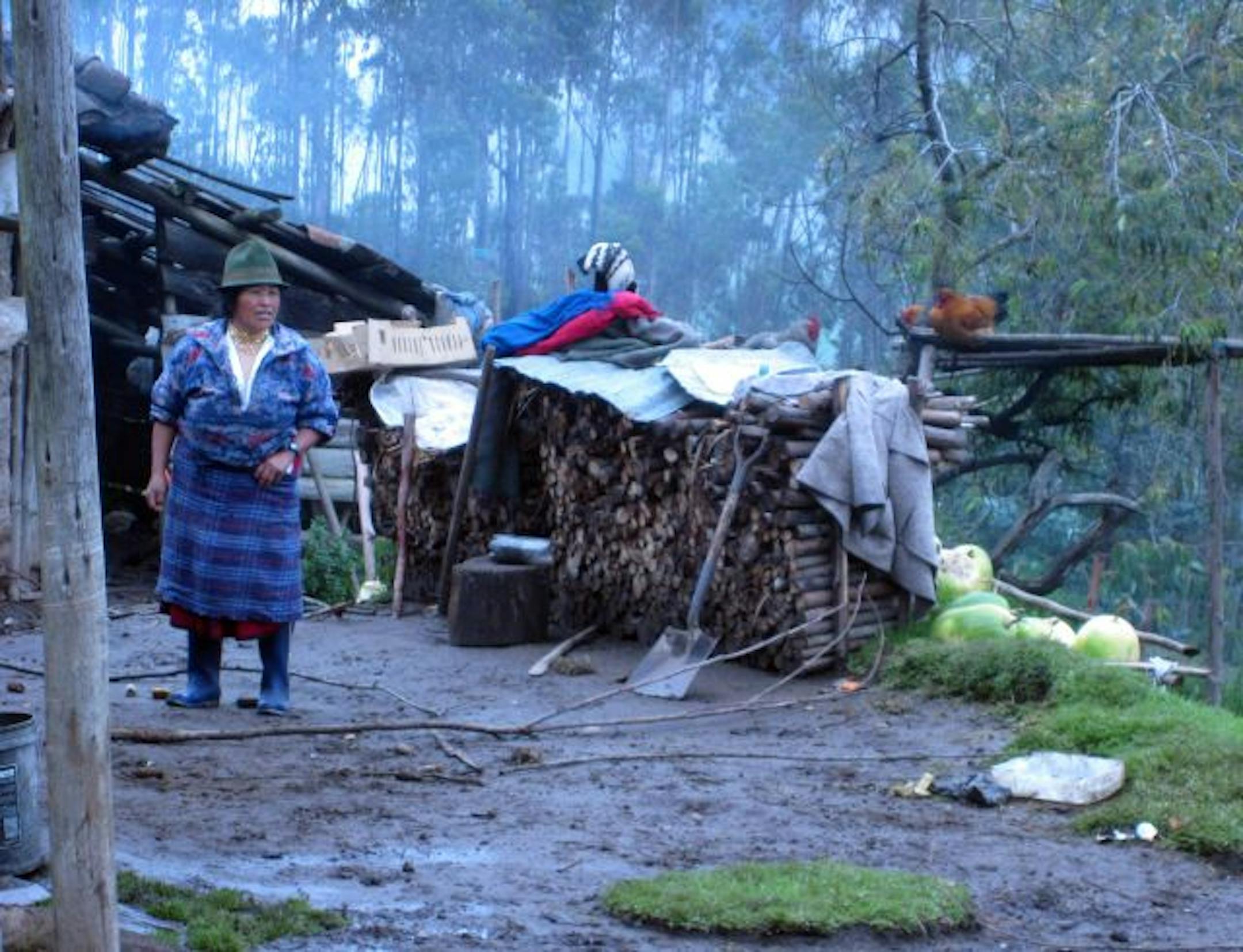
A farm woman, her woodpile, melons and roosting chickens greeted hikers near Hacienda Zuleta in the Ecuadoran Highlands.
A farm woman, her woodpile, melons and roosting chickens greeted hikers near Hacienda Zuleta in the Ecuadoran Highlands. (Dml -/The Minnesota Star Tribune)
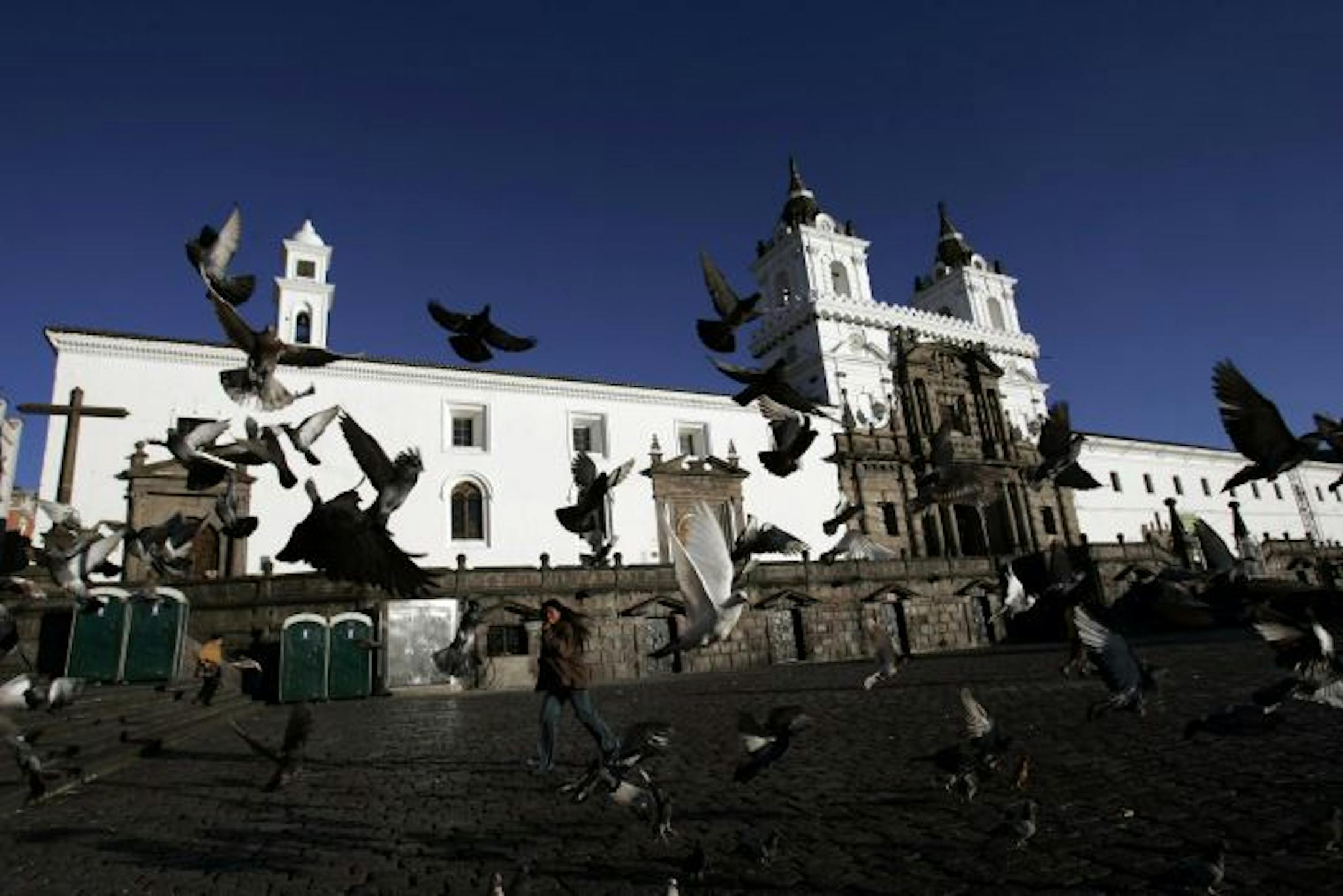
Pigeons flew in San Francisco Square in Quito, the first stop on Country Walker's hiking trip through the Ecuadorean Highlands. The Church of San Francisco was built in 1536 shortly after the founding of Quito.
Pigeons flew in San Francisco Square in Quito, the first stop on Country Walker’s hiking trip through the Ecuadorean Highlands. The Church of San Francisco was built in 1536 shortly after the founding of Quito. (Associated Press/The Minnesota Star Tribune)
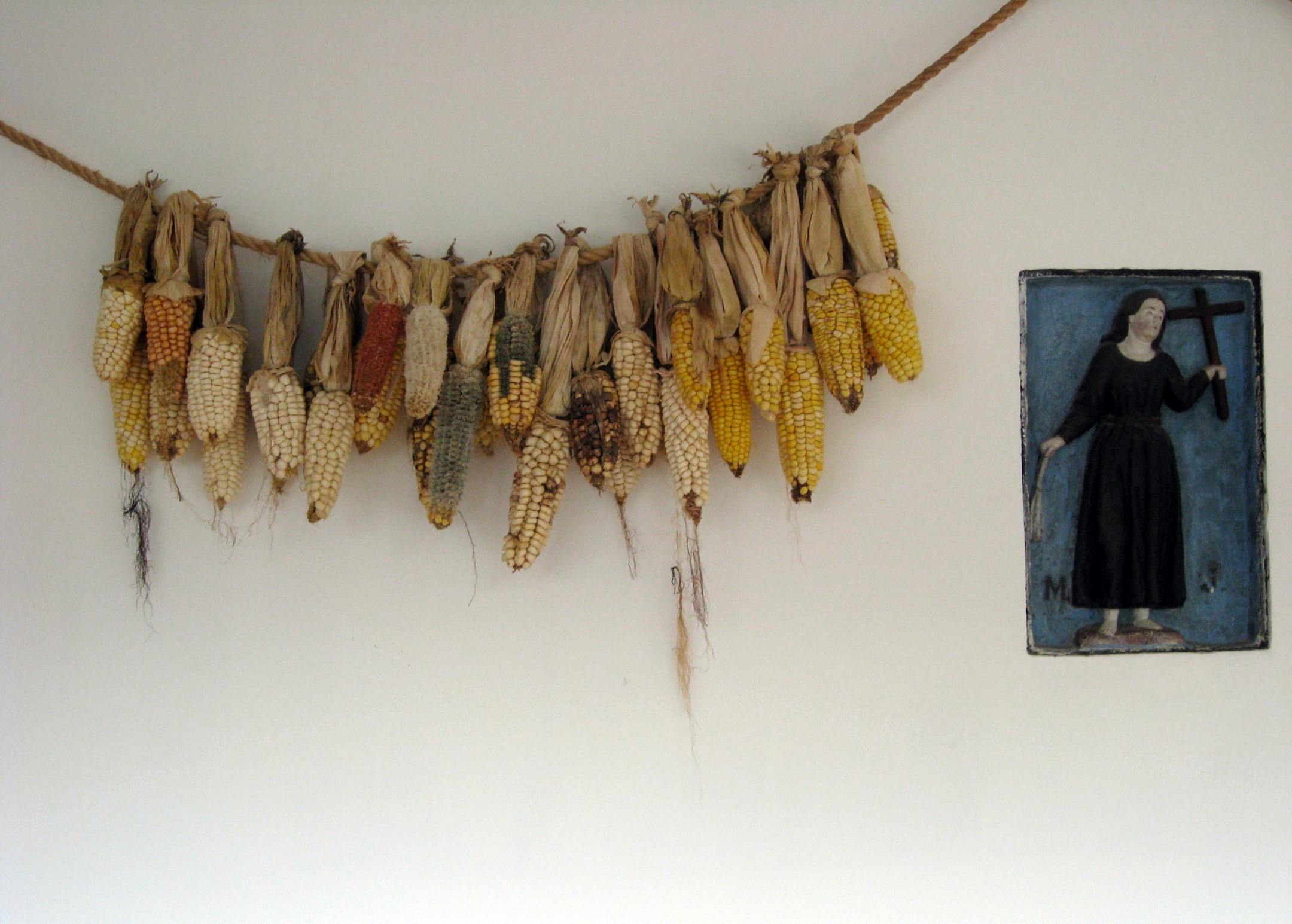
At Hacienda Cusin, a restored 17th-century estate in the Ecuadoran Highlands, signs of pre- and post-Spanish conquest can be found on a wall displaying dried corn and Christian art.
At Hacienda Cusin, a restored 17th-century estate in the Ecuadoran Highlands, signs of pre- and post-Spanish conquest can be found on a wall displaying dried corn and Christian art. (Dml -/The Minnesota Star Tribune)
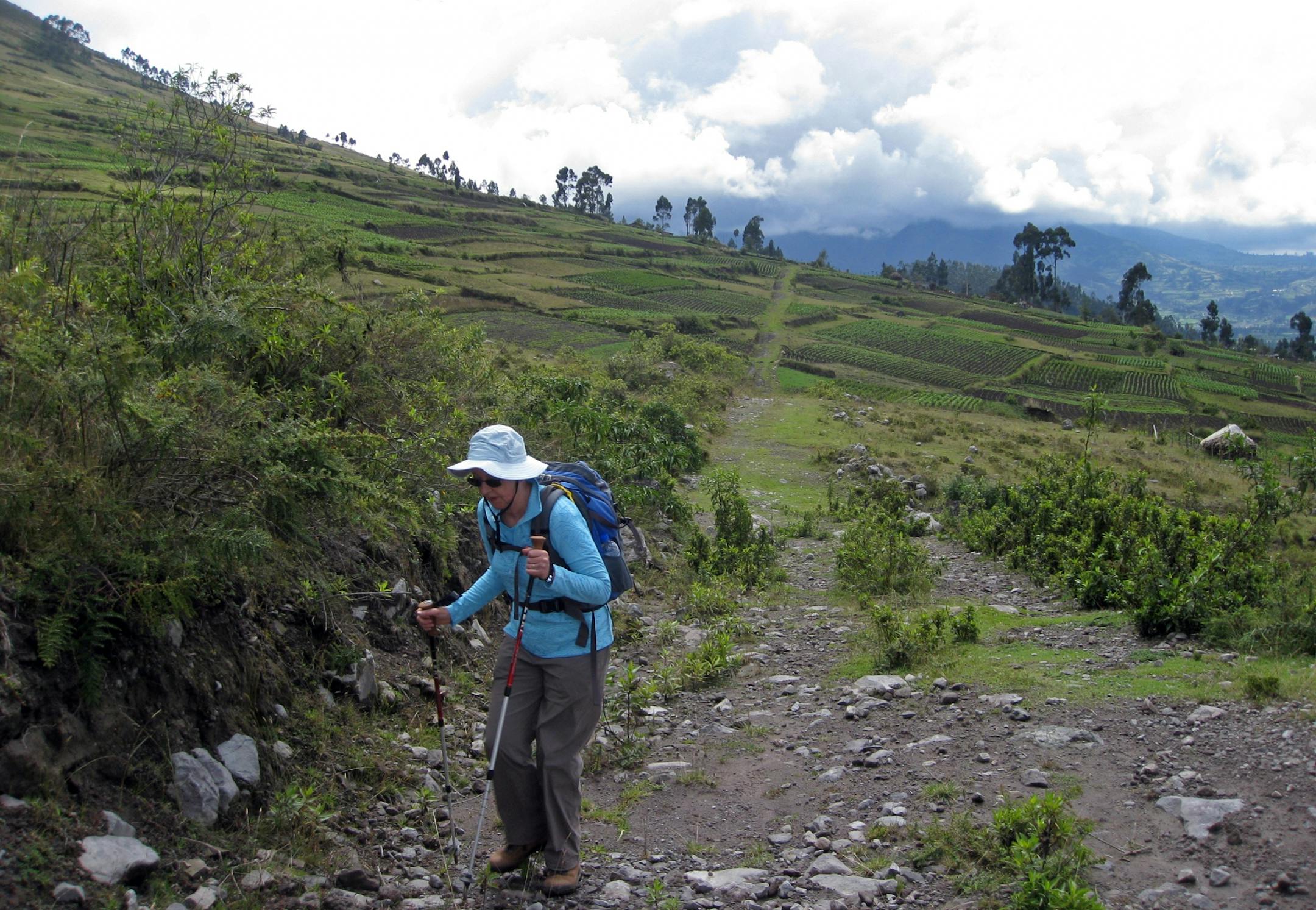
Mary Jo George of Asheville, N.C., hikes between patches of corn and fava beans fields near San Pablo Lake in the Highlands of Ecuador.
Mary Jo George of Asheville, N.C., hikes between patches of corn and fava beans fields near San Pablo Lake in the Highlands of Ecuador. (Dml -/The Minnesota Star Tribune)
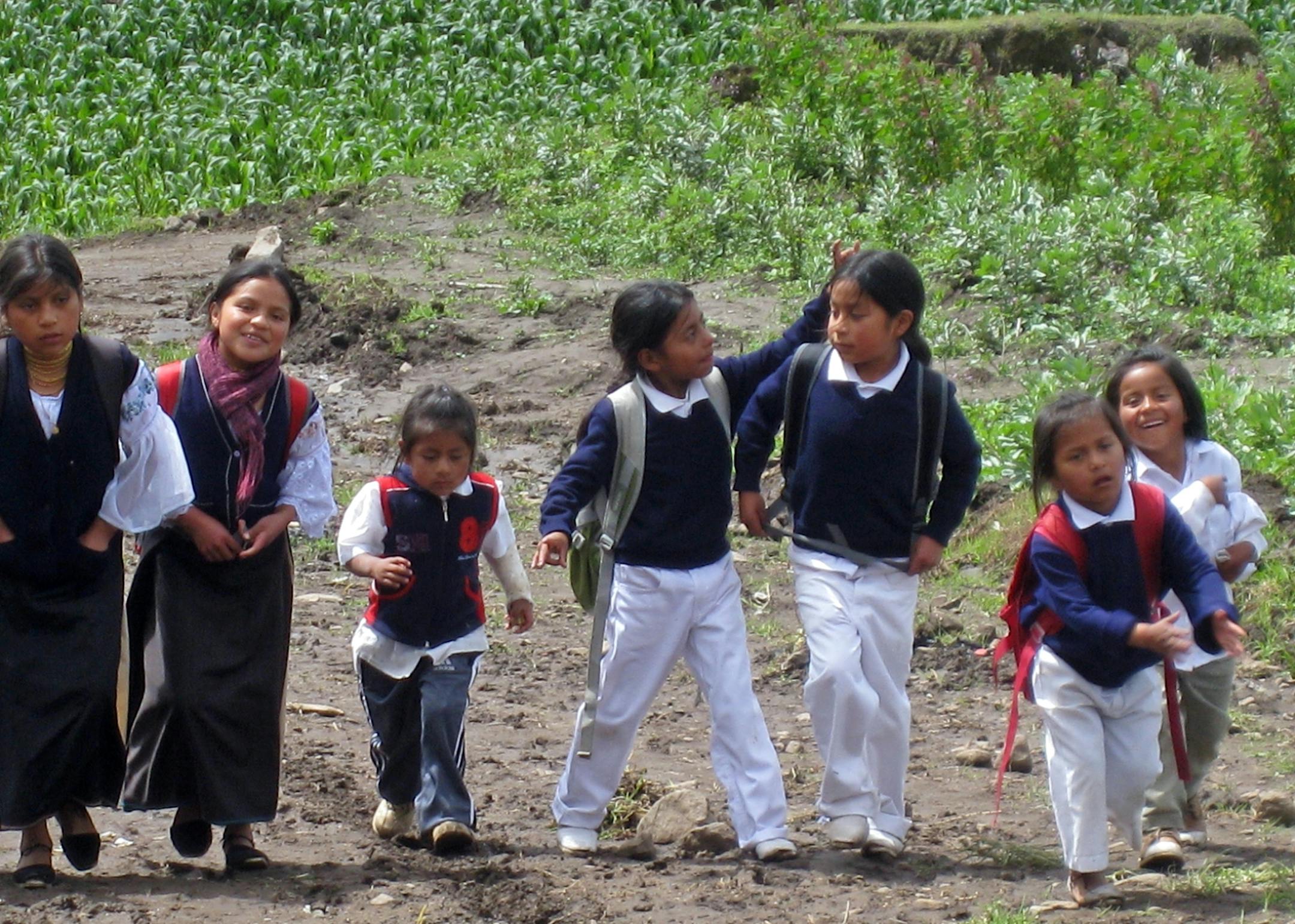
The boys near Otavalo are known for wearing long ponytails and crisp white pants as they join girls on their way home from school among the cornfields in the Ecuadoran Highlands.
The boys near Otavalo are known for wearing long ponytails and crisp white pants as they join girls on their way home from school among the cornfields in the Ecuadoran Highlands. (Dml -/The Minnesota Star Tribune)
A rainbow of drying laundry punctuated the cloudy hillsides nears Angochagua in the Ecuadoran Highlands.
A rainbow of drying laundry punctuated the cloudy hillsides nears Angochagua in the Ecuadoran Highlands. (Dml -/The Minnesota Star Tribune)
Fernando Polanco Plaza has created a non-profit foundation to protect Hacienda Zuleta, the former home of his grandfather, Ecuadoran President Galo Plaza Lasso, whose portrait hangs on the right.
Fernando Polanco Plaza has created a non-profit foundation to protect Hacienda Zuleta, the former home of his grandfather, Ecuadoran President Galo Plaza Lasso, whose portrait hangs on the right. (Dml -/The Minnesota Star Tribune)
about the writer

about the writer

Curt Brown

Columnist

Curt Brown is a former reporter for the Minnesota Star Tribune who writes regularly about Minnesota history.

See Moreicon

More from Minnesota Star Tribune

See More
card image
Provided/Sahan Journal

Family members and a lawyer say they have been blocked from access to the bedside of Bonfilia Sanchez Dominguez, while her husband was detained and shipped to Texas within 24 hours.

card image