Luck is a curious concept when you are adopted from another country. Strangers see your (usually) dark skin contrasted with your parents' (usually) white complexions and assume the cosmic roulette wheel spun you to great fortune by saving you from a life on the streets in a lawless backwater.
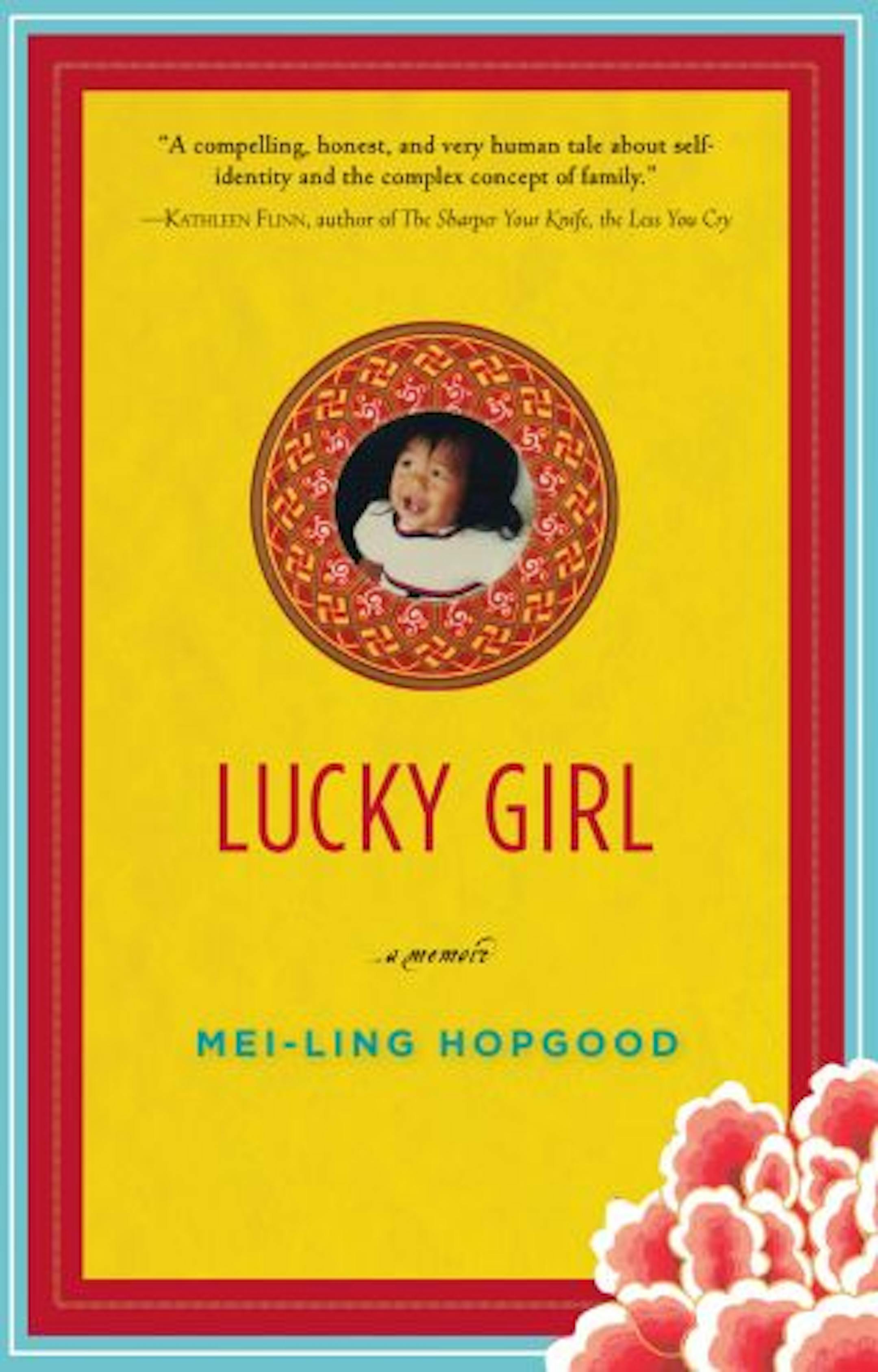
Journalist Mei-Ling Hopgood's memoir, "Lucky Girl," tackles these assumptions. Born in Taiwan, Hopgood was "poured into the arms of Rollie and Chris Hopgood on an April afternoon in 1974." Raised in suburban Detroit with two younger brothers from South Korea, her life unfolded under the security of bedtime stories, recitals and family vacations. "Instead of enduring poverty and prejudice against girls and women, I had been raised to believe I could do anything that I wanted," she writes. "I had a close family, a rich life, and the endless opportunities of the great United States of America."
It's a comforting sentiment, but as Hopgood so movingly discovers, only partly true. On a January night in 1997, 23-year-old Hopgood was preparing for a party when the nun who had facilitated her adoption called. She had information about Hopgood's birth family: Her mother and father were still married and had six daughters and an adopted son. Another daughter had been placed for adoption. They begged her to visit.
The nun had eased open a door and now a passionate and bossy family rushed in, swamping Hopgood with phone calls, e-mails and faxes in a language she couldn't understand.
If the appearance of blood relatives unnerved Hopgood's American parents, the reader never experiences a tango of divided loyalties. "Ultimately, I think people tend to forget that on a basic level our relationships with our adopted parents are normal parent-child relationships," Hopgood writes. "The only difference is how we became parent and child. We can get along great and we can hate each other. We love and fight. We can long for another fate or ... never want anything else."
That other fate snaps into focus when Hopgood arrives at Chiang-kai Shek International Airport. Her book tenderly explores what follows such reunions. Like some adoptees who travel to the countries of their birth, Hopgood was surprised to find that her relatives weren't peasants toiling away for subsistence.
As Hopgood learns that she was sent abroad in order to clear the way for a pregnancy that could, her father hoped, produce a son, her choice of title starts to taste bittersweet. There are secrets and an ocean's worth of anger. But Hopgood turns the narrative crank one more time to play out the complex tenderness that springs from expanding your definition of what constitutes a family. Those realizations are what led Hopgood to decide that, in the end, she's a very lucky girl.
Elizabeth Larsen is an adoptive mother whose writing on the topic has appeared in the Los Angeles Times, Mother Jones and Adoptive Families.