

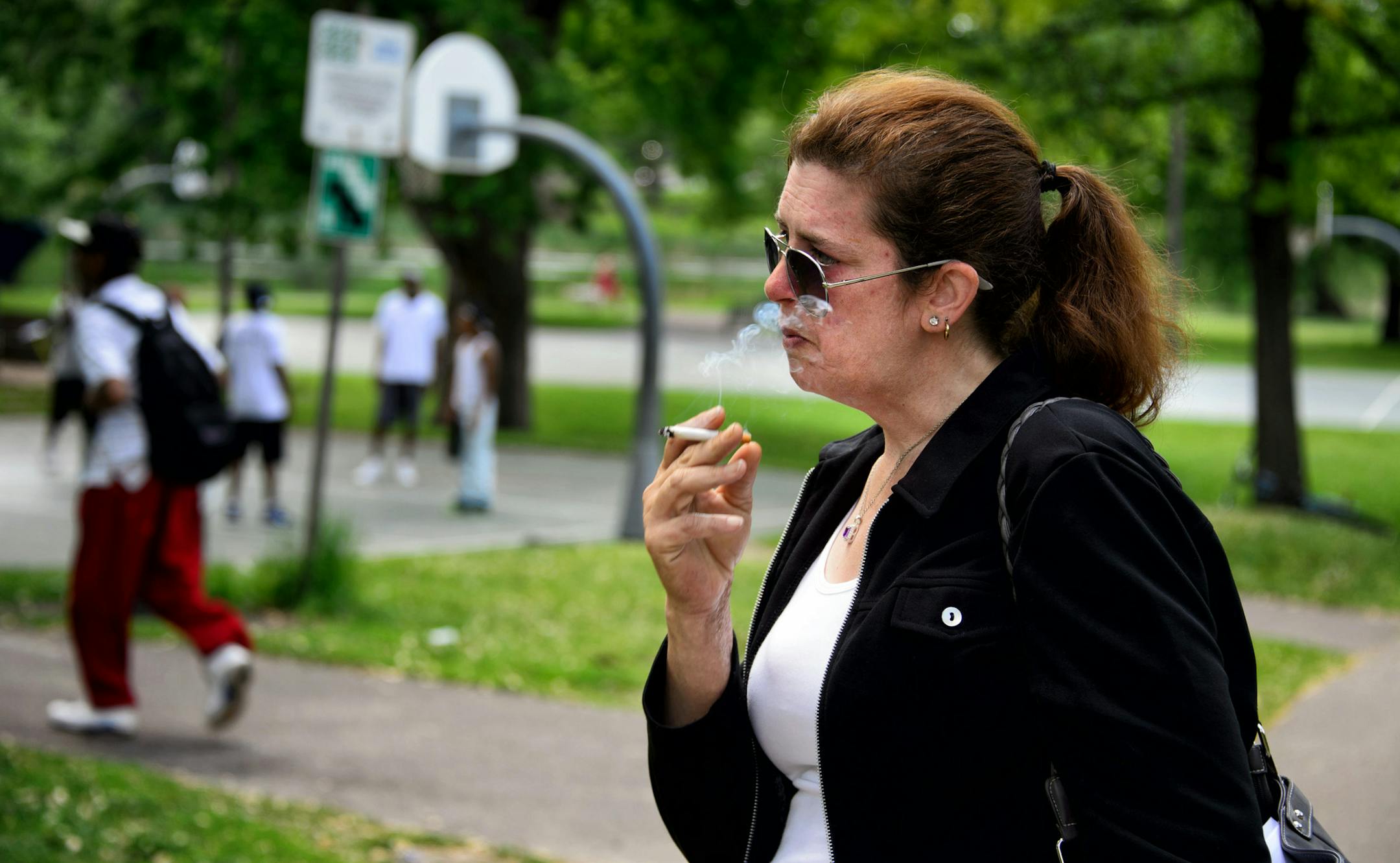
After 38 years of smoking, Jean Laging has just reached six months without a cigarette. A senior executive assistant from Minneapolis, Laging has tried to quit four times and, until recently, was one of about 19 percent of Minnesota adults who still smoke.
"I'm a cig-aholic," she confessed recently. "I would love to take a drag off a cigarette right now."
Cigarette use in Minnesota and nationally has plummeted in the past two decades, but a recent study shows there are pockets around the state where smoking rates remain stubbornly high as smokers struggle with the same challenges Laging has faced.
Factors such as income, education and addiction levels appear to be key influences. Across Minnesota, for example, counties with lower incomes saw smoking rates decline more slowly than areas with higher incomes, according to a recent national study by the Institute for Health Metrics and Evaluation.
Mahnomen and Pine counties, where median incomes hover around $40,000, recorded adult smoking rates of 28 percent and 26 percent. By contrast, only about 15 percent of adults smoked in Carver and Scott counties, where the median income is above $80,000.
The county data from the institute differs slightly from that of the Minnesota Adult Tobacco Survey, which is conducted every four years by the state Department of Health and ClearWay Minnesota. But its findings underscore the challenges that health officials face in the long battle to reduce tobacco use.
More than 480,000 Americans die from complications related to cigarette smoking each year — one in five American deaths — and more than 16 million Americans suffer from a smoking-related disease, according to the U.S. Centers for Disease Control and Prevention.
Minnesota's smoking rates have been below the national average for more than a decade, according to the last Minnesota survey. But without drilling down into county-level data, big metro areas can dominate the research, said Dr. Ali Mokdad, a University of Washington professor and researcher on the study.


