

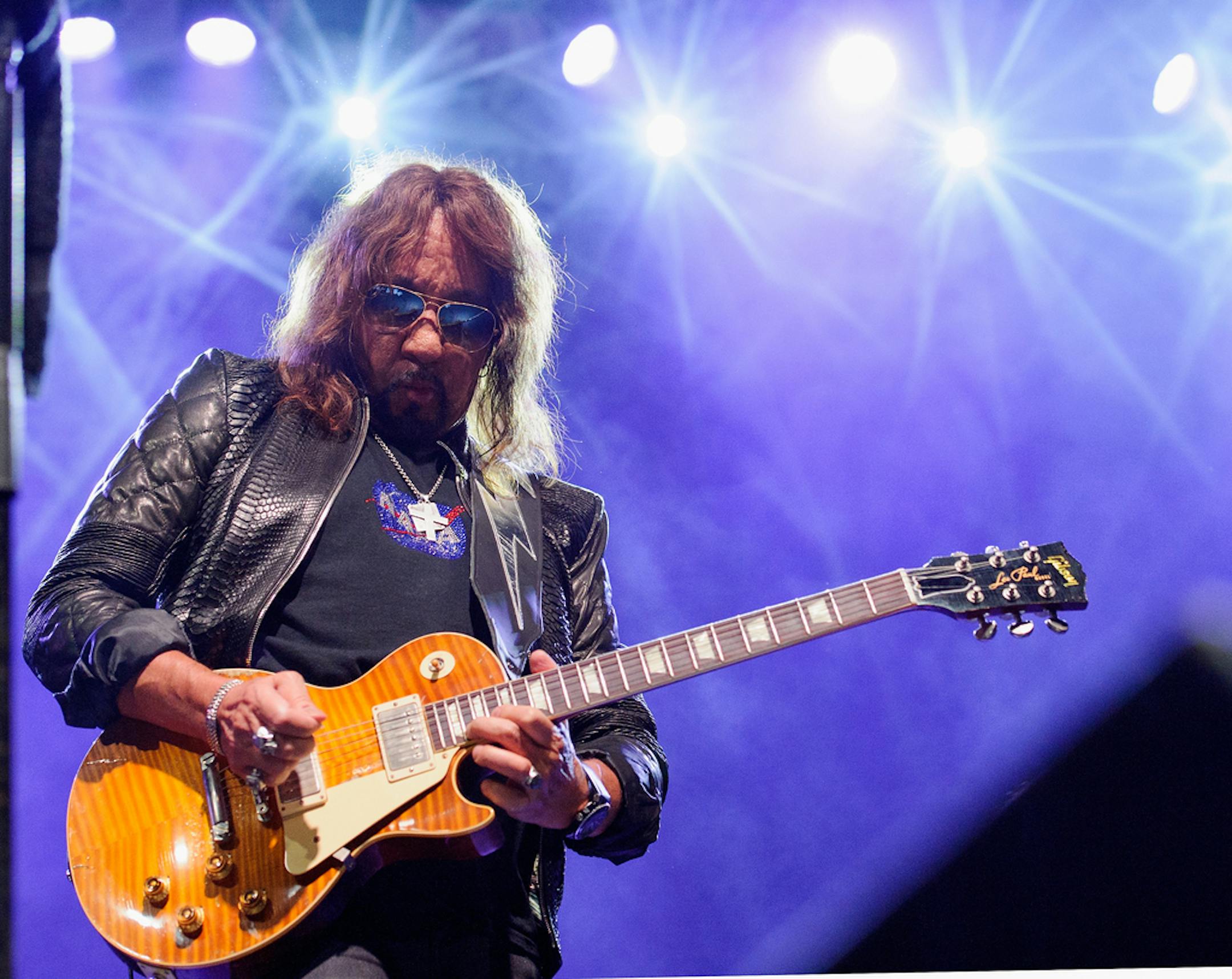
Ace Frehley, the galvanizing guitarist who helped make Kiss one of the biggest rock groups of the 1970s and ’80s, died Oct. 16 in Morristown, New Jersey. He was 74.
His family announced the death in a statement, noting that he had recently fallen at home. Frehley announced earlier this month that he was canceling the rest of his 2025 tour dates because of “ongoing medical issues.”
An inspiration for guitarists from Tom Morello of Rage Against the Machine to Slash of Guns N’ Roses, Frehley added a dose of blues riffage to Kiss’s theatrical, hard-charging style of rock. He leaned into the band’s pyrotechnics as well, launching smoke bombs and lasers from his Gibson Les Paul guitars. And he occasionally sang.
“A guitar player so incredible, his ax billowed smoke and shot rockets,” Morello said as he introduced Kiss at the Rock and Roll Hall of Fame ceremony in 2014. Frehley, he said, “blazed unforgettable, timeless licks across their greatest records.”
Frehley knew how to explode into a song, grabbing attention with his wailing solos. His squealed notes incorporated hints of Jimmy Page’s early playing and charted a path forward for the grandiose hair metal guitarists who were still to come.
“I don’t want to say playing guitar was easy, because that implies a lack of effort,” he wrote in his 2011 memoir, “No Regrets.” “But there’s no question that it came easier to me than it did toothers.” He added that before joining Kiss,“I almost felt guilty when I got paid for playing gigs. It didn’t feel like work. I was having too much fun.”
Paul Daniel Frehley was born in the Bronx on April 27, 1951. His father was an electrical engineer, and his mother was a homemaker. His parents played music around their Bedford Park home, and both were proficient at piano. A self-taught guitarist, Frehley started playing when his parents gave him the instrument for Christmas in 1964.
“For me, the best way to learn how to play guitar is not to take lessons, it’s to listen to your favorite six, seven, eight, 10 guitar players and learn all their solos note for note,” he once told an interviewer. “And once you can do that, then you’ve got a good shot.”
