

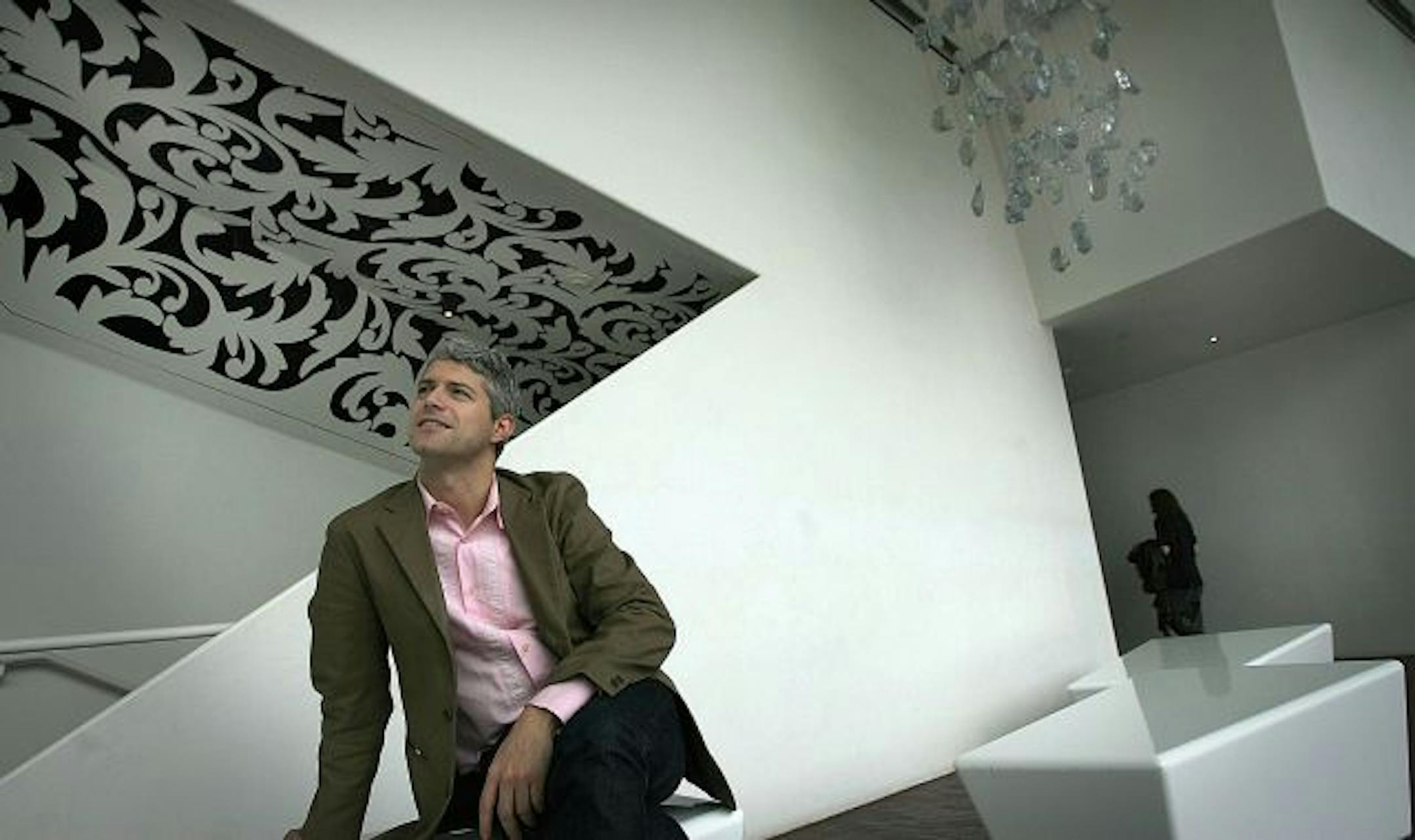
Peter Eleey arrived at Walker Art Center in 2007 from Creative Time in New York, where he was a curator and producer of contemporary exhibitions, commissions and public projects. His first major show at the Walker opens this weekend, with about 90 conceptual works by 53 international artists spanning the past 40 years. In a wide-ranging conversation, Eleey talked about the exhibit and some of the strange things visitors will encounter, including occasional thunder, an electromagnetic field, a bronze skull of a living artist, folk music in the garage, wind chimes in the Sculpture Garden, a hole drilled in a gallery wall, time capsules, a spray-painted sky and 100 buried lemons.
Q Why did you call the show "The Quick and the Dead"?
A Lots of different reasons. Originally, it was a phrase in the King James Bible referring to the end of time when Jesus would sit in judgment. I liked the way it continues to appear in modern life. Beckett used it in writing about Marcel Proust's references to memory and time. Buckminster Fuller used it to differentiate between modern physics, in which matter is composed of constantly moving atoms, and the old Newtonian physics in which objects are static. That's a difficult concept to accept because when you sit on a bench like this, the thing beneath you is obviously solid, or "dead," if you will. But modern physics tells us that it's "quick" and made up of jiggling atoms. Conceptual art is about paradoxes like that. It often involves things you can think about, but can't necessarily see.
Q Can you give some examples from the show?
A Sure. In 1968, Robert Barry made a little metal box containing a 9-volt battery and a mechanism that generates an electromagnetic energy field. You switch it on and it does this, but we don't know how big the field is or how far it extends. Later he wanted to make a work that expands forever, which gas does. So he bought a liter of argon gas, released it in the desert and took a photo of the empty beaker.
Q So what is conceptual art?
A It's a term that has come to stand in for modern art that you don't understand, but that's misleading. Conceptual art tries to allow the world to reveal its own magic. It's a dematerialized and noncommercial type of art that emerged in the 1960s and '70s, when there was a lot of social turmoil, war protests, generational divide and angst about nuclear confrontations. There's a range of classic conceptual art dealing with language, political content and the way we perceive it. I've chosen mostly things that deal with epistemological problems of what we know and what we can't know, things that extend beyond the range of our experience.
Q How are notions of time realized in the show?


