

Opinion editor’s note: Star Tribune Opinion publishes a mix of national and local commentaries online and in print each day. To contribute, click here.
•••
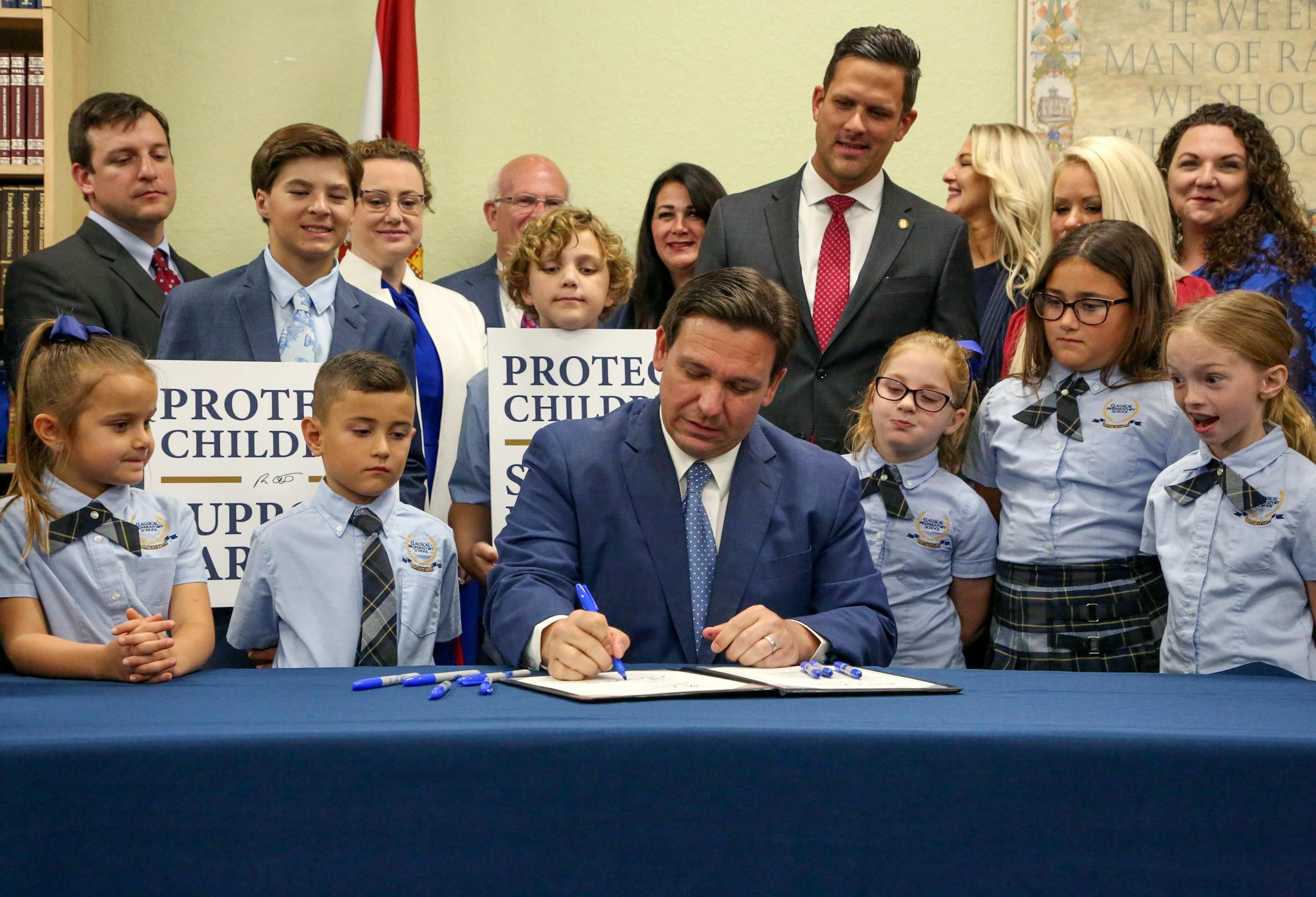
In a federal court settlement this month, Florida Gov. Ron DeSantis’ signature “don’t say gay” law — which cost the state millions in business and led to the governor attempting to subjugate a noncompliant Disney — was dealt a significant blow. This comes as the legislature abandoned more than 20 other anti-LGBTQ bills in a sign of a changing tide.
DeSantis’ sleight of hand here was to represent the law as a very narrow targeting of certain kinds of specific speech at particular ages — the boogeyman of a pre-K teacher telling a 3-year-old that maybe they were a different gender, which is much easier to argue is improper.
In practice, that was a pretextual rationale for a much broader crackdown on speech; its vagueness was not a bug but a feature, allowing the background fear of running afoul of the law to push schools and teachers to take wide-ranging measures like hollowing out school libraries altogether.
This has become a facet of GOP policymaking on issues from speech and schools to voting to abortion — make the boundaries so hazy that compliance becomes untenable and people have no choice but to overcorrect, massively expanding the scope of what are supposed to be targeted restrictions.
The settlement does not completely overturn the law, but it takes direct aim at this fuzziness, ordering the state to clarify the exact delimitations of its restriction and ensuring that, at minimum, it cannot be used to ax references to LGBTQ themes or people altogether.
Perhaps this will serve as a model to other courts faced with similarly imprecise language. If laws attempting to restrict speech and rights can’t be repealed altogether, they can at the very least be forced to explicitly lay out their boundaries.


