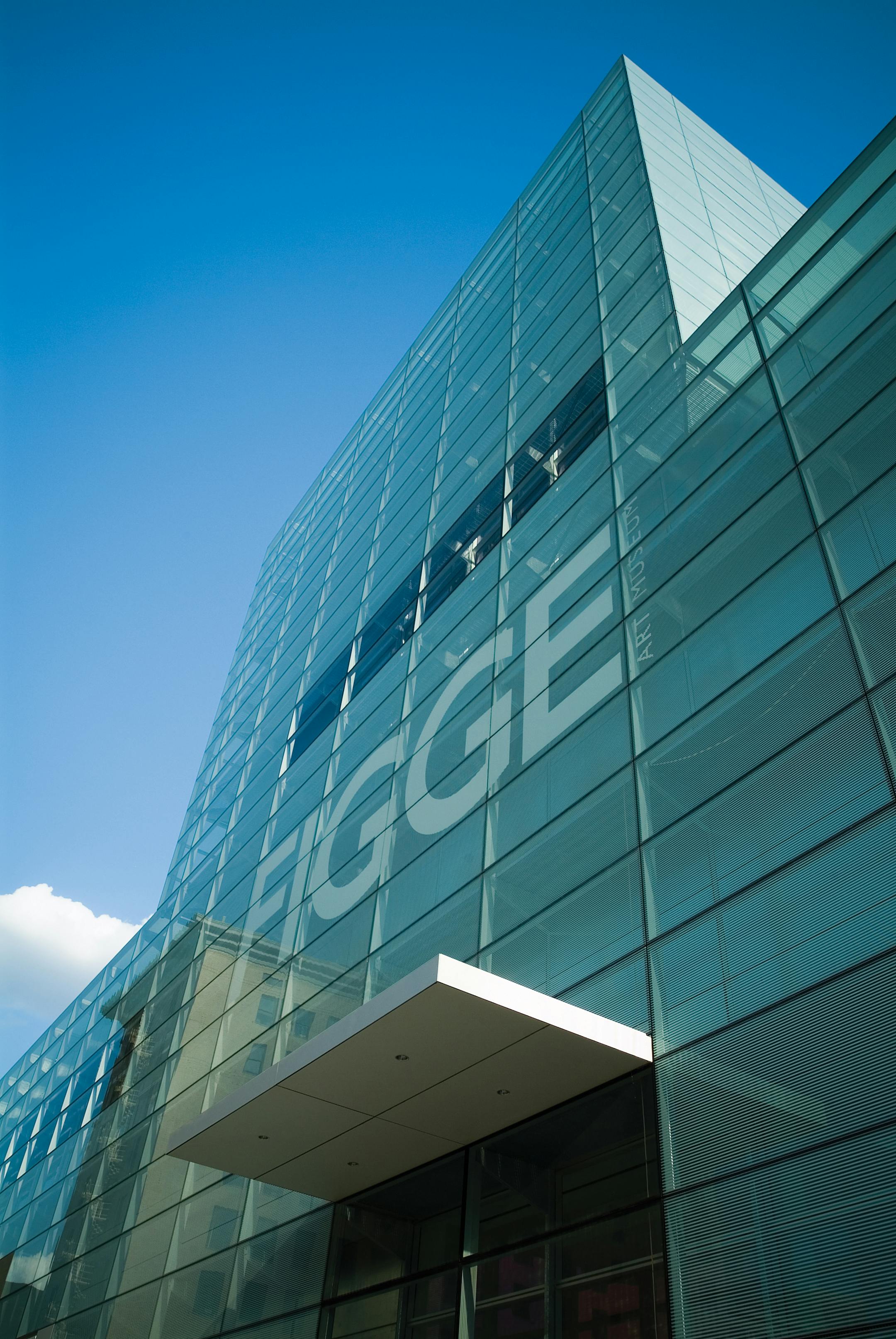
On the banks of the Mississippi, in the sleepy town of Davenport, Iowa, a giant glowing cube sits on the waterfront.
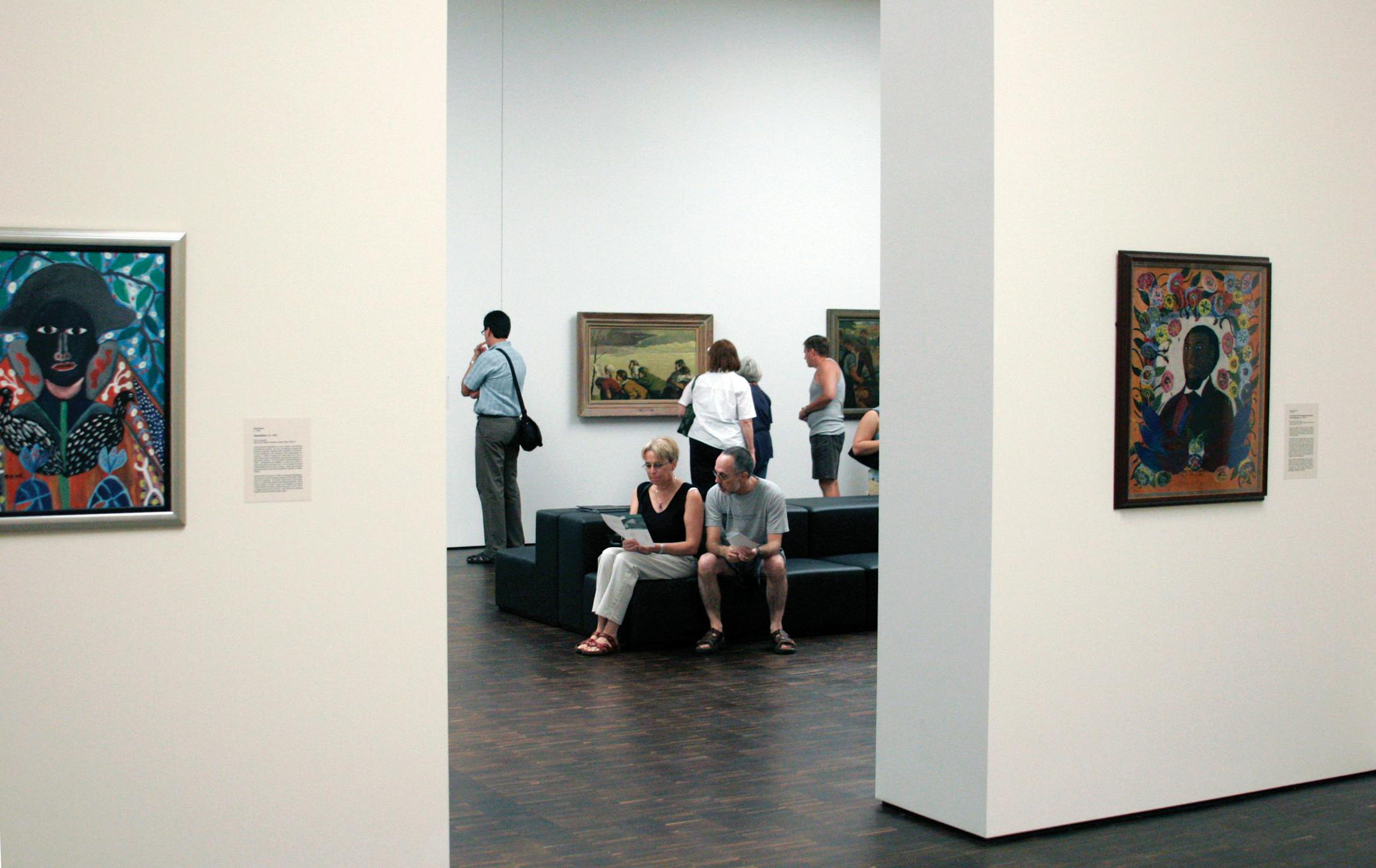
It is a piece of world-class architecture, designed by the renowned British architect David Chipperfield, known for his spare, minimalist designs. On its side is the word Figge, and inside is the town's oddly fabulous collection of 3,500 paintings, sculptures and works on paper, including Grant Wood's only self-portrait and some of the world's best collections of Haitian and Mexican art.
As I drove down the river to it, past the ornate Victorian homes built during the town's heyday, I wondered how the Figge Art Museum could fit into this typical, sturdy Midwestern downtown.
The building caught me by surprise. At first, it seemed to be in the wrong city, but the longer I looked at it, the more it eased into place: It was the perfect size for its space. Its glass sides were tempered, so it didn't feel hard and impersonal like the glass towers of the 1960s and 1970s.
Instead of defying the river, the Figge uses it. It reflects light the same way the river does, making it feel like a mirror of the water.
The opening of the Figge in 2005 was a major event for the town, and helped stake Davenport's claim as a national destination. Not only was the art worth seeing, but the building itself was perhaps an even bigger draw.
Museums are one of the most sought-after commissions by architects, and when the Figge was announced (named for the V.O. and Elizabeth Kahl Figge Foundation, whose $13.25 million donation helped fund the building), more than 50 firms from around the world wanted to build it. In the end, David Chipperfield won out. The museum was his first civic work in the United States.
"One of the reasons we wanted David," says curator Michelle Robinson, "is because we knew he would do something completely different. We wanted a totally new approach. We didn't want him borrowing from other museums."