

While the oil boom in the western part of the state is getting most of the attention these days, North Dakota's cultural and economic roots are planted firmly in agriculture. Millions of acres are covered by crops or livestock, and it was the prospect of working the land that attracted European settlers in the 1800s.
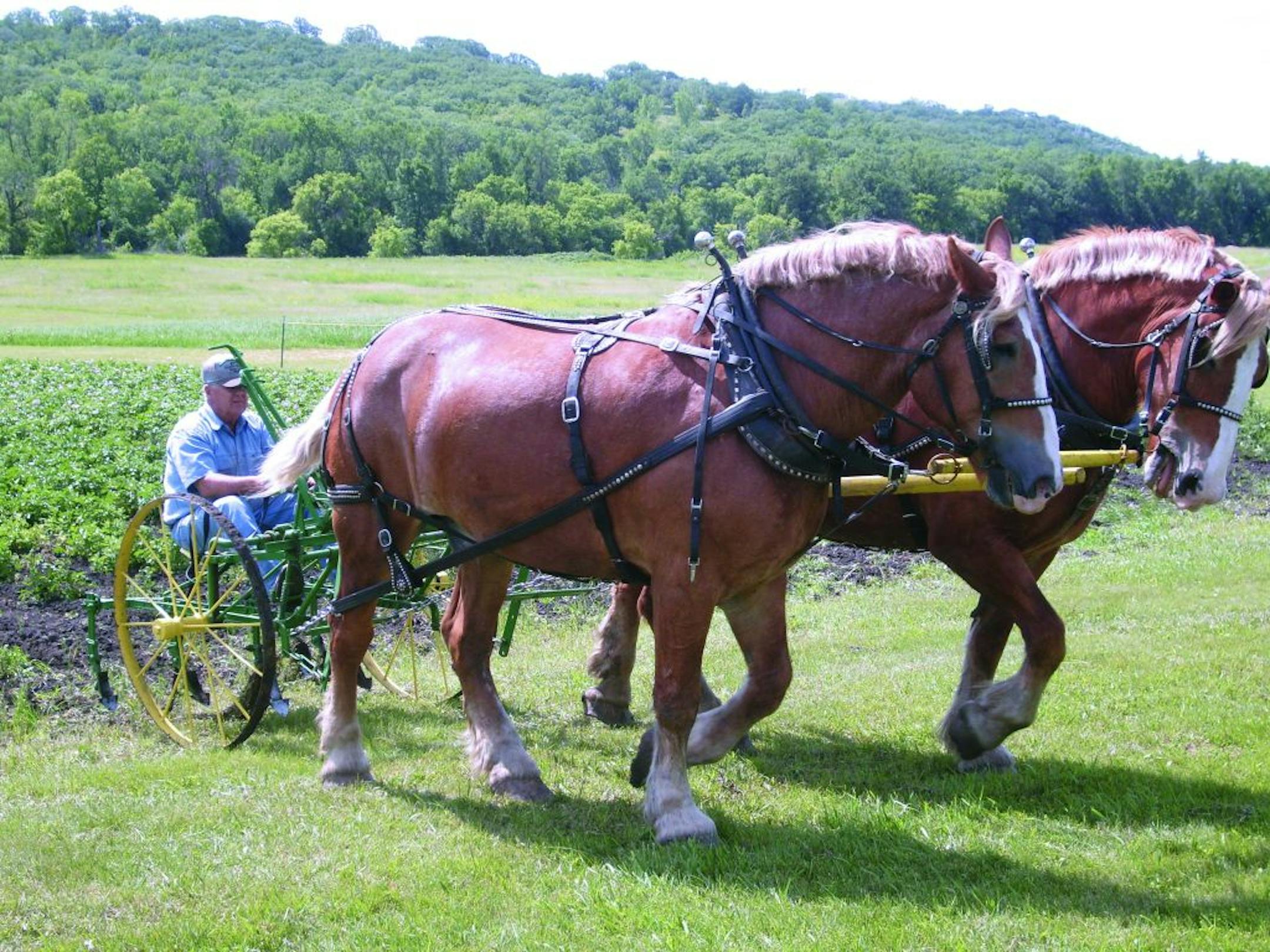
Many of today's farms are major operations that rely on expensive machinery. In the early 1900s, though, farmers relied on a different kind of horsepower -- the original kind, with four legs, a mane and a tail.
You can get a taste of what old-time farming was like at Sodbuster Days, a weekend tribute to turn-of-the-century pioneer life in Fort Ransom State Park in southeastern North Dakota.
GETTING THERE
The cornstalks, with their golden crowns, seemed to bow as a warm prairie wind blew through them. Acres of shimmering green soybean leaves and stout, blond wheat stretched out on either side of the lonely two-lane road. Only telephone poles, distant farm buildings and rolled hay bales provided any vertical contrast to the rambling farm fields that seemed to melt into the horizon.
Yes, this is the North Dakota most people picture.
But north of Hwy. 27, past the Fort Ransom historic marker, the landscape changes. The road descends into a valley where lush green foothills, covered in leafy trees, provide a topography unlike the miles and miles of surrounding farmland. The winding, muddy Sheyenne River snakes through the area.
At the bottom of the hill is Fort Ransom, a hamlet tucked into the Sheyenne River Valley, about 80 miles southwest of Fargo. With a population of 77, the town has a small lodge, a museum, a few shops, a central park with playground and, of course, a bar. Once you turn the corner of the main strip and pull out of the town, Fort Ransom State Park lies a couple of miles down the road. Off in the distance is Bear's Den Mountain Ski Resort and a rodeo grounds. Look up to the right and check out the towering statue of a Viking atop a hill. Upon entering the state park, past the campgrounds, picnic tables and play areas, lies the Sunne Farm.
THE EXPERIENCE
The property has several buildings and is sliced up into different areas, each featuring a different aspect of old-time farm life. During Sodbuster Days, there are nonstop demonstrations, from cooking to plowing to blacksmithing. Clanks, snorts, squeaks and chatter filled the air. On this particularly breezy day, the aroma was wood fire mixed with earth, hay and, occasionally, manure (there were horses all over, after all).


