

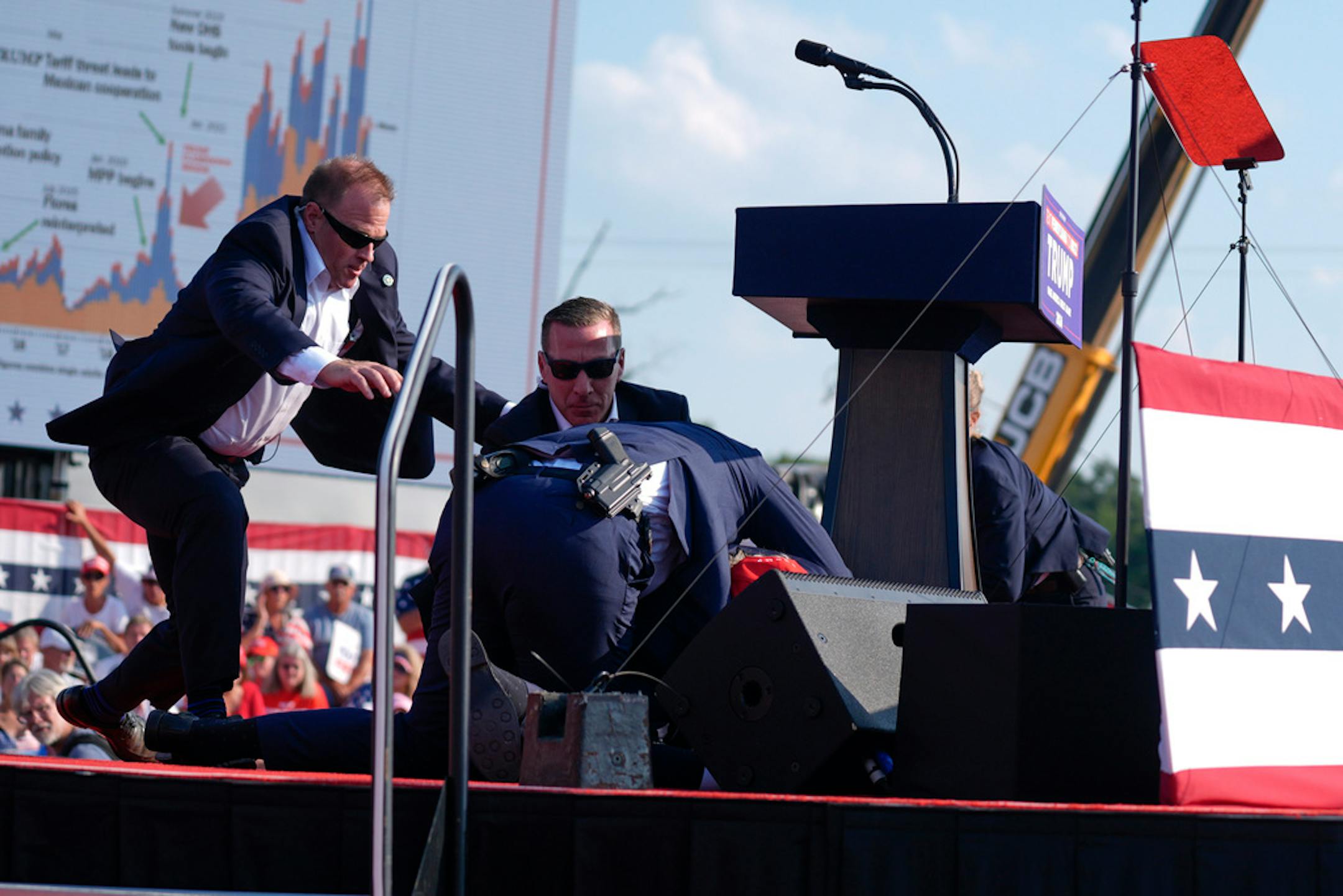
WASHINGTON — The acting director of the Secret Service was incensed at what had happened that July evening. ‘’What I saw made me ashamed,’’ Ronald Rowe Jr. said. ‘’I cannot defend why that roof was not better secured.’’
The unguarded roof, easily within shooting distance of the rally stage, is just one of the myriad questions behind the worst Secret Service security failure in decades. The more that investigators unpack from that day, the more missed opportunities that could have prevented the attack are revealed.
As the United States grapples with a second attempt on Donald Trump's life, in Florida, there remains a reckoning to be done from the Pennsylvania shooting on July 13 that killed one man and wounded three — the ex-president among them.
The Secret Service is a well-funded, historically elite force with a mission to keep presidents and other higher-ups safe — whether they're out for a bicycle ride, attending a world summit, visiting a war zone or campaigning.
But at the farm show grounds, a young nursing home aide with a rifle he borrowed from his dad outmaneuvered authorities for more than 90 minutes before firing the shots that came millimeters from killing Trump. More than two months later, everyone still wants to know:
—When rallygoers reported a man skittering on the squat rooftop of a nearby building, why didn't anyone in law enforcement move faster?
—Why did the Secret Service exclude that building from its security perimeter, leaving it to local police, and why did the local force not station someone on the roof?
—Why could local law enforcement agencies not communicate in real time with Secret Service agents when they're supposed to be working together?
