

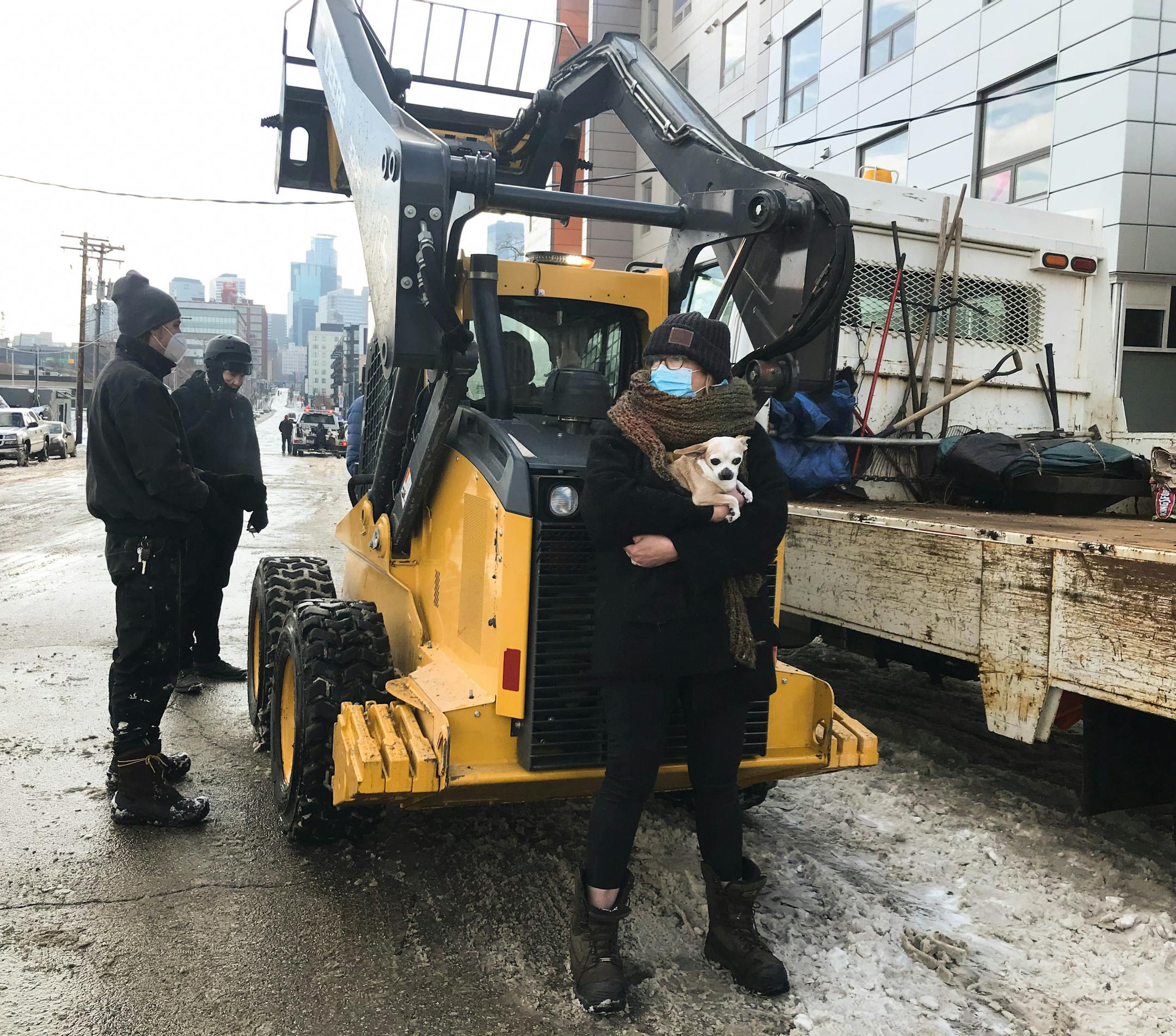
I protested the eviction of a homeless encampment the other day and wound up in a photo in the Star Tribune, clutching my chihuahua Pauly, clearly caught in an act of civil disobedience. I'm thinking about how I got here.
I don't support homeless encampments. I don't want to live outdoors. Nor do I want others to be unsheltered.
In 2019, I brought food and supplies to the Wall of Forgotten Natives. When the Drake shelter burned, I gave more. Then came COVID, the killing of George Floyd, Powderhorn, legal park encampments and the long hot summer of 2020.
At one of the encampments near my home in north Minneapolis I got to know the residents. Multiple evictions led to a very large camp being established in mid-September in the North Loop close to my office. A community took shape. When someone entered the camp, others would help set up their tent and share supplies.
One family is unsheltered as a result of a series of events. Mom applied for food assistance and the county sought child support from Dad. His driver's license was suspended for nonpayment. He was arrested for driving after suspension and his car was towed. Both Mom and Dad lost their transportation to work.
One single mother worked as a server at a popular restaurant when she was diagnosed with a vertebral tumor. Her family lost everything and is drowning in medical debt.
A union sheet metal worker, reeling from the death of his mother and despondent over his divorce, got arrested for a DWI and had his truck impounded with all his tools.
A neighbor of the camp donated material to build a tiny house and had more lined up. About 10 residents pitched in and the mood was optimistic. Tiny homes with dignity and security are the dream of nearly every encampment resident I've met. This one was built on the edge of the camp, on Minnesota Department of Transportation (MnDOT) land. It was promptly condemned, leading to its destruction.


