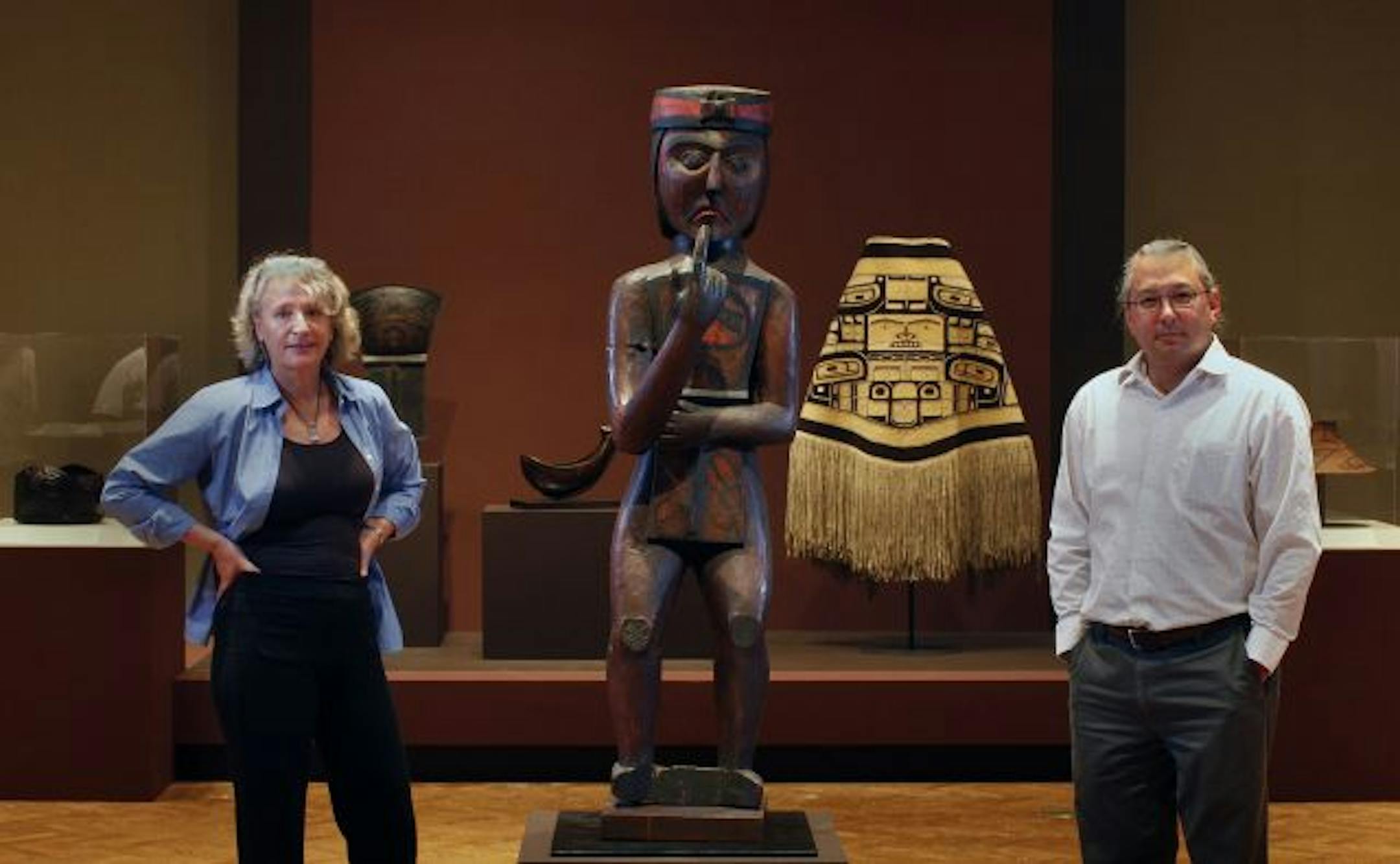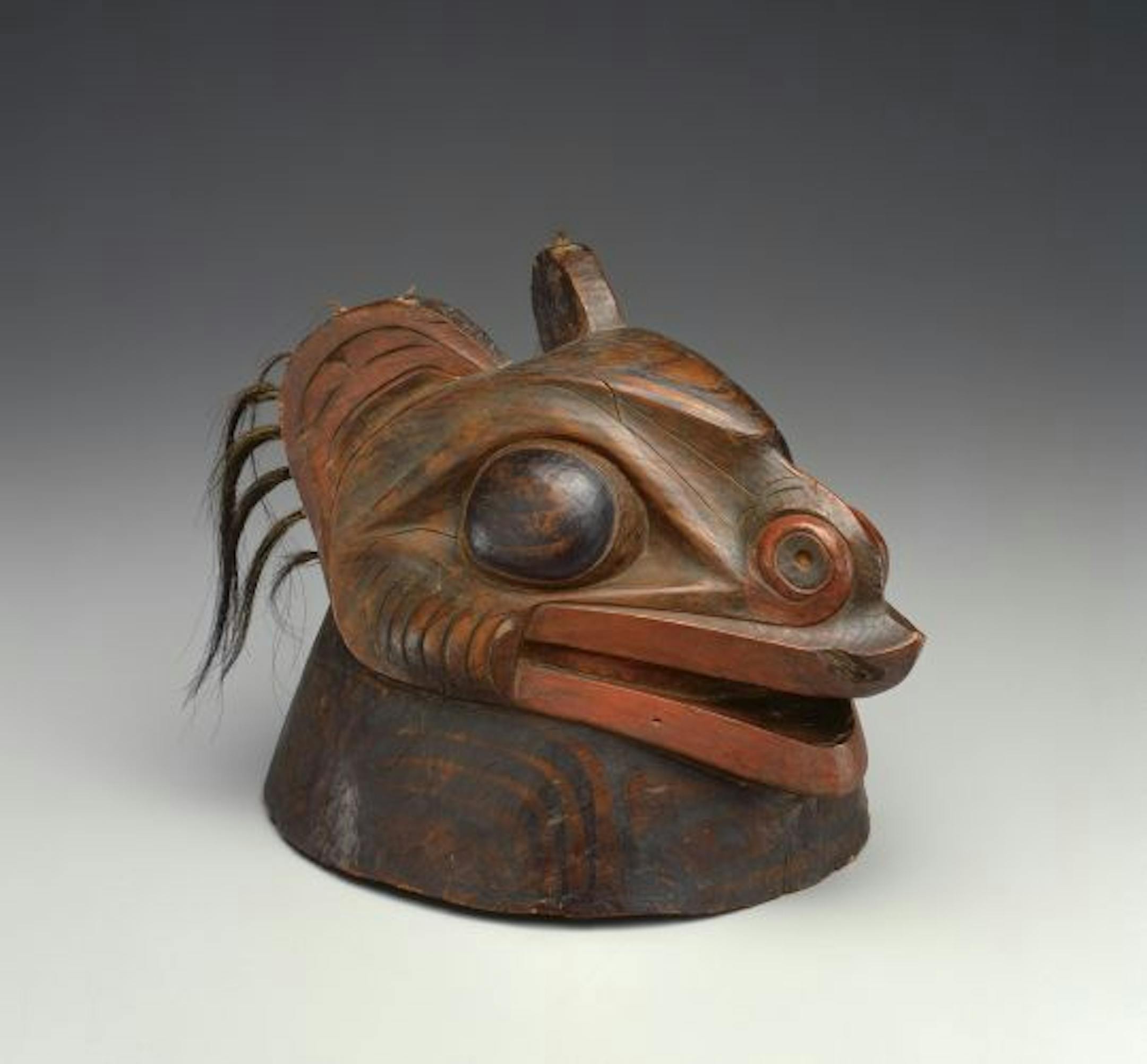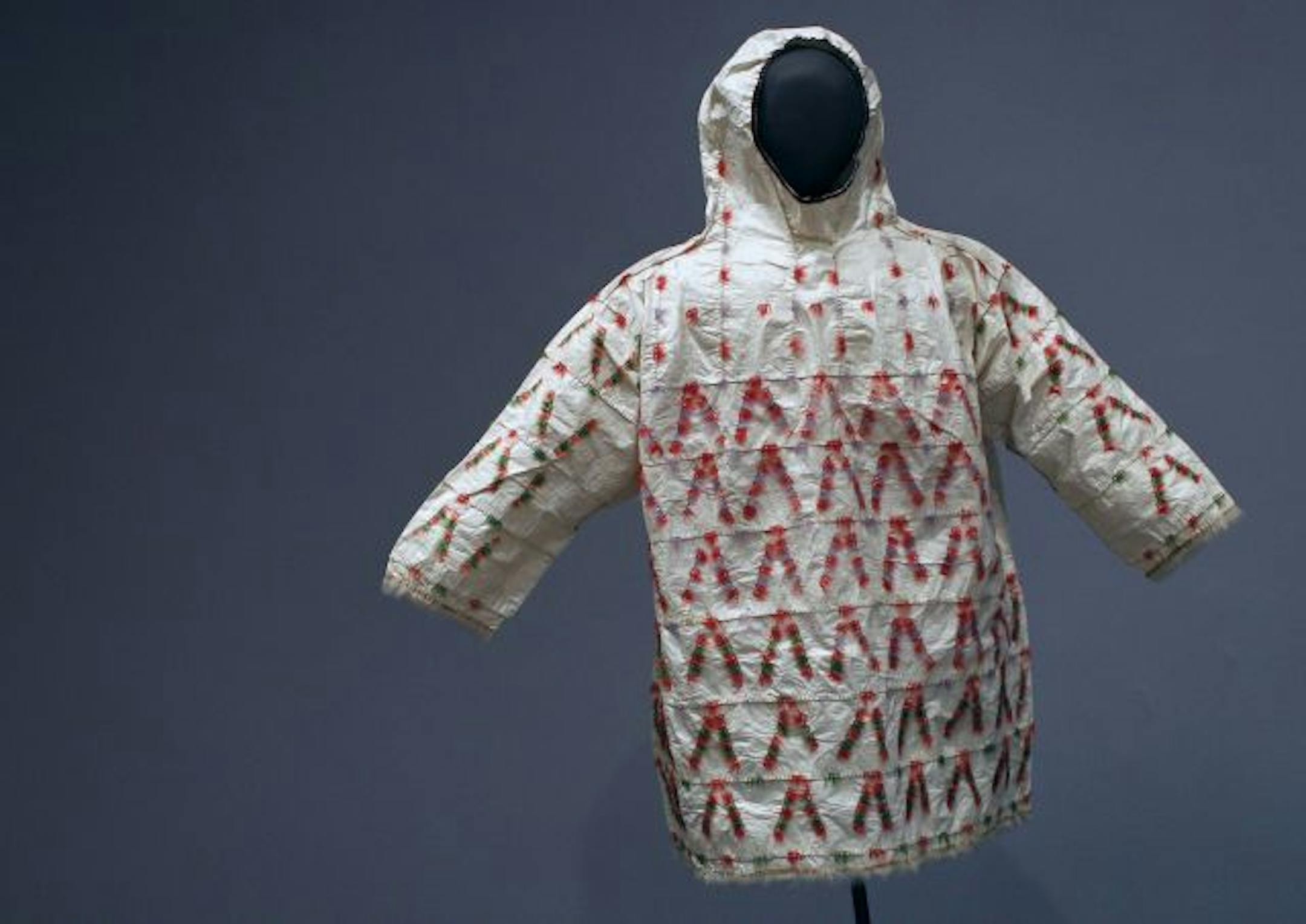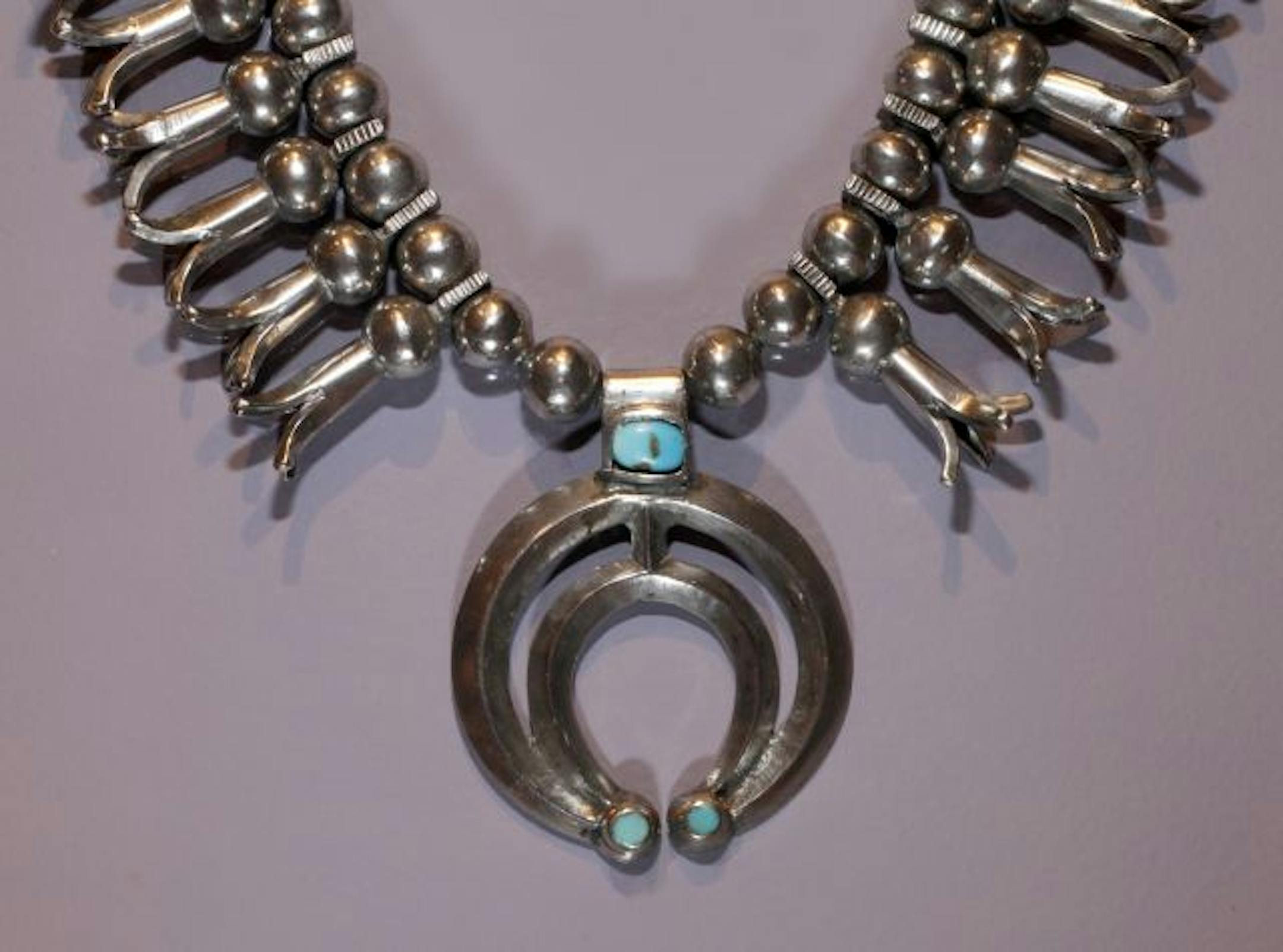
Although they are fascinating enough to be the main attraction, the three colorful tepees on the lawn of the Minneapolis Institute of Arts are just an eye-catching invitation to "Art of the Native Americans," a fabulous show opening this weekend.
The 110 rare objects include such exotica as a pair of ivory goggles carved in Alaska or Siberia before 500 A.D., a 500-year-old effigy jar from Arkansas in the shape of a human head (with multiple-pierced ears!) and a high-style Nova Scotia bonnet from the 1850s decorated with silk cockades and dyed ostrich-feather tufts.
Featuring masterpieces from dozens of Indian nations, the show was conceived as a "tour of North America," according to curator Eva Fognell of the Fenimore Art Museum in Cooperstown, N.Y., which lent the works.
The continental ambition reflects the collection's origin as the private holding of Clare and Eugene V. Thaw, a former dealer in Old Master paintings and drawings who became obsessed with Indian art after retiring to Santa Fe, N.M., in 1987.
Convinced that American Indian art was the aesthetic equivalent of Asian and European masterpieces -- but a lot less expensive -- Thaw reportedly sold a Van Gogh painting and used the money to buy top-quality Indian work. When the collection outgrew their home, the Thaws donated it to the Fenimore, which in 1995 opened a special wing to house it.
The Thaws' focus on aesthetics is unusual. Most collections of American Indian art were assembled in the 19th century, first by explorers and later by archaeologists, scholars and even tourists fascinated by the myriad Indian cultures that once dominated the American landscape.
Ethnographers studied them for their social and historic significance, rather than as objects of beauty and design. Only in recent decades have art museums begun to collect and display Indian art along side Euro-American paintings, sculpture, furniture and decorative art.
The show strikes a happy balance between history and culture, art and artifact. Spanning centuries of North American Indian culture, it is displayed geographically, starting with a gallery of Alaska objects and moving south along the coast of British Columbia into California, circling through the Southwest, crossing the Northern Plains and turning east to the Northern Woodlands of the Atlantic coast.