

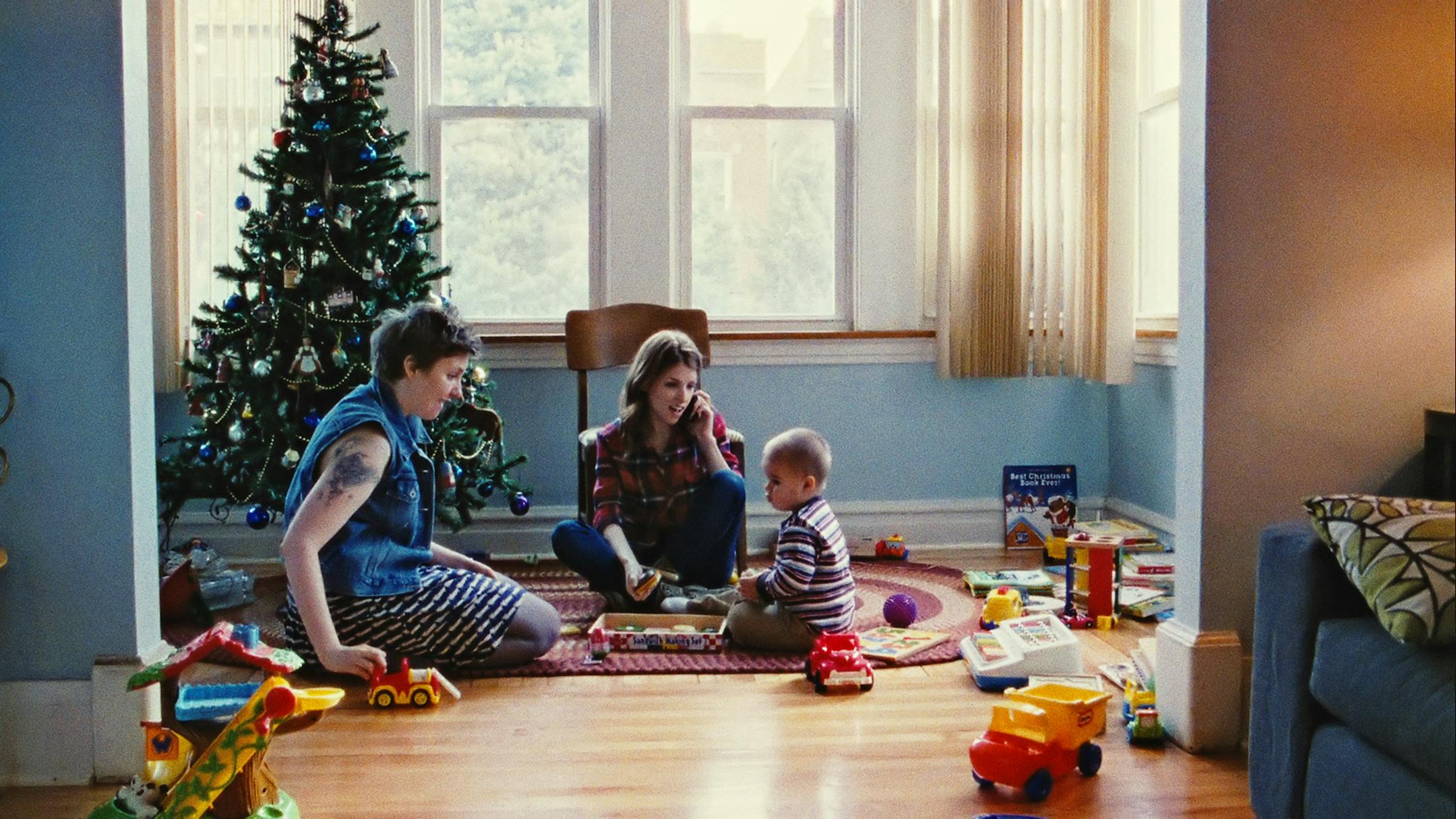
Trading on the spectacle of "Pitch Perfect" sweetie-pie Anna Kendrick as a wayward party girl swilling and smoking up a storm, the micro-budget "Happy Christmas" won't appear in a local theater until August, and not on DVD until the holidays. But actor/director Joe Swanberg's equally soused and sober follow-up to "Drinking Buddies" can be streamed starting Friday via video on demand, which the indie auteur sees as more than just a viewing convenience.
"Without VOD, we wouldn't be talking right now," said Swanberg by phone from his home in Chicago, where "Happy Christmas" is set. "VOD has allowed me the career that I want to have. It has enabled many smaller movies to gain distribution and reach a lot of people at relatively little cost. I'm all for it."
Swanberg, whose slurred digital rom-com "Kissing on the Mouth" helped establish the so-called mumblecore string of twentysomething manifestos, can be considered a wizened veteran at age 32, with 16 features under his belt. "Happy Christmas," in which Kendrick's careless Jenny blows into the Windy City to crash indefinitely on her brother's couch at Yuletide, resembles the hyper-prolific filmmaker's earliest work for being semiautobiographical and largely improvised.
"The movie is based on stuff that my wife and I were trying to figure out as new parents," said Swanberg, whose younger brother's extended visit two years ago, when Swanberg's son was a toddler, proved both welcome and not.
Kendrick, whom Swanberg had directed in "Drinking Buddies," came immediately to mind for the role of a freeloading sibling under the influence.
"Nothing about Anna led me to think she was reckless or immature," Swanberg insisted. "I just thought she was incredible in 'Drinking Buddies.' She's one of those actors who have a really good sense of what feels right in the moment — how long a scene should be, what the vital information is, the text and the subtext. She's very smart."
Swanberg's interest in improvisational filmmaking derives not from repeated screenings of movies by Mike Leigh and John Cassavetes, but from having worked with nonprofessional actors from the start of his career.
"I didn't want to write dialogue for my friends, especially not for the women I was working with," he said. "I didn't want to write female characters from a guy's point of view. I wanted them to speak for themselves.


