

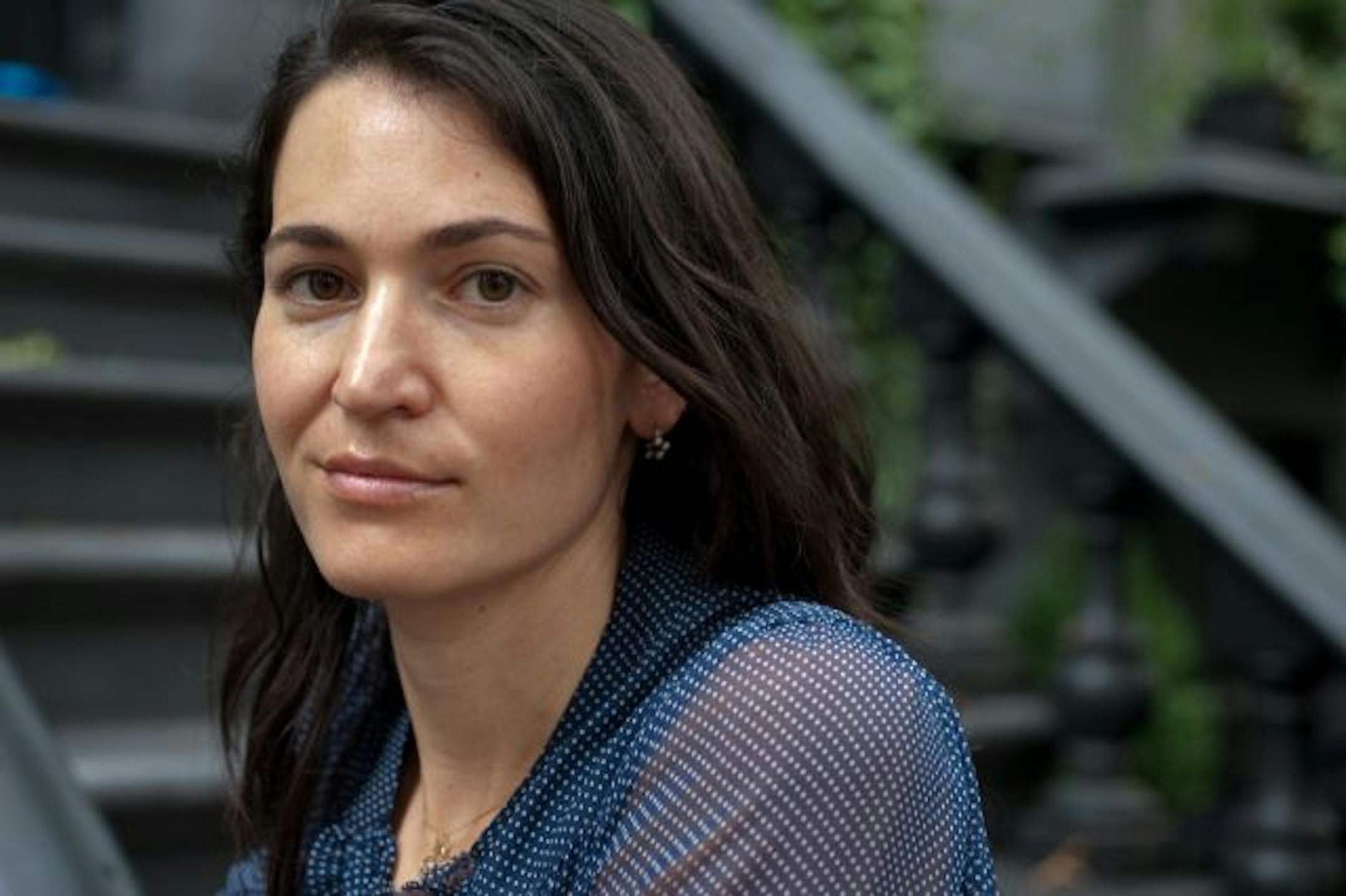
Since 2005, when Nicole Krauss published her second novel, "The History of Love," a lot has happened in the writer's life. There was the critical and commercial success of "History," which was shortlisted for a fistful of literary prizes, translated into more than 30 languages and optioned for a movie.
Krauss, just 36, this year was named one of New Yorker magazine's "20 under 40." (Another one of the 20 is her husband, writer Jonathan Safran Foer.)
And, oh, yes, she gave birth to two children. Krauss took time off from writing around the time her first child, Sasha, now 4, was born. And she and Safran Foer have a second son, Cy, now 18 months old.
Somewhere in there she found the time and energy to write another novel, the just published "Great House," which she dedicates to Sasha and Cy. Krauss will speak Oct. 28 in a Talking Volumes appearance at the Fitzgerald Theater in St. Paul.
"I wrote it while Cy napped," Krauss said recently by phone from her home in Brooklyn's Park Slope neighborhood. "The book is not obviously about parenthood," she said, "but it is about the burden of inheritance -- what do we pass down to our children, knowingly and unknowingly? That was of great worry and concern to me."
In "Great House," the lead characters -- a writer in New York, an aging father in Jerusalem, a peripatetic antiques dealer, a young American woman studying in England, an elderly British couple -- relate stories that at first seem unconnected. Only later does it become apparent that "the burden of inheritance" is represented by a mysterious old desk that passes through the hands of some of Krauss' characters over a period of about 60 years.
"I was aware of holding the characters apart for as long as possible," Krauss said. "The uncertainty lasted in a deep way much longer than in 'History of Love.' I think I ask the reader to also live for a while in that state of uncertainty, to feel what it is to make a life there. The solutions are there, but I also became very interested in what can't be known, ultimately." While a short final chapter does tie up some loose ends, others remain loose.
The characters who ended up in "Great House" are just the tip of the iceberg. "I wrote for a long time, many pages and many voices, much of which I threw away," Krauss said. "Then I settled on these voices that I couldn't shake."


