

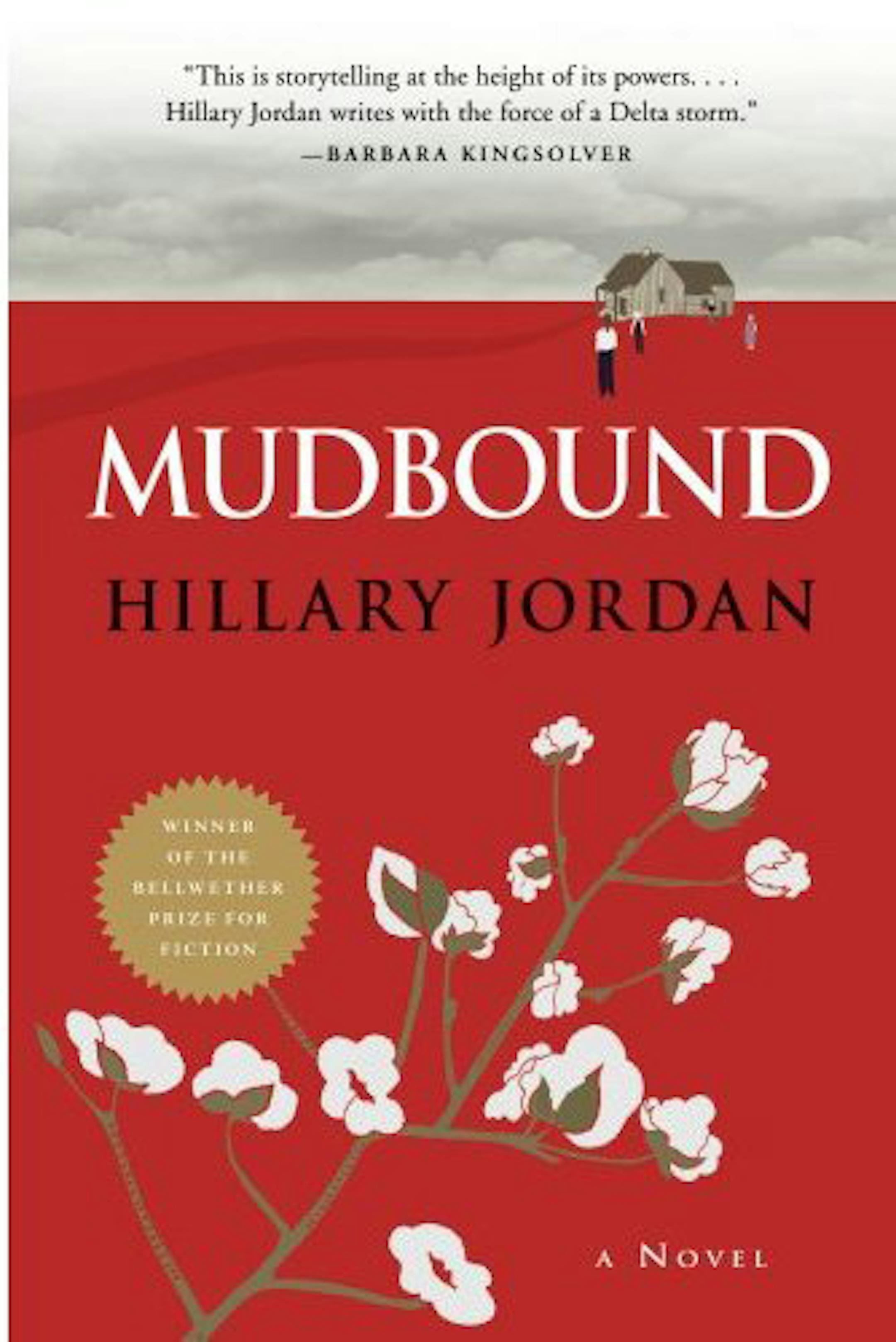
I'm a lousy reader. I probably finish a book every year-and-a-half (kind of embarrassing to admit in the Star Tribune). So what am I doing writing book review?
Well, as a radio producer, my job is to make sense of pretty lofty subjects. Since I don't always actually know very much about these subjects, I tend to admit to my ignorance up front. It's just easier not to pretend, and most people like my honesty. I was in New York City recently meeting with Workman Publishing about a possible project. Typical of me, I leaned back at one point and told publisher Peter Workman that I hadn't finished a book since late 2006. (I'd admitted that I was literature-challenged once before to a famous publisher, Harry Evans, when he was head of Random House.)
Peter, a lovely, lovely guy, left the room and came back with a copy of "Mudbound," saying simply, "Try this." (Algonquin is an imprint of Workman.)
On the plane ride home I decided to give it a try, and, by the end of the very short first chapter, I was completely hooked. I devoured a book for the first time in many years.
At the center of the novel is Laura McAllan, a college-educated "soft citybred" woman of 1940s Memphis, who has to leave her loving extended family to follow her husband Henry's dream of working the land. On the mudbound farm he's bought in the Mississippi Delta, she tries to raise her two children in a frightening new world.
Disease, a malevolent father-in-law, simmering racial and marital tensions, domestic brutalities, and inescapable rain and mud conspire to "suck the sap out of her."
But as World War II ends, two returning veterans alter her story. The "beautiful" Jamie McAllan, Henry's brother, brings his worldly charm (and his physical love) to Laura's otherwise desperate life. And Ronsel Jackson, the son of black sharecroppers who work the McAllan farm, a hero in battle but now less than a man back home in Mississippi, shows her how to carry on with dignity and truth.
Jordan says in her forward that this book took seven years to write, and you sense that as you read her work. It's so carefully considered and so full of weight, like the heavy, wet mud of the Delta. And it's extraordinarily plain writing, devoid of any fancy words, any hyperbole, any prettiness -- perfect for this tragedy set in the American South.


