

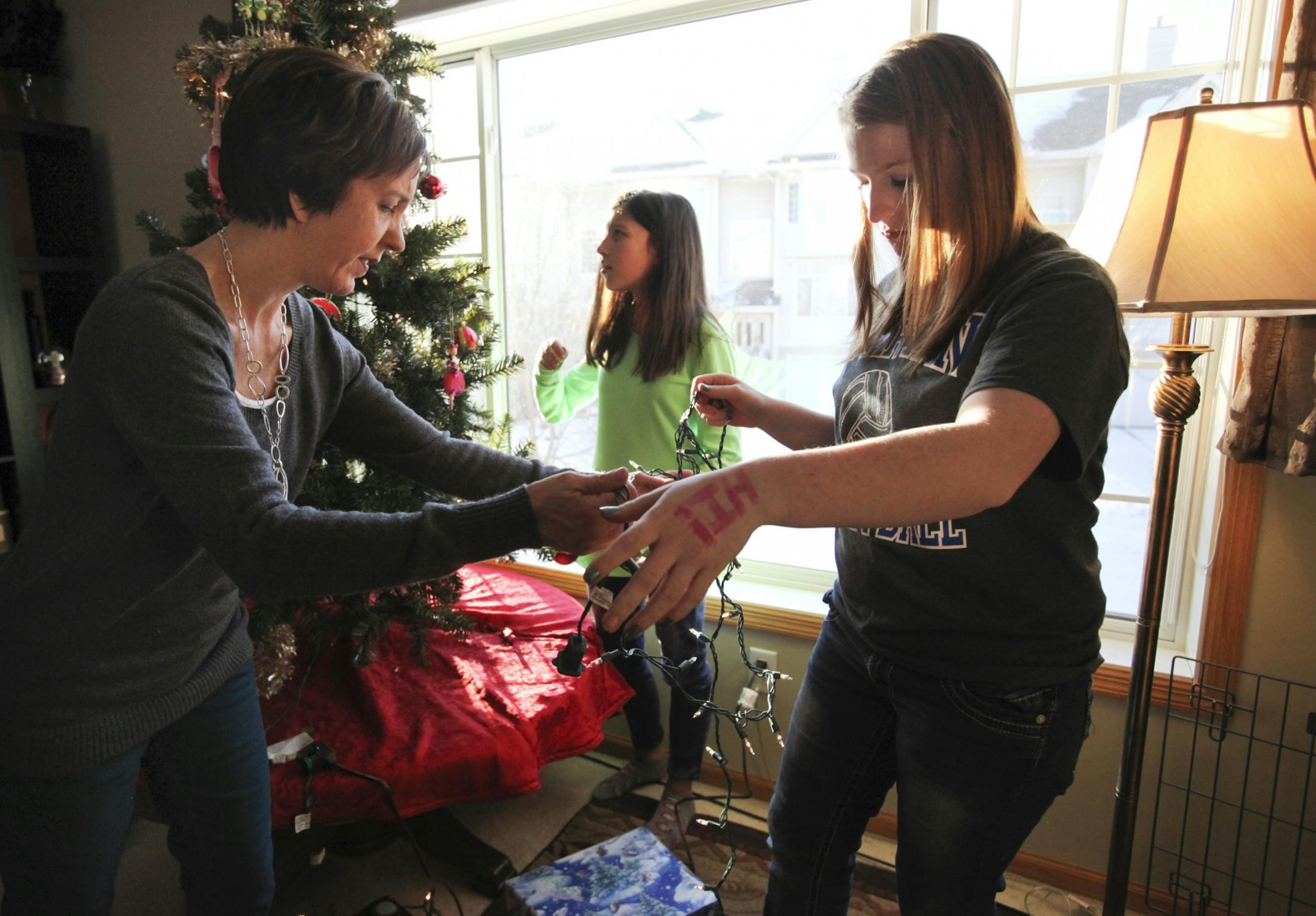
The usual holiday decorations in Tia Vasquez's home -- the tree adorned with candy canes, the cookies, the brightly wrapped presents -- belie what an unusual Christmas this will be for Vasquez, her 11-year-old daughter, Mia, and her newly adopted 15-year-old, Brianna.
For Tia, it culminates a dream of having one birth child and one adopted child, though a dream made with a husband who didn't live to share it. For Mia, it's a Christmas in which she is now the younger sister, not the only child. And for Brianna, it's a celebration she thought might never happen after being abused at age 4 and moved through a dozen foster home placements over the past decade.
"I thought I would never get adopted," she said. "I've been told at my age that it's rare."
A refocus by state and county child welfare officials on finding parents for the toughest kids to adopt -- teens, siblings and foster children with behavior problems -- has brought many blended families together in time for the holidays. The state so far this year has finalized 376 adoptions -- including Brianna's on June 26. While that is a decline in adoptions from 2011, it still reflects progress for the state, which over the past decade has cut the number of kids awaiting adoption from around 1,200 to 428.
"Any waiting children is too many," said Erin Sullivan Sutton, an assistant commissioner for the Minnesota Department of Human Services, who directs the state's foster care and adoptions.
Some of the state's progress has to do with its diversion programs, which keep families intact and children out of foster care. But state officials believe the adoption process is quicker and more aggressive as well. In two years, the state has halved the number of kids seeking adoptions who reach age 18 without parents. And over the past decade, the state has reduced the time it takes to move children from state guardianships to finalized adoptions from 24 months to 16 months.
County workers now ask older foster children about influential relatives, teachers or other adults in their past and follow up with those adults to see if they'd consider adoption. Private agencies, hired by the state, assist counties in finding matches for adoptive children, and recruiting families even if they had stopped pursuing adoption. Pre-adoption classes emphasize the needs of teens and dispel myths that they don't benefit from adoption as much.
"What kids will tell you is their sense of belonging and security is so much greater having been adopted," Sullivan Sutton said. "It's not always easy, but knowing somebody is going to stick with them through it all is extremely powerful."


