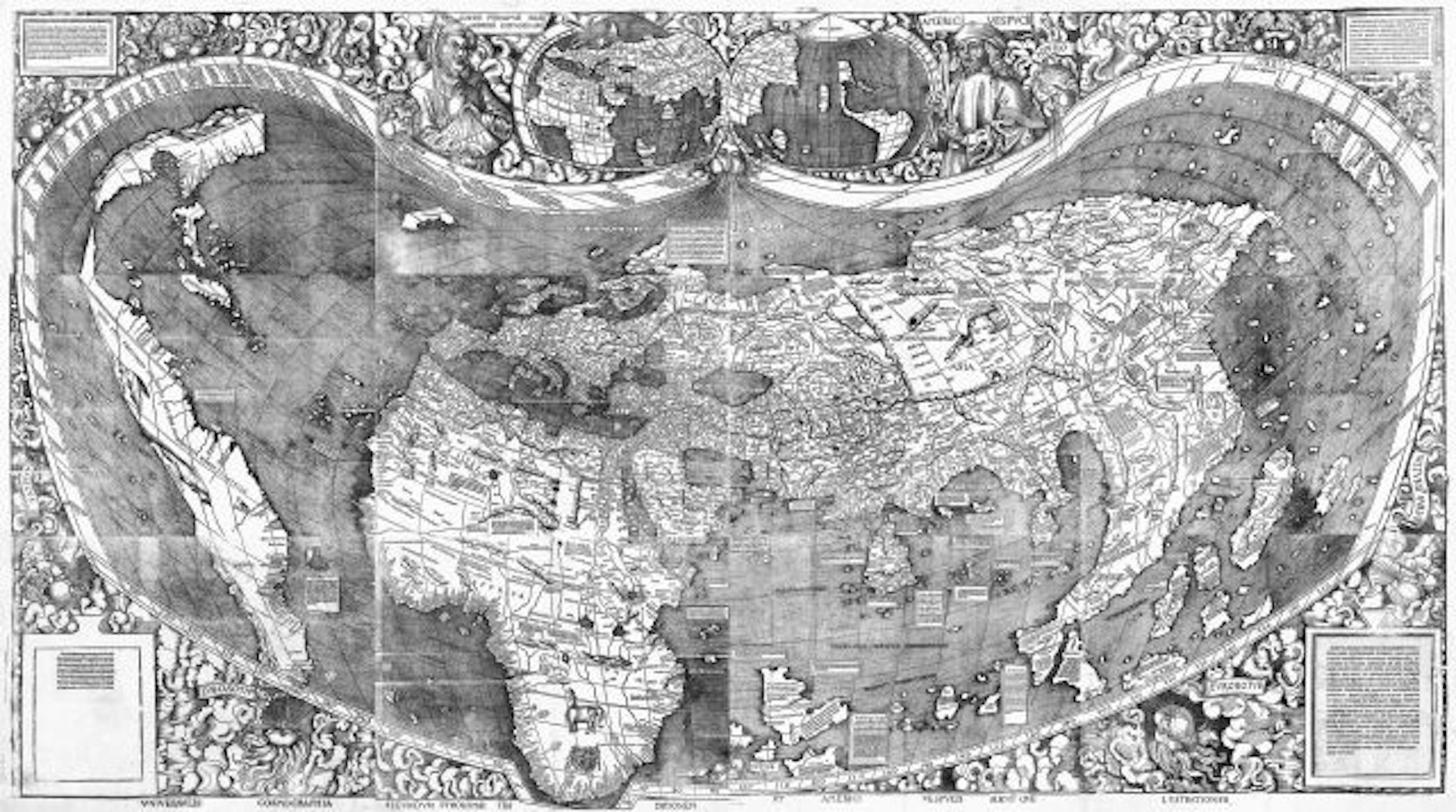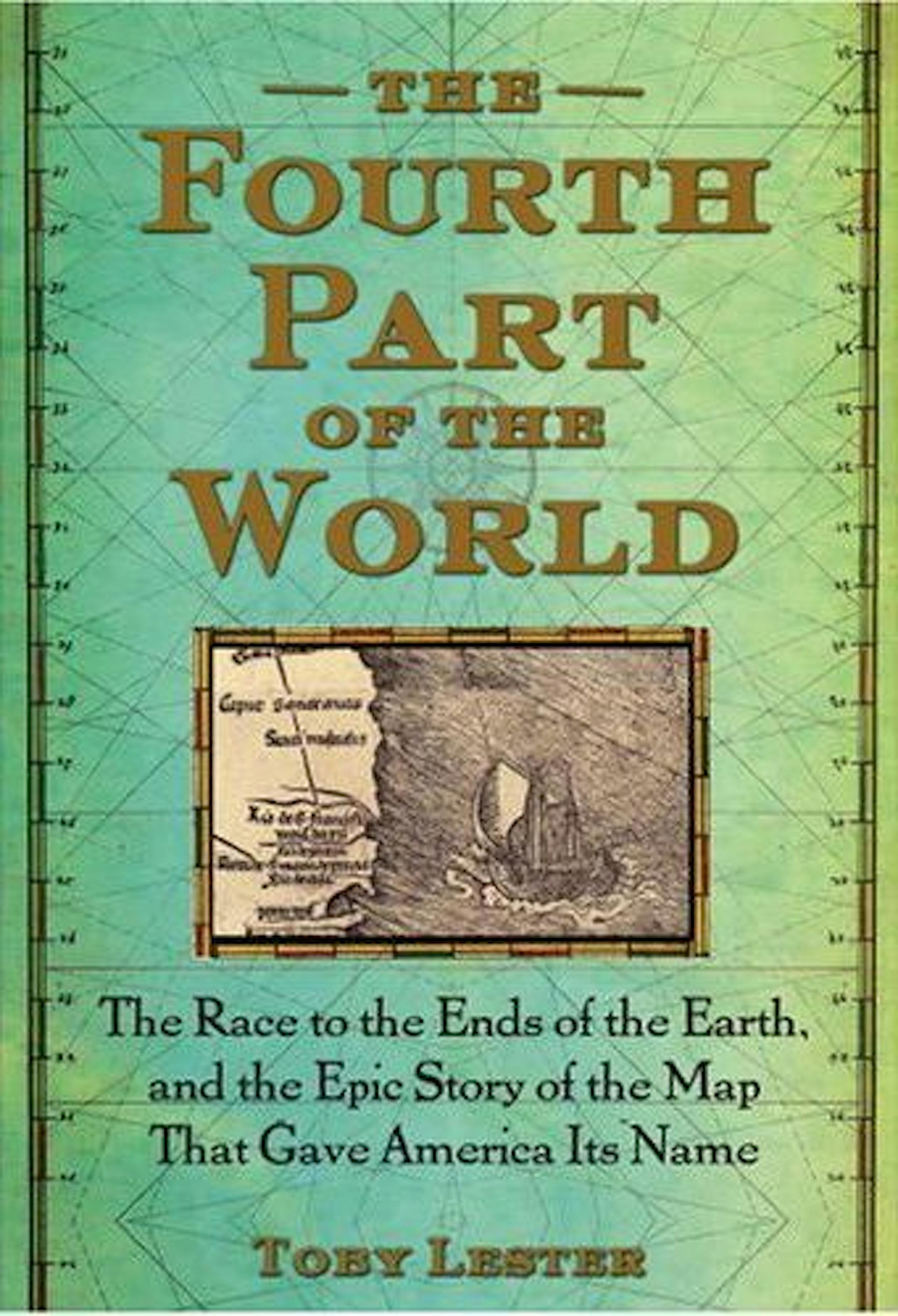
Everyone learns in school that the Americas were named after Florentine merchant Amerigo Vespucci, but the questions that should arise -- the whys, the hows -- are rarely asked. Why Vespucci, not Columbus? How did Vespucci, called a fraud by some in his day, lend his name to the continents of the Western Hemisphere? In his book "The Fourth Part of the World: The Race to the Ends of the Earth, and the Epic Story of the Map That Gave America Its Name," Toby Lester, a contributing editor at the Atlantic, provides an answer: the Waldseemüller Map of 1507.
Thought lost for centuries, a copy of the map was found at the end of the 19th century and, more than 100 years later, was purchased for $10 million by the Library of Congress, where it remains on display. But what, other than naming the Americas, is so important about this map? Through careful unpacking, Lester uncovers "world upon world" in the map -- from medieval monks curious about the unknown world to humanist scholars driven to understand the known.
Lester begins with a description of a worldview ready to be transformed. In a few fascinating chapters about the 13th century, he weaves monks, Mongols and Marco Polo's journey to the kingdom of Kubilai the Great Khan into a portrait of the medieval mind that was shrouded, though not closed. Still, knowledge of the world was limited, and there were only three known parts; Asia, Europe and Africa.
In the succeeding centuries, a few brave souls began to investigate the unknown world. The outline of this Age of Discovery we all know, but Lester highlights the roles of those typically left out of the explorer's narrative. Florentine humanists, such as Petrarch, who rediscovered ancient texts -- such as Ptolemy's "Geography" -- are as important as Columbus. And when the explorers themselves are portrayed, they come across as lucky, foolhardy, greedy or fame-seeking.
The humanists are the true heroes of Lester's story, especially two young Germans, Matthias Ringmann and Martin Waldseemüller, who created the revolutionary map of 1507. Inspired by centuries of exploration, ancient wisdom, and new technology (the printing press), they created a map that rewrote the world: presenting the New World surrounded by water and unattached from Asia, a fourth part of the world when there had been three.
The naming of the Americas is in some ways the lesser part of the story, though still interesting. Part complex play on words (it can be parsed to mean "no-place-land," "land of Amerigo," or "born new" in Greek), part testament to Vespucci, the name would remain even as the map disappeared.
Without Toby Lester's fine book, the Waldseemüller Map might remain an interesting historical footnote. A treasure, sure, for naming the Americas, but its importance would remain obscured for all but a few scholars.
Instead, one now understands the creation of the map as a world-changing moment, "a birth certificate for the world that came into being in 1492 -- and ... a death warrant for the one that was there before."