

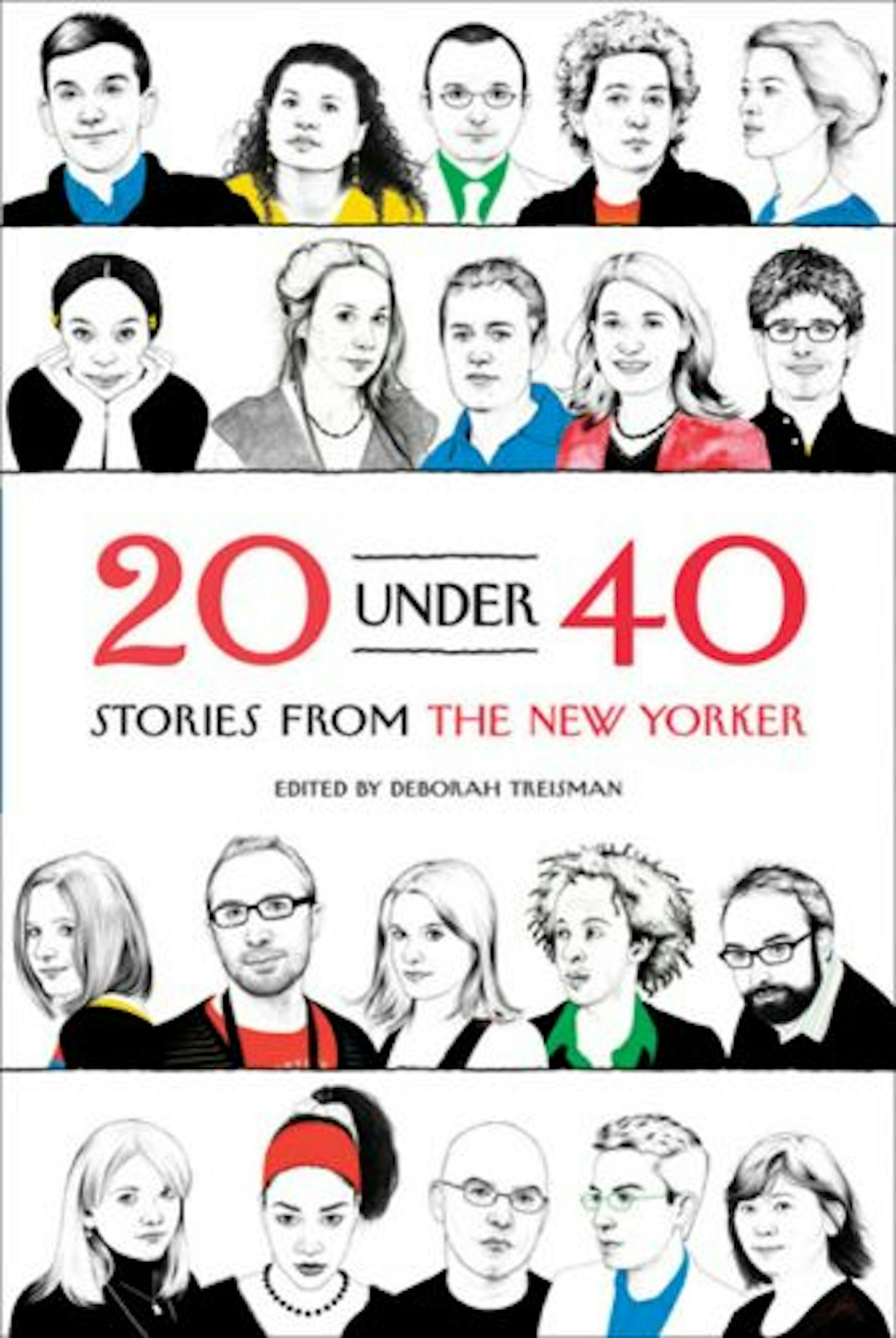
Last summer, The New Yorker made the announcement that sent shock waves through the ranks of youngish American writers: It had decided who the 20 best of them under 40 were (though it carefully avoided the word "best"). The list did indeed include some of the most formidable writers of their generation: Wells Tower, Daniel Alarcon, Rivka Galchen, and many others, and their stories have now been collected in a new anthology, "20 Under 40: Stories from The New Yorker."
Needless to say, in the cloistered hothouse of the writing world, the list caused a mix of panic (existential and aesthetic), celebration (fiction matters!) and sour grapes (a record harvest).
But amid backlash came a procession of alternative lists: 20 more over 40, 10 over 80, 41 over 40, and so on, while others cataloged the most overrated writers, the most underrated writers, etc. The New York Times summed up the reaction with the headline: "20 Younger Writers Earn the Envy of Many Others." Gawker.com posted a primer on how to complain about the list, "without looking jealous and bitter."
Why all the fuss? After all, if you picked the average person off the street, it's unlikely they could pick a single name off the list. So who cares?
The answer is partly that we have become a list-obsessed society, and are desperate for some authority to tell us what's worth our time and our attention. "The list is the origin of culture, " says Umberto Eco, author of "The Infinity of Lists." "What does culture want? To make infinity comprehensible."
And we do. With nearly 290,000 books published in the United States each year, and more than 700,000 self-published, we are awash in fiction, nonfiction and James Frey. Without such lists, we are lost. "The list doesn't destroy culture," Eco says, "it creates it."
The New Yorker's list, then, was an act of authority and hubris, an attempt to steer us toward those writers it feels are contributing stories of weight and value. It was a naked attempt to shape the culture.
The "best writers" phenomenon started at Granta magazine, where the inaugural "Best Young British Novelists" list was published in 1983 under editor Bill Buford. After moving to the New Yorker, Buford repeated the stunt in 1999, and that list was prescient, featuring Junot Díaz, Jonathan Franzen, George Saunders, Jhumpa Lahiri and others. That is probably why the new list fomented so much interest.


