

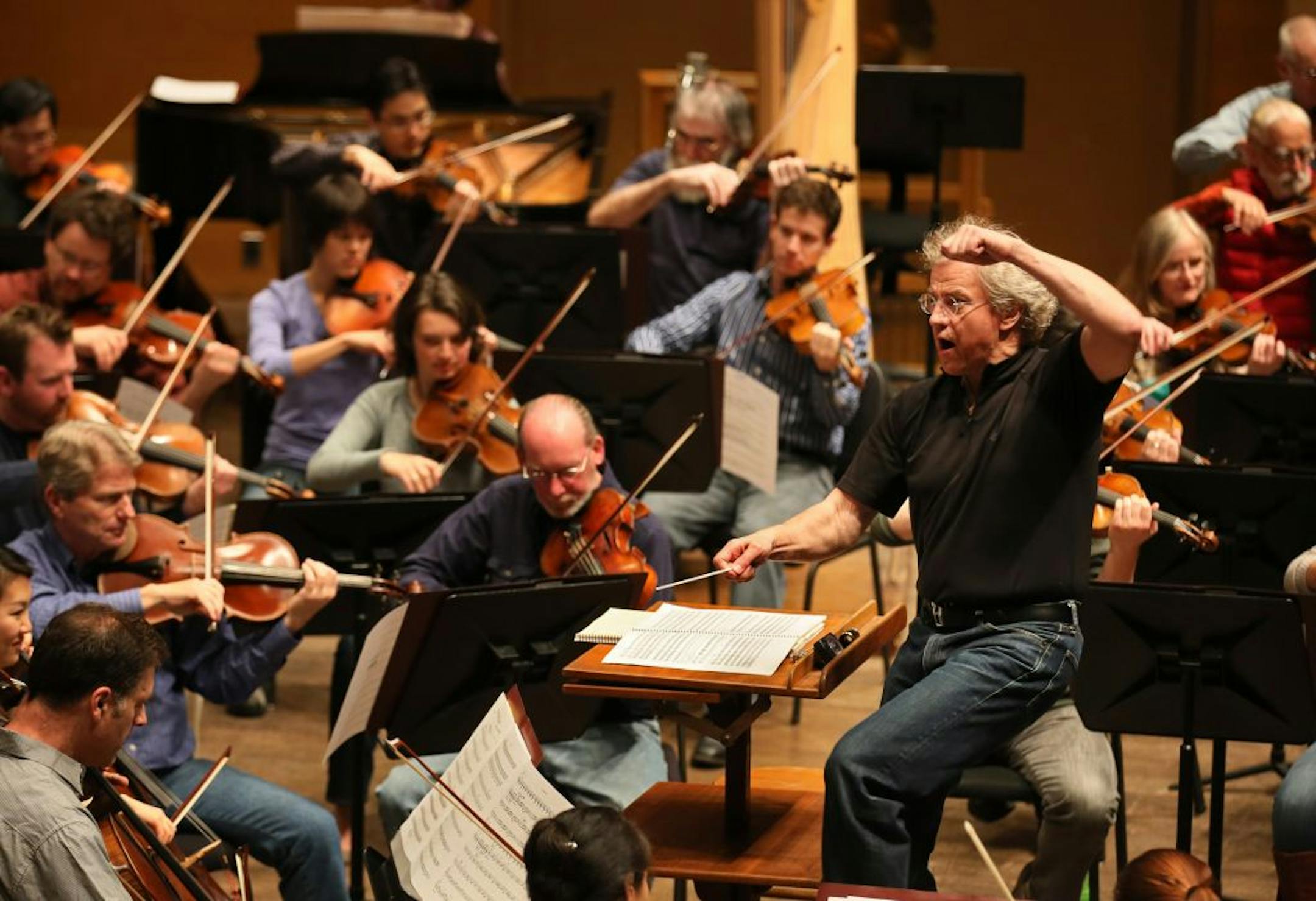
Anguish wrestles with kitsch -- or is it camp? -- at this week's season-ending Minnesota Orchestra concerts, led with near-hallucinatory intensity by Osmo Vänskä in the soon-to-be-renovated Orchestra Hall.
The program pairs Gustav Mahler's death-haunted Tenth Symphony, written in the shadow of a marital crisis and in the light of a consultation with Sigmund Freud, with the luxuriant depravity of Richard Strauss' opera "Salome." The juxtaposition, like the performances, should leave no one indifferent.
The lurid "Salome" (1905), which makes its own bid for Freudian attention, is represented by two melodically linked excerpts: the "Dance of the Seven Veils" and, more weightily, the title character's culminating monologue -- a quarter-hour of necrophiliac ecstasy, sung to the severed head of John the Baptist. In the "Dance," Vänskä and the orchestra succeed in making a virtue of what musicologist Lawrence Kramer calls the music's "hootchy-kootchy" style; on Thursday, for once, this faux-oriental morsel brought a smile to my lips.
In her account of the monologue, Deborah Voigt wisely forgoes the bloody head (which in some productions upstages the soprano) and sings, commandingly, to the hall. She makes no effort to impersonate the 15-year-old girl of Strauss' imaginings. Yet Voigt, clad in red and crimson, is thrilling in the role, her sumptuous voice challenged but never quite vanquished by the roiling orchestra. And if she can't make a silk purse from the composer's calculated titillations, probably no one can.
Mahler's Tenth, left unfinished at his death, is as visionary as "Salome" is voyeuristic. Drafted in 1910 but not heard in full until 1964, the work has struggled for recognition. Mahler wanted it burned -- or so he said. Even Leonard Bernstein was dismissive, contending that Mahler had "said it all" in his Ninth (premiered 100 years ago this month). But the half-dozen musicologists who have produced performing editions of the Tenth -- Vänskä uses the scrupulous 1976 version by Deryck Cooke -- have made its stature unmistakable.
Vänskä and colleagues play it like the heart-piercing music it is. Everything tells. The opening Adagio builds to a terrifying climax; the two scherzos pulse with a wild energy; the Finale, launched with an implacable drumbeat, climbs from the abyss toward something like serenity.
I heard Thursday's concert in the company of a Japanese visitor. "What a great orchestra!" he exclaimed. Let's hope its light remains undimmed in the season to come.


