“Pork shoulder is so easy, it’s almost like cheating,” my friend Zoe said on a recent winter afternoon.
We were discussing possible meaty mains for an upcoming party, looking for something impressive but low-stress and economical enough for a crowd. Finding that balance can be tricky.
One by one, we nixed the usual options. Standing rib roast and beef tenderloin are opulent but expensive and potentially challenging to get right. Lamb and veal shanks are more reasonably priced and feel special, but they can be hard to find and aren’t inherently crowd-pleasing. Turkey? Been there, done that much too recently to make again so soon.
We kept circling back to pork, specifically the shoulder, which ticked all the boxes — accessible, inexpensive and about as forgiving as meat gets. Why reject it just because — for our party at least — it was perfect?
The next question was whether to roast it or braise it. Both methods have their merits. Slow-roasting a large pork shoulder results in a hulking centerpiece, crowned with glossy, irresistible cracklings. But it’s best cooked the same day as the party, keeping the oven occupied for hours.
Braising can be done a day or two before, and it makes the pork all the better, turning it silky and supple, and imbuing it with whatever flavors you’ve added to the pot. And it frees the oven and the cook for other pursuits.
Pork shoulder is easy to find in the supermarket once you know what to look for. The shoulder is made up of two parts, the butt, sometimes called Boston butt, which is taken from the upper part of the shoulder, and the picnic cut, which is lower down. The butt is slightly fattier and tends to fall apart; the picnic is slightly leaner and holds its shape. Both are good for braising — as is anything called pork stew meat, which is also cut from various parts of the shoulder. Remember what I said about forgiving?
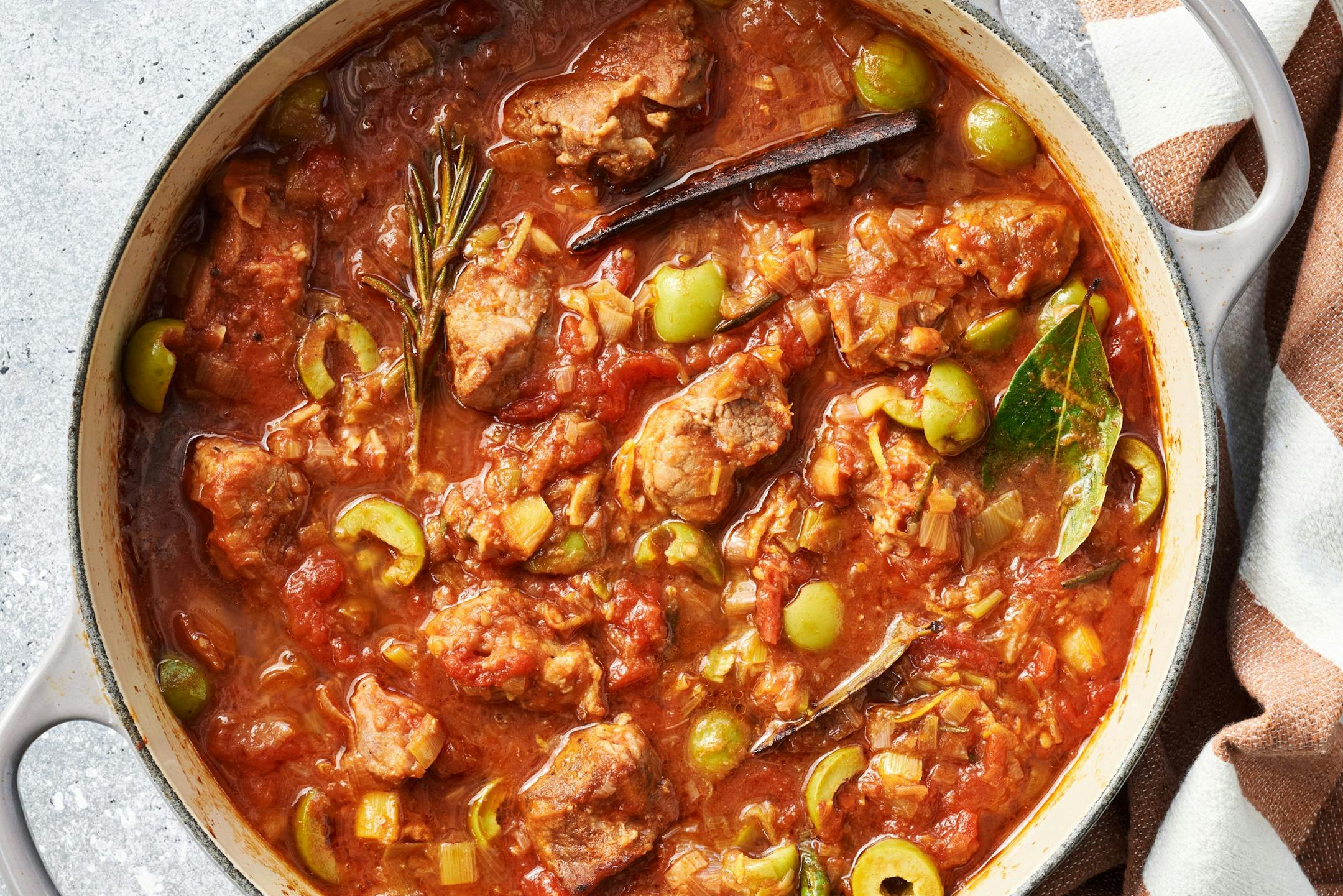
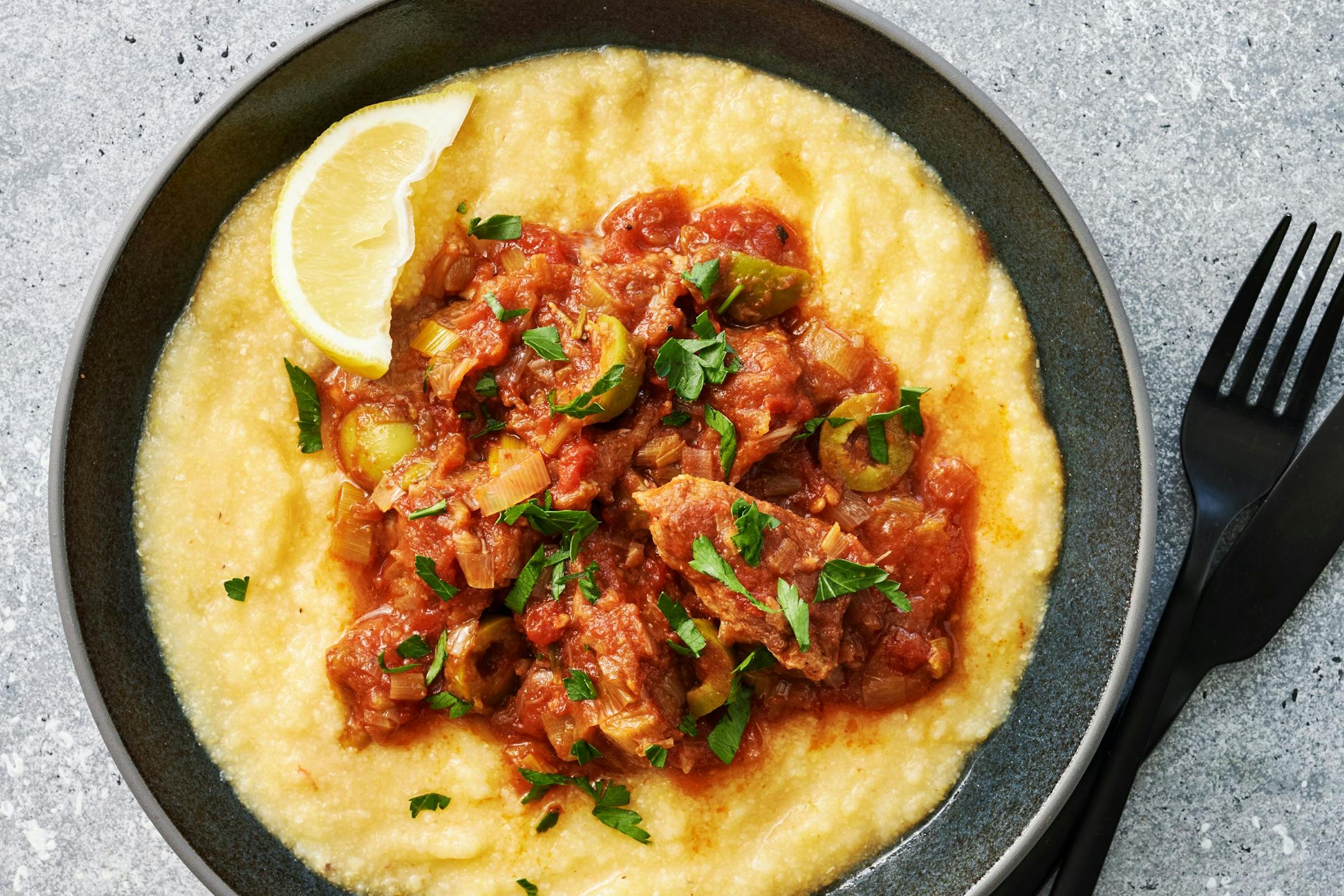
You can braise pork shoulder with practically any combination of liquid and aromatics. For this recipe, I combined olives, lemon and tomatoes to make a bright and lively sauce that contrasts with the rich, succulent meat.