

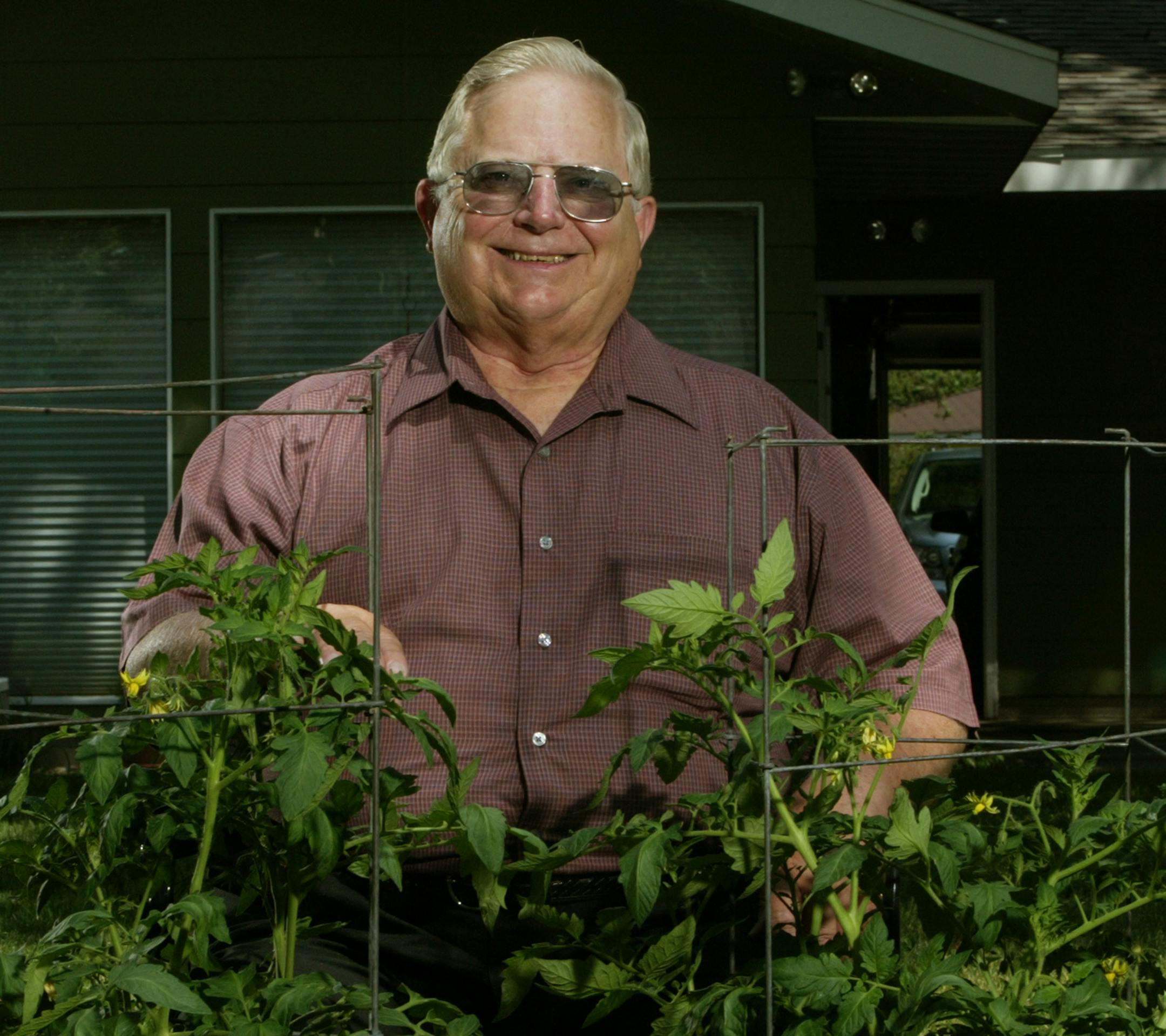
His best memory is of taking the salt shaker out to the garden, twisting one of Grandma's pink-red tomatoes from the vine, swishing it under the hose and eating it there, "right down to the little nub."
Dr. Greg Pappenfus was a kid then, many decades ago, when a summer day could last forever. Now he's 71, when even a year flies by, so when he looks at the tomato plants flowering in his yard these days, the worthiness of his annual seed-saving ritual hits home.
This season's tomato plants began with the seeds of the seeds of the seeds -- keep saying this around 150 times -- of the seeds that his great-grandparents brought over from Trier, Germany, to their new home in Minnesota's Stearns County. John and Mary Gregory also once stood under a familiar sky, hefting the big-as-your-hand tomatoes, savoring the same incomparable tang.
It's quite a thought and, now, quite a tribute. But its roots are humble thrift and sensibility.
Each fall, Great-Grandma saved seeds for the next spring's sprouts, teaching her daughter, Hermina, how to spread them over cheesecloth to dry. When Hermina married Michael Pappenfus in 1904, she kept up the tradition, even when they moved to a ranch in Montana.
They settled near a town named Plentywood, proof that at least one pioneer had a sense of irony. There, she gave birth to four sons and two daughters; the latter two died as newborns.
One winter, Grandpa Mike went out to check on his livestock and was stranded in a blizzard. He made it home, only to fall ill with pneumonia and die soon after -- but not before urging Hermina to return to Minnesota to raise their sons, Clarence, Norbert, Wilfrid and Ernest.
And so Grandma Minnie returned to St. Cloud, named for the magnificent palace near Paris where Josephine waited for Napoleon, proof that at least one pioneer had a sense of romance. When oldest son Clarence married Barbara Alstatt in 1933, that union led to three children, one of whom is Greg Pappenfus.


