

Scorning winter's latest affront (and forgoing the women's hockey final in Sochi), a crowd of hardy and demonstrative music-lovers gathered Thursday morning in Orchestra Hall for the belated opening of the Minnesota Orchestra's truncated subscription season.
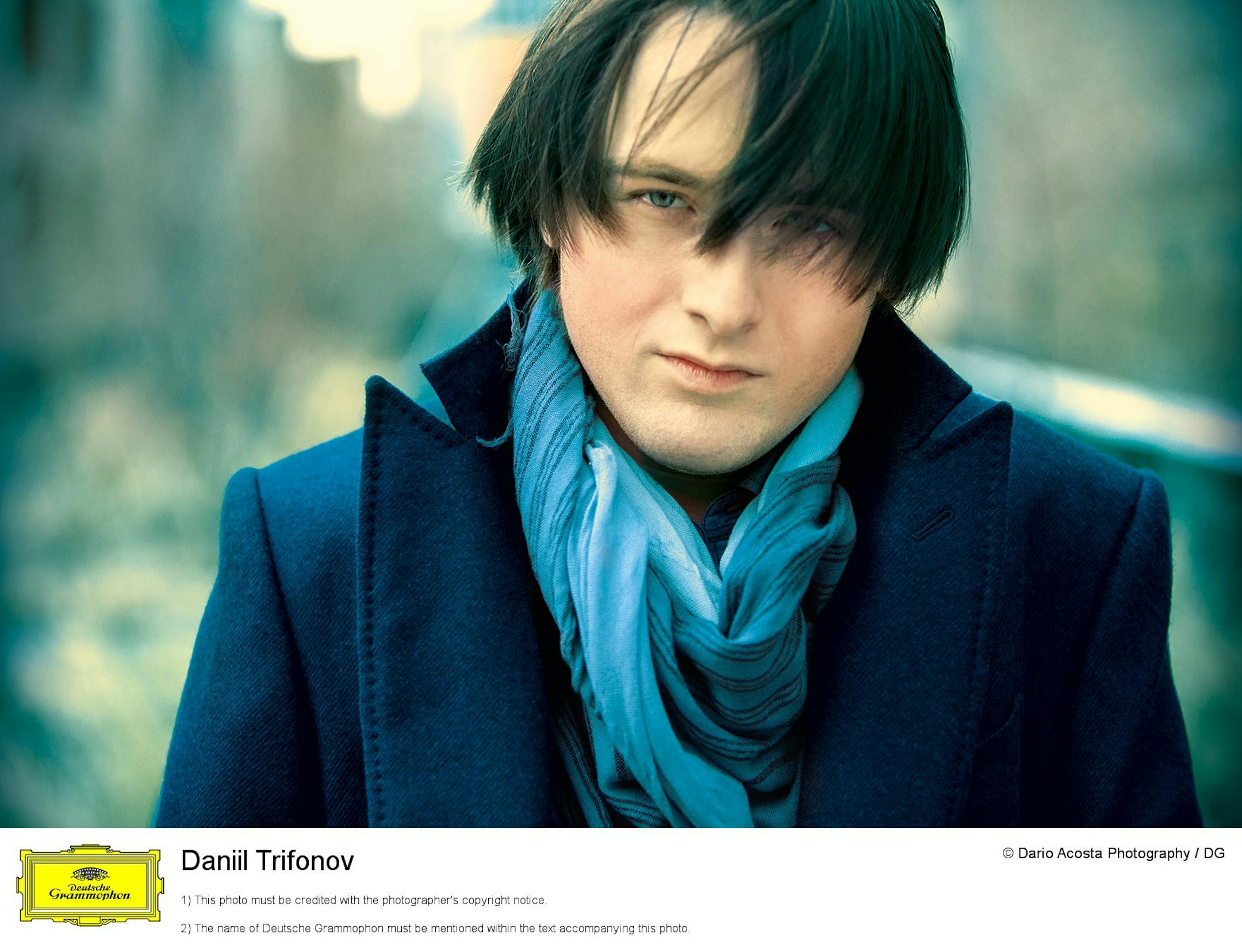
Impressively led by Michael Christie, best known locally as music director of the Minnesota Opera, the program featured the Twin Cities orchestral debut of pianist Daniil Trifonov, a fiery young Russian hypervirtuoso first heard here in a much-lauded Chopin Society recital last season. Although a more challenging program would not have gone amiss, the concert did suggest that the post-lockout orchestra is recovering more rapidly than I had feared it might.
Trifonov, boyish looks and flowing locks notwithstanding, is a master who combines control and abandon, precision and spontaneity. His technique, though astounding, is the least of it; the man is a native speaker of the language of the romantic piano, a 21st-century counterpart of Liszt. (Like Liszt, he composes: in April he'll premiere a piano concerto in Cleveland, where, even after winning the Tchaikovsky and Rubinstein competitions, he continues to study.)
Trifonov's realization of Rachmaninoff's Second Concerto was transformative — a lesson in the rehabilitation of a warhorse, to my mind surpassing Rachmaninoff's own recording with Leopold Stokowski. Particularly in the nocturnal Adagio, soloist and orchestra danced bewitchingly. And the pianist's Chopin encore (the E-flat Waltz, Op. 18) was magical in its delicacy: golden-age playing from a 22-year-old.
Stravinsky (who once called Rachmaninoff "a six-and-a-half-foot scowl") wrote the music for "The Firebird" in 1909-10, after at least three other composers had declined the commission. The ballet score, his breakthrough piece, served as the basis of three suites he fashioned between 1911 and 1945. Christie's account of the 1919 suite — not the most interesting of the three — was colorful and propulsive, with a wider range of tempos than one usually hears. Lyrical sections breathed; the conductor's clear beat was a definite plus.
"Orchestral tissue without music," Ravel said of "Boléro," his study in obsession, convinced that orchestras would refuse to program it. Occasionally one wishes he'd been right. Yet there was much to admire in Thursday's performance. Beginning with a pianissimo worthy of Osmo Vänskä, Christie and colleagues built Ravel's 17-minute crescendo exactingly, with close attention to the composer's sometimes-exotic sonorities; the ninth variation (for horn, celeste and two piccolos) was especially droll.


