

Opinion editor's note: Star Tribune Opinion publishes a mix of national and local commentaries online and in print each day. To contribute, click here.
•••
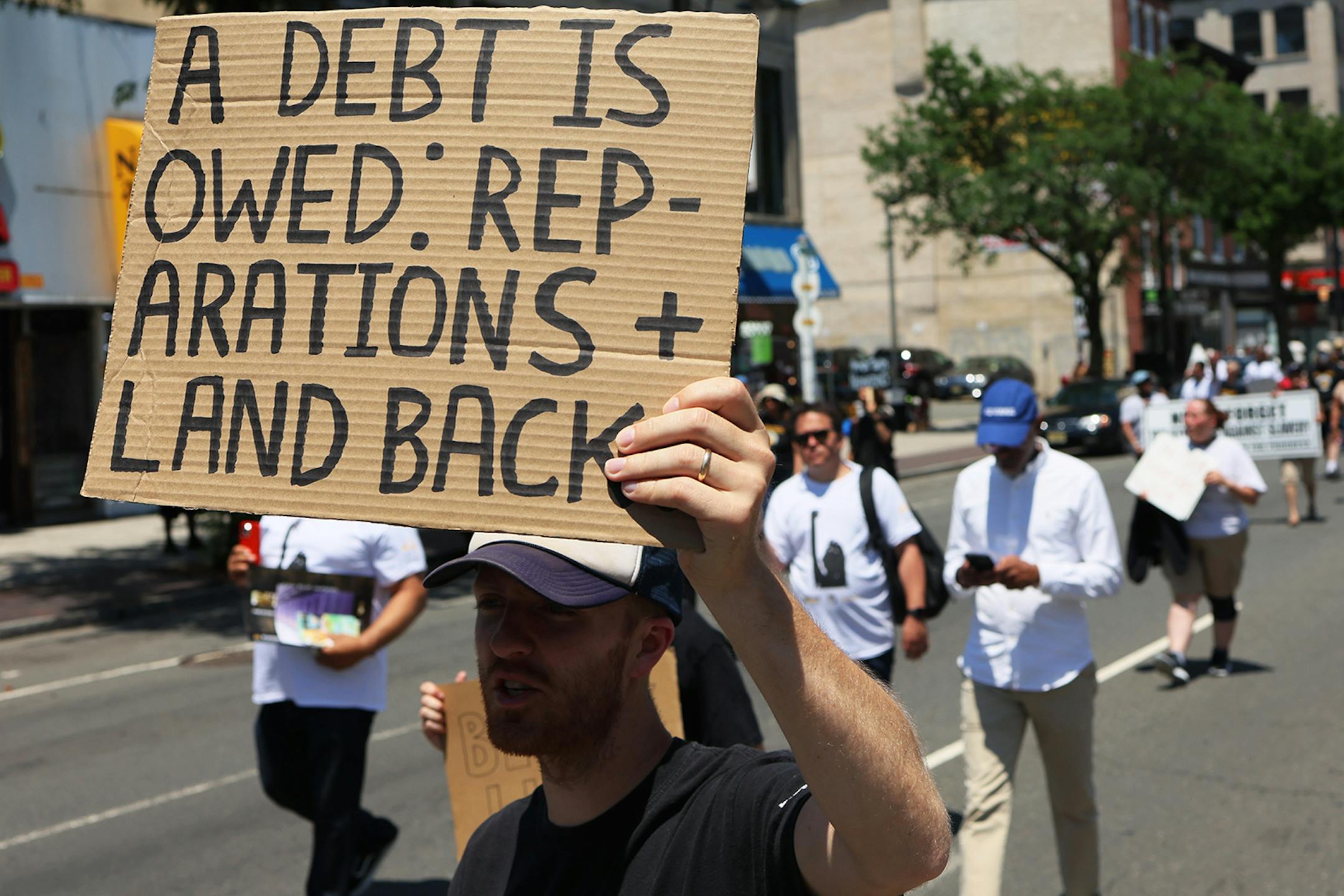
Offering reparations to compensate Black citizens for slavery is usually considered a leftist idea — well outside the mainstream of the broader public. Recent polls show that supermajorities of American citizens oppose using taxpayer funds for reparations. For more than a quarter century in Congress, representatives introduced a bill calling only for a study of "appropriate remedies" for the "lingering negative effects" of slavery. The bill made it out of committee for the first time in 2023, but never received a floor vote. About a dozen cities and the state of California have made commitments toward reparations, but it has never been a serious item on the national agenda.
While conventionally viewed as leftist, reparations can also be understood as conservative. The late Robert Nozick, a libertarian professor at Harvard, provides a theoretical foundation. Nozick criticized contemporary liberals for their tendency to see inequality as inherently unjust. Condemning gaps between rich and poor, today's liberals seek a taxpayer-funded welfare state to provide benefits to those who are struggling. Nozick argued that the government programs that liberals advocate are unjust because no one should be forced to help people. People can voluntarily give to charitable causes, but they should not be forced to contribute to government programs. People are entitled to keep what they earn. Taxing the rich (or anyone, for that matter) amounts to nothing less than theft or forced labor — akin to slavery, really.
A minuscule government is all that is necessary to accomplish Nozick's vision. He wrote that "only a minimal state limited to enforcing contracts and protecting people against force, theft, and fraud is justified. Any larger state violates persons' rights not to be forced to do certain things, and is unjustified."
Injustice is found not by decrying particular distributions of wealth and income, but by looking at how wealth was gained. As long as wealth was acquired in free and fair transactions in an open market, any resulting distribution of wealth — however unequal — is just. In Nozick's world, government should be limited to enforcing contracts, prosecuting fraud and protecting against violence. That means there are no food stamps, no Affordable Care Act or Medicaid, no student loan forgiveness, and no more of the major programs of the contemporary state. Government would stay out of the way of much of life. The institutions of government would include a judiciary, a police force and a military — but not much more.
From this perspective, is not the insidious institution of slavery an archetypal example of the theft that Nozick condemns? Slaves were forced to work with no compensation. And the institutions of Jim Crow America — including redlining and segregation — wrongfully deprived Black citizens of income and wealth. According to Nozick's conservative theory of justice, they should be compensated as victims of theft.
Ironically, many slave owners were remunerated. When Great Britain ended slavery in the 1830s, it paid 20 million pounds in reparations not to former slaves but to the slave owners who lost their slaves. And in 1862, President Abraham Lincoln signed the "District of Columbia Compensated Emancipation Act," which prohibited slavery in the District of Columbia and paid former slave owners $300 as compensation for their newly freed slaves.


