

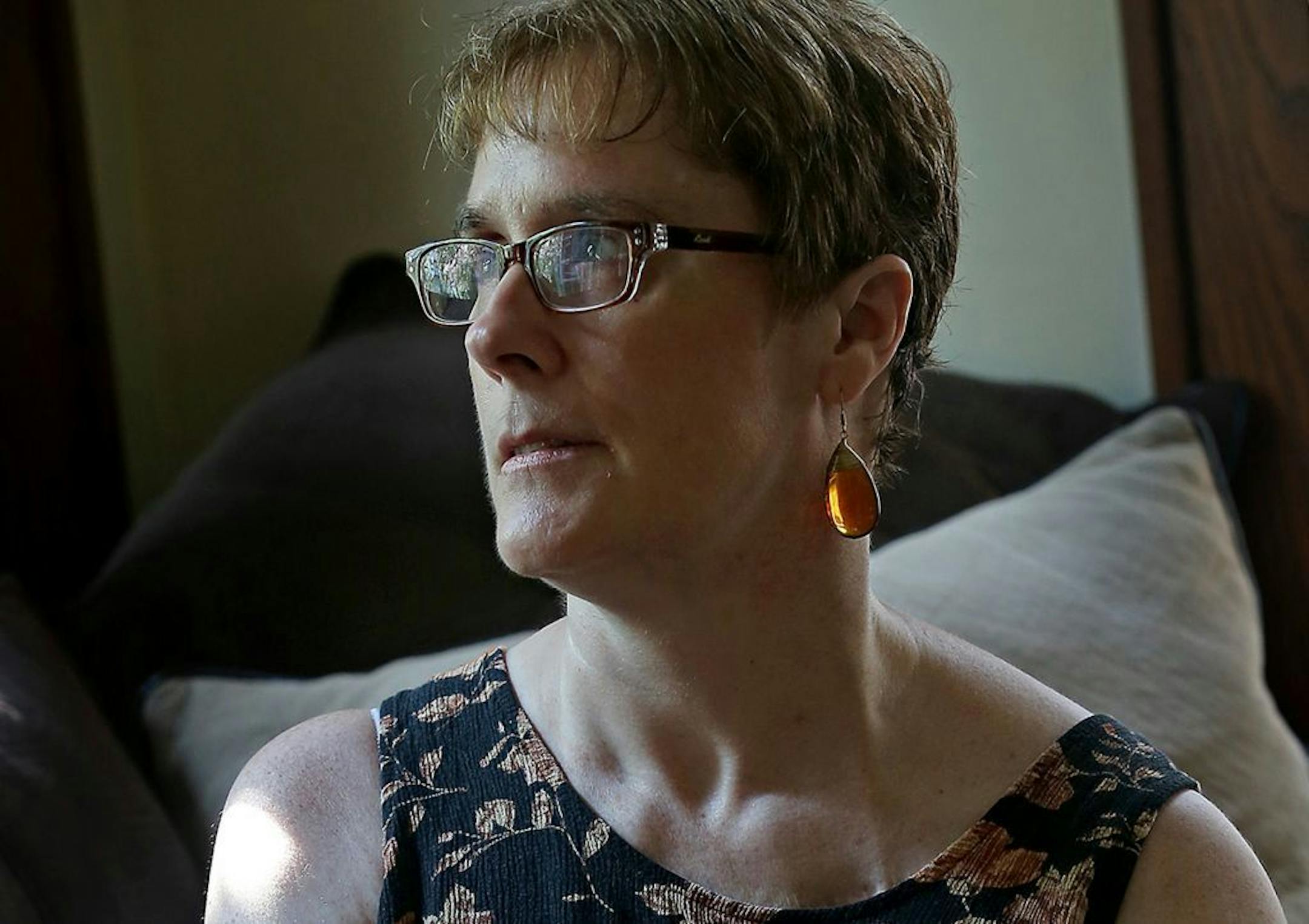
The cruel interplay between depression and Parkinson's disease has become reality for Jackie Hunt Christensen, a national Parkinson's advocate from Minneapolis.
While exercise can alleviate sadness and low moods, the worsening symptoms of Parkinson's —an incurable neurological disorder that erodes mobility and thinking skills — are making it harder for her to stay active. Christensen had to skip a national Parkinson's conference she has routinely attended. And a new symptom, retropulsion or an involuntary tendency to tip backward, has increased the risks for falls and limited even moving around home.
All of which makes it harder to combat depression.
"As the disease progresses," she said, "you're not able to do things that you used to do, and you're grieving that."
Recent research has clarified how common it is for depression and Parkinson's to occur at the same time; one study found depressive symptoms in 70 percent of people with Parkinson's. But the issue didn't gain much public attention until the death of comedian Robin Williams — whose suicide this month came after his Parkinson's diagnosis.
"Everybody with Parkinson's is all of a sudden examining themselves," said Dr. Steven Stein, a Minneapolis neurologist. "I have received many phone calls from patients who are sort of freaking out about, 'Is this going to happen to me?' "
The connection to depression is far more complicated than patients growing despondent over a Parkinson's diagnosis — though doctors said that frequently occurs. Parkinson's impact on movement and thinking skills comes from the gradual loss of dopamine, a chemical necessary for communication among brain cells that also triggers feelings of happiness.
"Dopamine is sort of a feel-good neurotransmitter," Stein said. "It's involved with our sense of enjoyment, our sense of pleasure. It would be surprising that anything that could disrupt those pathways wouldn't contribute to depression and anxiety as well."
![Jackie Hunt-Christensen, who has Parkinson's disease and also has struggled with depression since childhood, has been a national advocate regarding Parkinson's disease, but lately her ability to travel and her mobility has decreased due to Parkinson's symptoms. Here Hunt-Christensen is photographed in her south Minneapolis home, Wednesday, August 20, 2014. She said her grandmother committed suicide when Hunt-Christensen was 5-years-old. ] (ELIZABETH FLORES/STAR TRIBUNE) ELIZABETH FLORES •](https://arc.stimg.co/startribunemedia/BXKYIKNW3I3M5GDZHCDUCQKIAY.jpg?&w=1080)


