

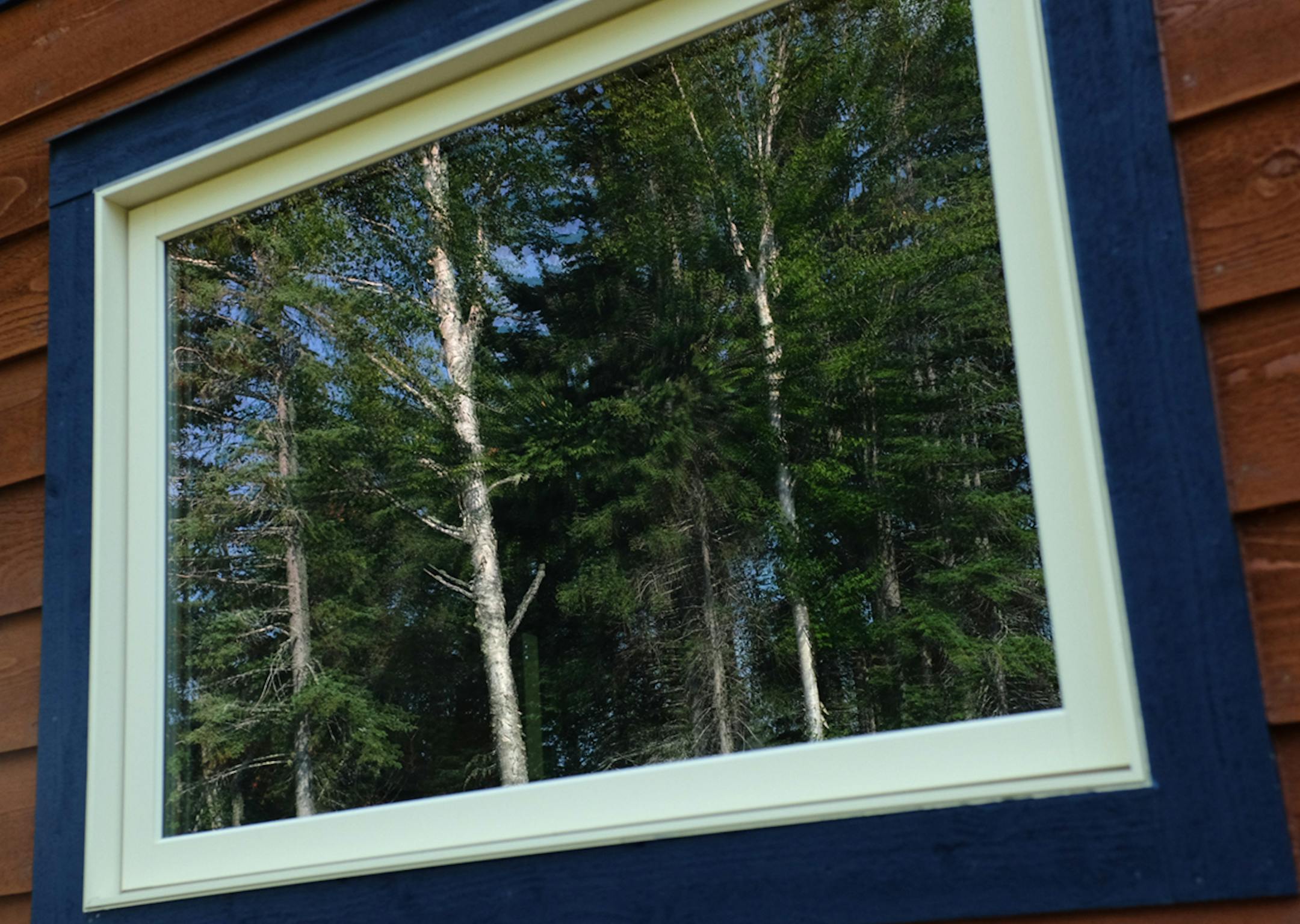
Want to reduce bird impacts with your window glass during migration periods? Consider removing any feeders that might encourage flight paths near your house. Avoid feeders close to the house, particularly if your yard has large trees.
That's standard advice from professionals concerned about bird safety, and my advice from personal experience.
The ongoing discussions about stadium glass and glass-related bird deaths is impersonal in a way. We're talking about birds in general. It's different if the bird falls at your feet.
We spent a few days this summer in a home on the Lake Superior shore at Lutsen, a shore lined with tall spruce. Warbler migration was underway. Our warbler passage was heavy with Cape Mays.
Warblers, which eat insects and larvae, don't visit seed feeders. But warblers must, however, see the activity other species provide as they come and go at feeders. Warblers forage near the feeders, attracted by the activity. That's my theory.
The regular feeder birds at the house did not seem to have issues with the window, but the warblers were a different story.
Warblers were in the trees that surrounded the feeders we were watching. When something spooked the feeder birds, all the birds would flee, helter skelter, warblers included. For some reason, it was the fleeing warblers that flew into windows.
I was sitting on the deck of the house at Lutsen watching purple finches come to the feeder. Chickadees, too, red-breasted nuthatches and an occasional goldfinch.


