After the first red-winged blackbirds blow in, after the robins flock back, but before the Baltimore orioles begin arriving with their sweet whistled songs, a small sparrow flits through the underbrush prior to continuing its migratory journey.
This is the oft-overlooked white-throated sparrow, one of my favorite birds of spring. Unless you look closely, you might not notice that this isn't one of the neighborhood's house sparrows -- both kinds are scratching around under trees and shrubs and in garden beds. But white-throat sparrows are definitely worth a second look, because they're among those rare, aptly named birds.
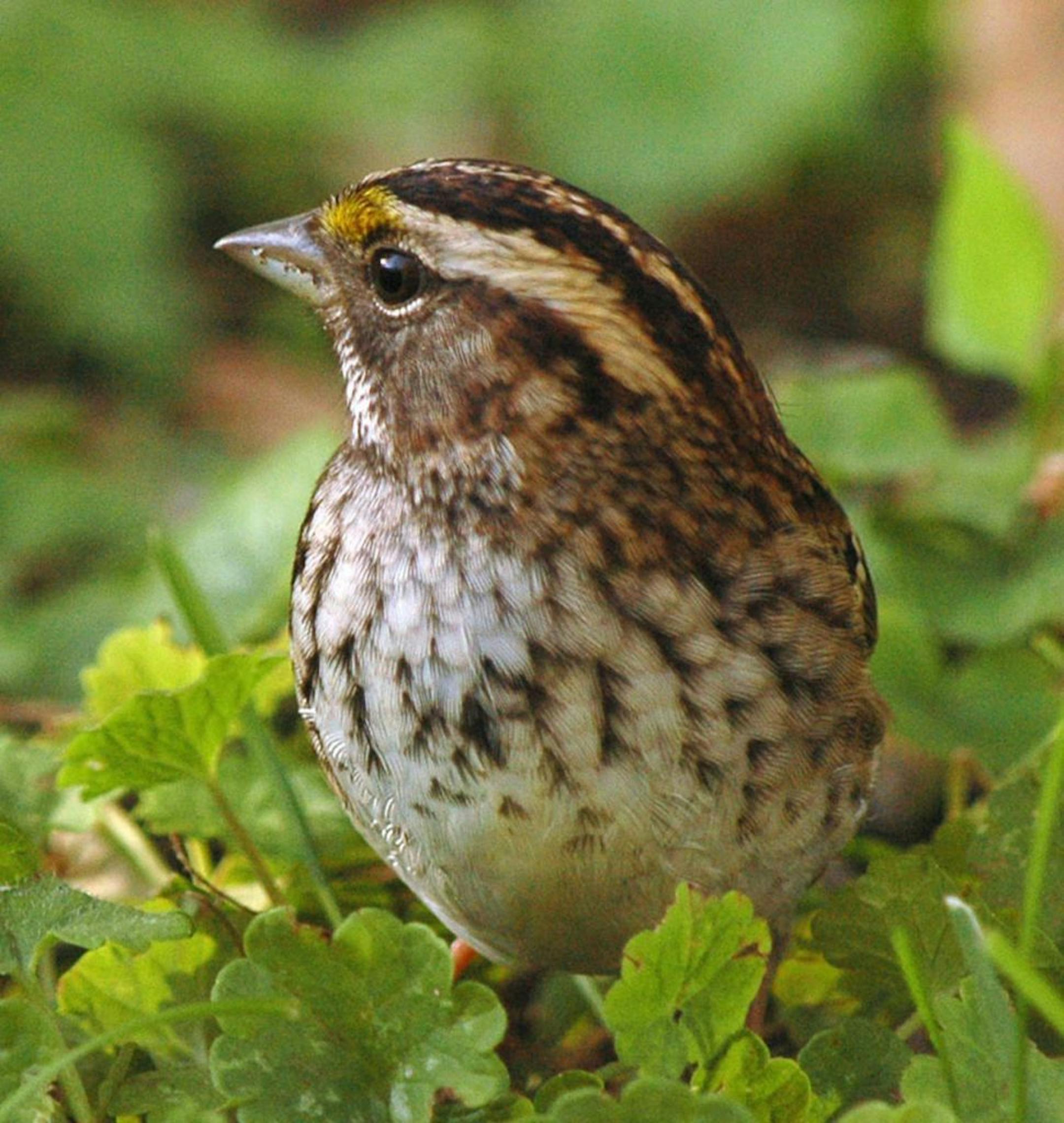
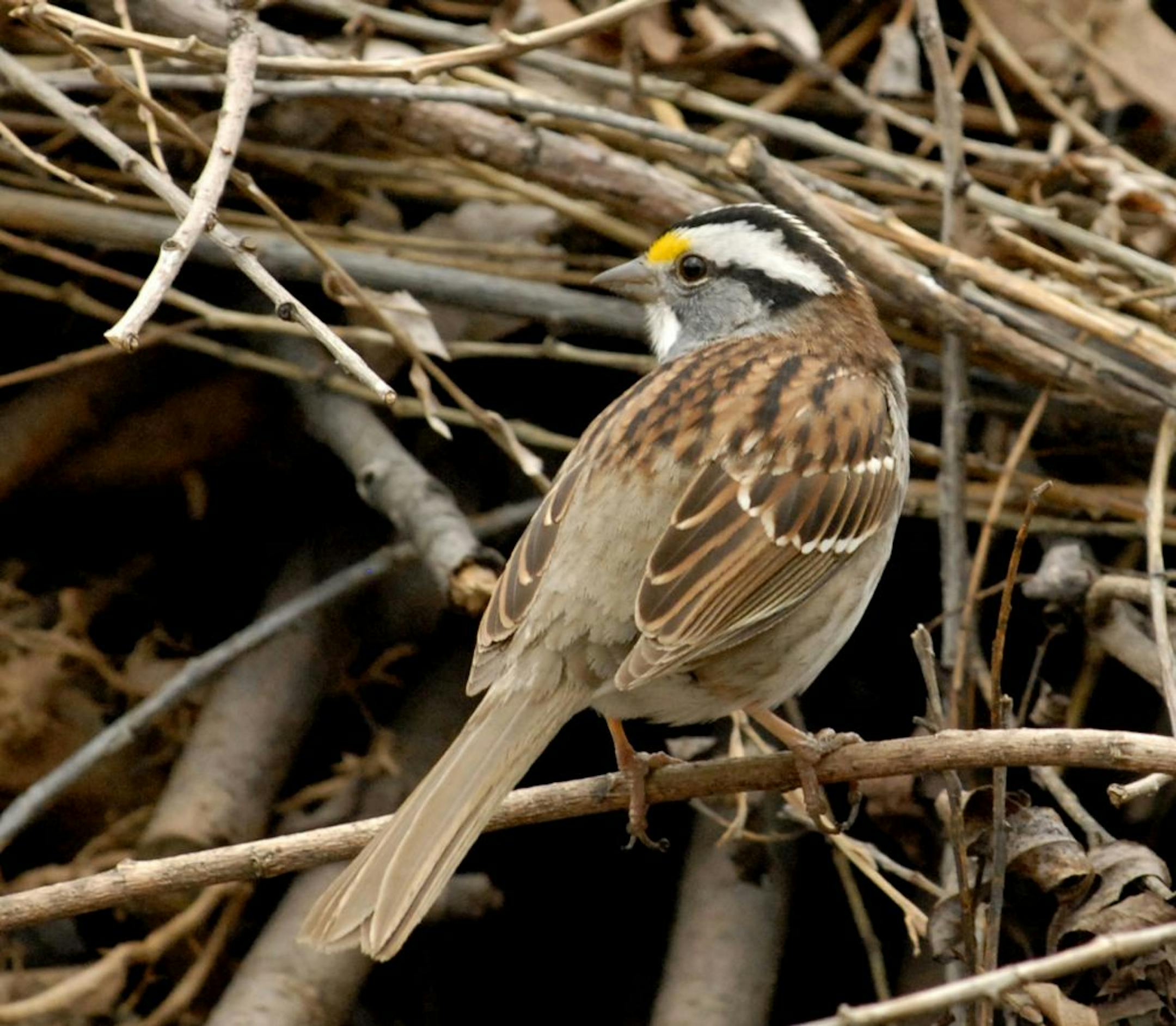
They do have a white throat, and it looks like a bright white ascot or bib just below the beak. Many also sport a head dramatically striped in black and white. But this sparrow also comes in another feather ensemble, a mousier coat with tan stripes on the head and a less-bright white throat.
These are the same bird species, just a variation in coloration.
Some people think the tan-striped version is the female and the white-striped birds are the males. In many bird species, females are drabber than males, so the female is camouflaged as she sits on the nest. But what we have in this case are two distinctly different looks in birds of the same species.
Big time skippers
White-throats are the "skippers" of the sparrow world, known for their habit of hopping forward, then hopping backward while dragging their feet along the ground. This pulls away any leaves, pine needles, twigs, mulch and anything else on top of the soil, thereby exposing tasty seeds or insects. Juncos do this, as do towhees and brown thrashers, but few birds seem to engage in the hop-skip maneuver with as much enthusiasm and vigor as white-throats. For such small birds, they can rearrange an amazing amount of detritus, as I rediscover each summer when I go out to rake mulch back into the garden beds, kicked out by these spring visitors.
What really makes these sparrows stand out is their lovely song, an almost plaintive-sounding series of two single notes followed by sets of three triple notes. Some say it sounds as if they're singing "Old Sam Peabody, Peabody, Peabody," or "Oh, sweet Canada, Canada, Canada." (Hear it here: www.allaboutbirds.org/guide/white-throated_sparrow/sounds/ac.)