

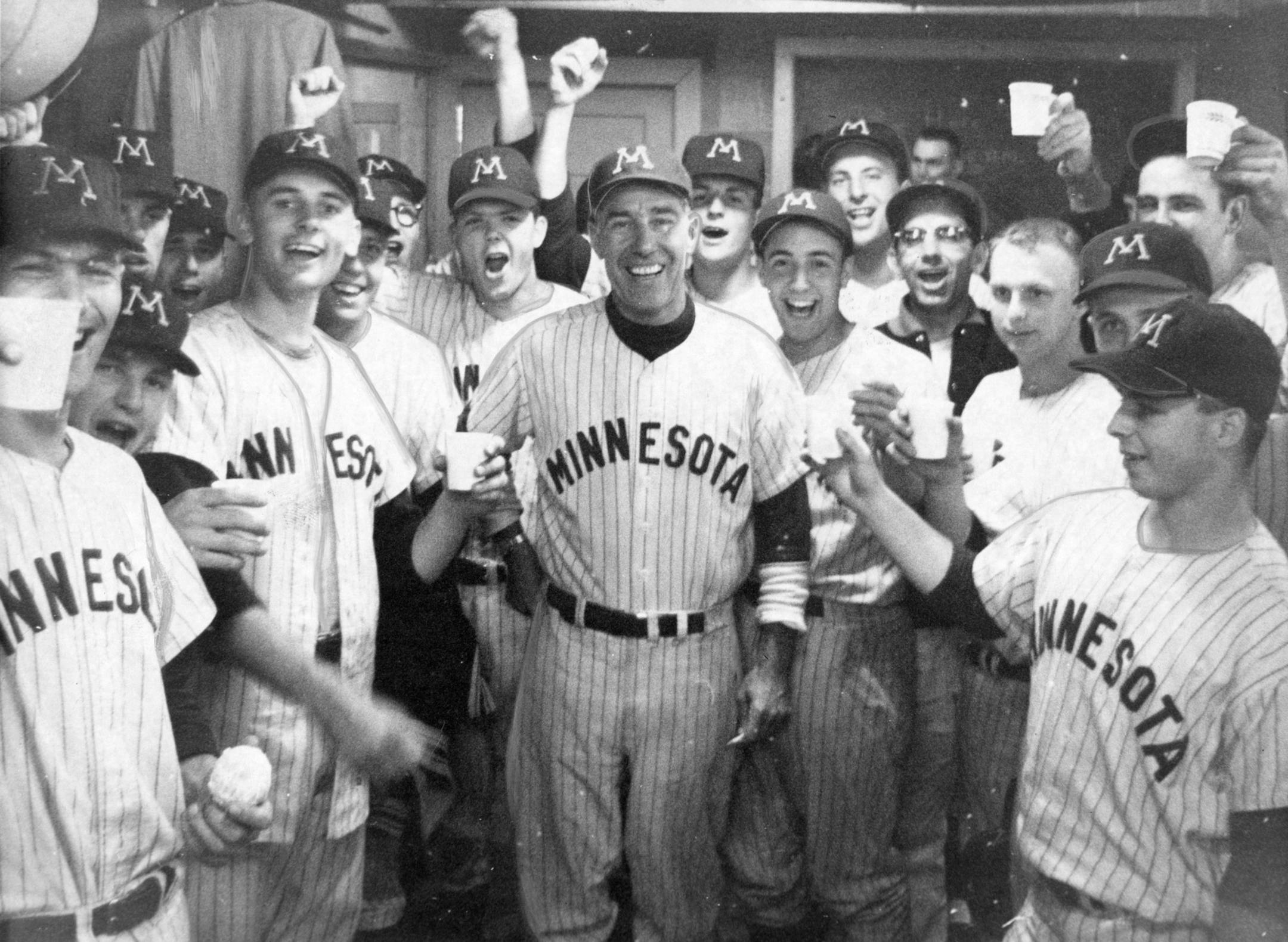
Dwight Eisenhower was re-elected president over Adlai Stevenson in a Republican landslide in 1956. John Kennedy won a cliffhanger over Richard Nixon in 1960. Lyndon Johnson walloped Barry Goldwater in a Democratic landslide in 1964.
A half-century later, we can say this: Those obscure links to a sports result that pundits like to suggest can foretell the outcome of a presidential election … none applied to the Gophers baseball team.
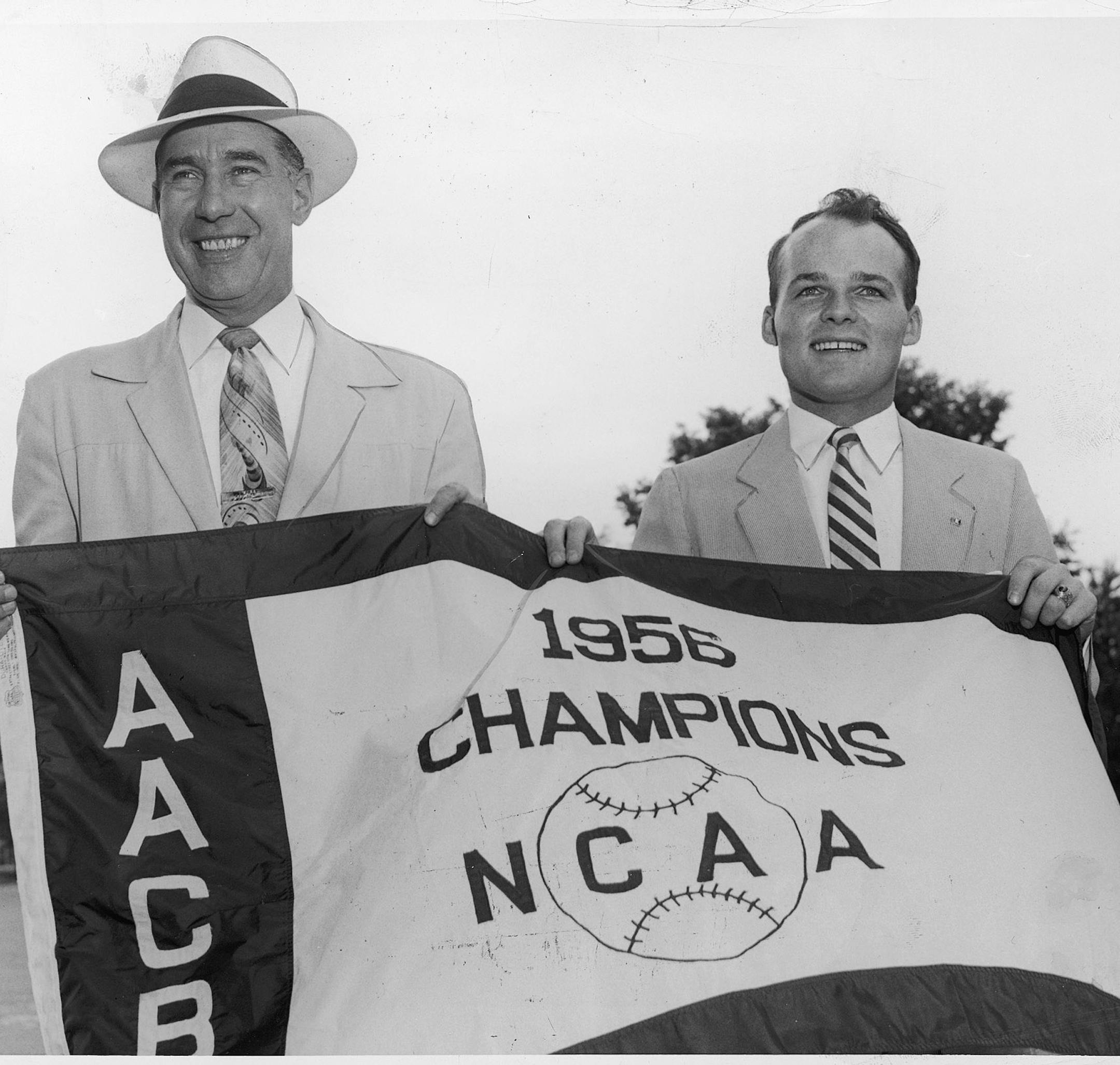
Dick Siebert's Gophers claimed the championship of the College World Series in 1956, 1960 and 1964. And the country's electorate followed with conflicting results.
"We didn't really think about an election year being good luck for us until we made it to Omaha in '64," first baseman Bill Davis said. "That's when people started mentioning it."
Jerry Kindall was a star infielder with the 1956 Gophers. He received a $50,000 signing bonus that put him on the Chicago Cubs roster for 1957. Cubs manager Bob Scheffing had this question for Kindall in spring training:
"How does a team from Minnesota, from up there in the snow, put together a team that can win the College World Series?"
All these decades later, the three championships have to be more of a mystery to followers of big-time college baseball than the first one was to Scheffing. In the 50 years since the Gophers won their third title, there has been only one more champion from America's snow belt, and that was Ohio State in 1966.
Siebert not only won the three titles in nine winter-shortened baseball seasons, but he did so with rosters that were 95 percent (or higher) home-state players. A panel of those players assembled at the Gophers' new Siebert Field recently to answer the question:
![Former University of Minnesota players from the College World Series champs of 1956-60--64 left to right Jerry Thomas (1956), Bill Davis (1964), Jerry Cawley (1964), Jack McCartan (1956), Doug Gillen (1956), Jim Rantz (1960) and John Anderson (current Gophers coach), posed for a portrait at Seibert Field Wednesday June 25, 2014 in Minneapolis, MN. ] Jerry Holt Jerry.holt@startribune.com](https://arc.stimg.co/startribunemedia/4IT5V3HWVWYEEGZBW5WIMFEH4M.jpg?&w=1080)
![Former University of Minnesota players from the College World Series champs Jerry Thomas at Seibert Field Wednesday June 25, 2014 in Minneapolis, MN. ] Jerry Holt Jerry.holt@startribune.com](https://arc.stimg.co/startribunemedia/XPOQIEOLKMSNXKBMOKKFSFWBNE.jpg?&w=1080)


