
A Balkan country sheds its secret past

Albania shows off its charms - including ancient castles, mosques and churches - after years under a Communist dictator.

August 28, 2010 at 9:56PM
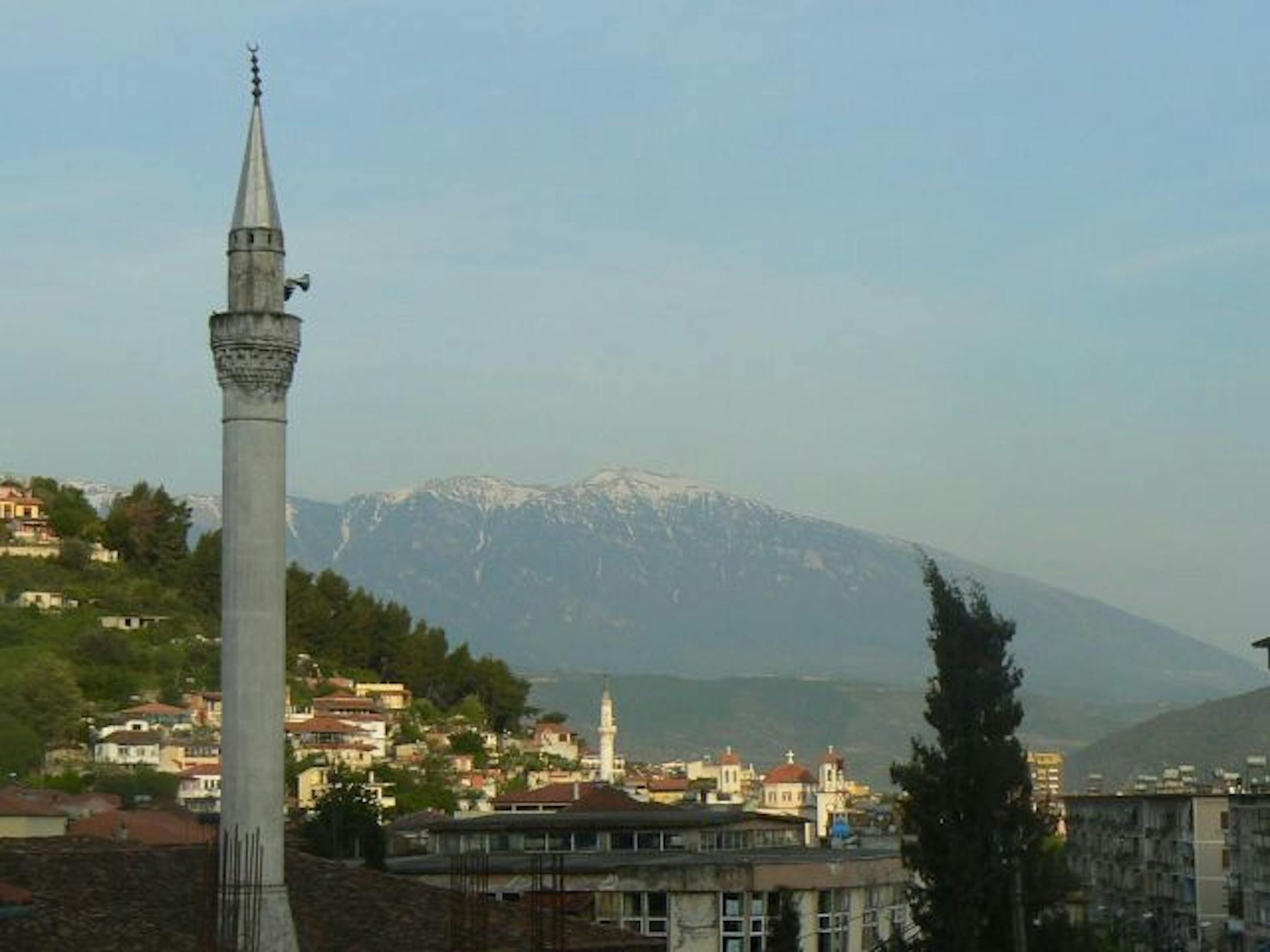
The historic mountain town of Berati in Albania was declared a "museum city" by the communist government. Even though religion was banned, its mosques and churches were preserved.
The historic mountain town of Berati in Albania was declared a "museum city" by the communist government. Even though religion was banned, its mosques and churches were preserved. (Seattle Times/The Minnesota Star Tribune)

Valter Mio, 22, was just a toddler when his family opened a four-table restaurant inside his grandfather's house in the mountain town of Berati in southern Albania.

What began as one of the first private businesses to open in 1993, after the fall of communism, is now the Hotel Mangalemi, a boutique inn, surrounded by pine forests and whitewashed villas wedged into terraced hillsides.

In a stone house where an Ottoman king once slept, guests sip cocktails on a rooftop deck and eat homemade sausages and desserts of honey and walnuts. In a country where religion was once banned, they awake to the sounds of church bells and the Muslim call to prayer.

Valter smiled and patted his stomach when I praised the roast chicken and stuffed peppers his mother had cooked the night before. As satisfying as the meal was the bill, $17 for two.

If Berati were a town in Greece or Italy, it would be filled with tourists roaming its 13th-century castle, and peering into its ancient mosques and Byzantine churches. Berati was designated a "museum city" by the government in the 1960s, and its historical architecture was preserved.

But this was Albania, and my husband, Tom, and I were among just a few foreigners.

Isolated from the rest of Europe and most of the world for nearly 50 years by its dictator, Enver Hoxha, Albania was a country where 20 years ago, "even the idea of owning a private hotel or restaurant was not allowed," Valter said.

The borders were sealed. Private cars and phones were banned. What little Albanians knew about the outside, they gleaned from patching into Italian TV or Voice of America.
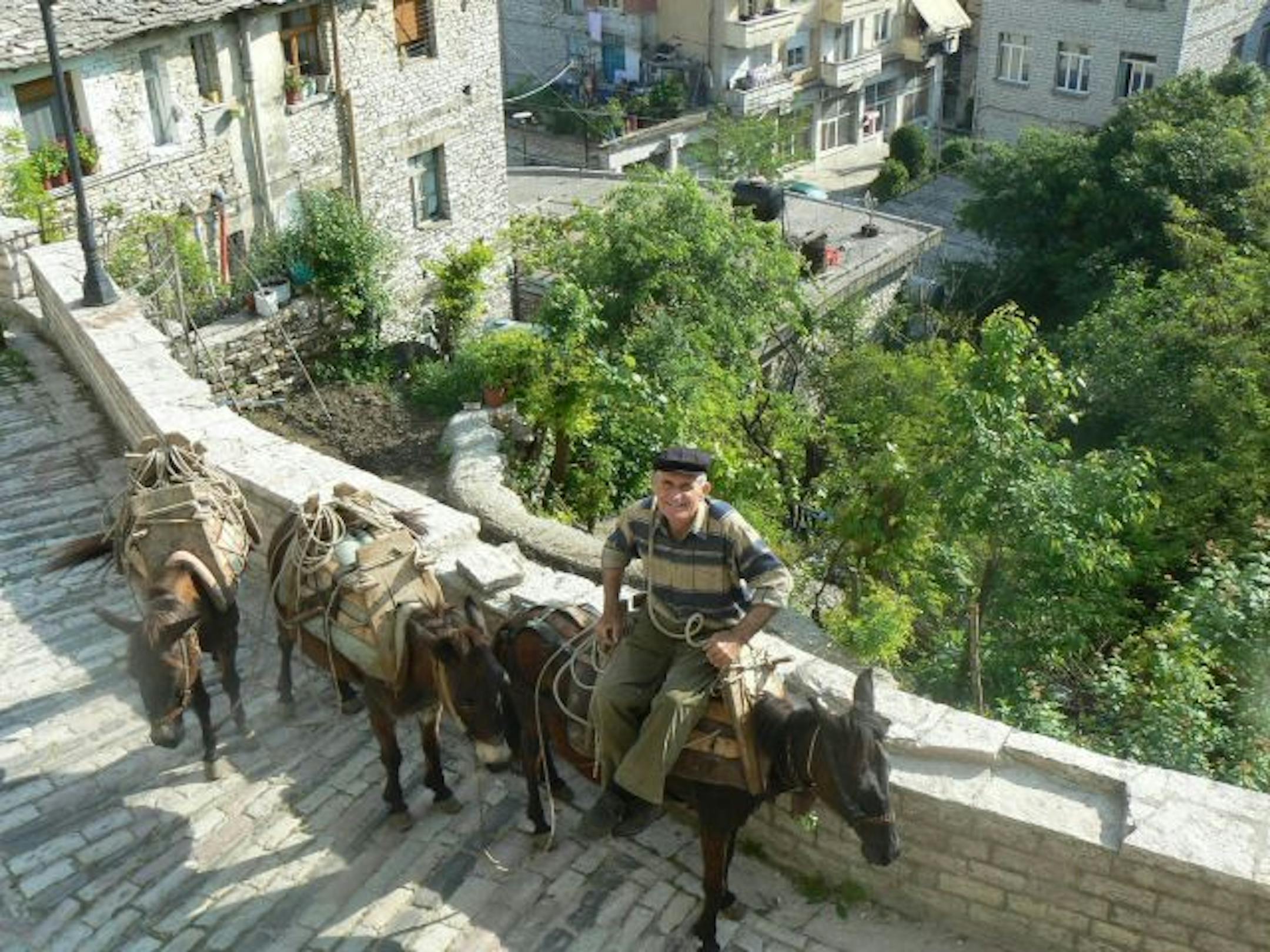
Like politics, a free press and religion, tourism in Albania is evolving, Valter said, "slowly, slowly."

Outside on the Berati streets, sidewalk vendors offered roasted sunflower seeds in paper cones and sour plums the size of cherry tomatoes as we joined in the ritual evening stroll along the riverfront.

Inside the castle walls, where families still live in stone houses tucked along cobbled streets too narrow for cars, a woman peered out of her doorway and motioned us inside.

Over tiny cups of coffee, we sat in her living room and chatted a while, using a few Albanian words and some Italian. Then she went behind a chair and pulled out a plastic water bottle filled with raki, a clear alcohol Albanians offer as a gesture of hospitality.

Villas now house cafes

As memories of the Bosnian war and ethnic conflicts of the early 1990s fade, the Balkan countries of Croatia and Montenegro in the former Yugoslavia are drawing travelers looking for less expensive alternatives to Western Europe.

Like its neighbors, Albania, a country slightly smaller than the state of Maryland, has historic towns with architecture evoking 500 years of rule by the Ottoman Turks; archaeological sites with Greek and Roman ruins; mountains and seaside resorts along a long stretch of Mediterranean coastline.

With its leftover Communist-style buildings and half-finished construction projects, the capital of Tirana is hardly Paris or London. But no longer is it the city of garbage-strewn streets and beggars that travel writer Paul Theroux described in his 1995 book "The Pillars of Hercules."

In the Blloku neighborhood, villas once reserved for the Communist Party elite house smart cafes where Tiranians sip cocktails on outdoor patios furnished with sofas and armchairs.

One night we joined a journalist friend at a restaurant called Shakesbeer owned by an Albanian chef who worked in London.

Walking along a wide boulevard built before World War II by Italian invaders for military parades, we passed the former government-owned Hotel Dajti, now closed, and the white marble pyramid built as a mausoleum for Hoxha.

A bronze plaque marks a street named Presidenti George W. Bush in honor of his visit in 2007, remembered for the cheering crowds that greeted him (Bush was a supporter of neighboring Kosovo's independence) and his watch that was either lost or stolen in the crush.

"Albanians love Americans and America," our friend explained. As it was in Berati, people were friendly and excited to talk.

A man sitting across from us at a pizza restaurant our first day in town told us that he spent time working in the United States during the war in Kosovo, and earned enough money to pay for his wedding.

When he got up to leave, he offered to buy us an espresso. My husband explained that he doesn't drink coffee. "Beer then," he said, and told the waitress our drinks were on him.

Slowly, Albania improves

Away from Tirana, rugged mountains form the backdrop for Albania's rural villages and seaside towns. We traveled on buses and shared vans, called furgons. Two-lane roads cut through a countryside strewn with dome-shaped concrete bunkers left from the Hoxha years.

Locals steer travelers to the Greek and Roman ruins in the ancient city of Butrinti and the nearby beaches in the coastal town of Saranda across from the Greek island of Corfu. More memorable than any sights, though, were the experiences we had and the people we met while traveling in a country where tourists are few.

On one of our long bus rides, we sampled pace, the national breakfast dish made from parts of a sheep's head. Early in the morning, the driver stopped at a mountain restaurant, and the waiters brought out bowls of what looked like a thick soup. It was pace, and despite our initial inhibitions, the soup was delicious.

In the town of Gjirokastra, we met Haxhi and Vita Kotoni, owners of the Kotoni House, the first private hotel to open after the Communist government fell. Using UNESCO funds, they renovated Haxhi's 300-year-old family home as a B&B decorated with carved wooden ceilings and Vita's embroidered pillows and woven rugs.

As Hoxha's birthplace and Albania's second "museum city," Gjirokastra, like Berati, received special attention. Built into a steep hillside below a castle and above a modern university town are Ottoman-era stone houses, some restored, others abandoned and awaiting money for repairs.

The port city of Durres on the Adriatic Sea was our last stop before crossing to Italy on an overnight ferry. Within a few blocks' walk in the historic center were the remains of a second-century Roman amphitheater, a shop selling 30-cent scoops of Red Bull-flavored ice cream and a bar in the turret of a Venetian watch tower.

I thought about the conversation Theroux had with a man named Fatmir as the writer was preparing to leave on a ferry to Greece.

"I hope you come back in 10 years," Fatmir told Theroux. "You will find that the houses are better, the town is better, the port is better, the food is better and I am better."

He was right. Slowly, slowly, Albania is changing.

The view from the window at the Kotoni House, a B&B in Gjirokastra, Albania. Gjirokastra is a UNESCO World Heritage Site with an ancient castle and preserved Ottoman-era stone houses perched above a river valley.
The view from the window at the Kotoni House, a B&B in Gjirokastra, Albania. Gjirokastra is a UNESCO World Heritage Site with an ancient castle and preserved Ottoman-era stone houses perched above a river valley. (Seattle Times/The Minnesota Star Tribune)
about the writer

about the writer

CAROL PUCCI, Seattle Times

More from Minnesota Star Tribune

See More
card image
J. SCOTT APPLEWHITE, ASSOCIATED PRESS/The Minnesota Star Tribune

The "winners" have all been Turkeys, no matter the honor's name.

In this photo taken Monday, March 6, 2017, in San Francisco, released confidential files by The University of California of a sexual misconduct case, like this one against UC Santa Cruz Latin Studies professor Hector Perla is shown. Perla was accused of raping a student during a wine-tasting outing in June 2015. Some of the files are so heavily redacted that on many pages no words are visible. Perla is one of 113 UC employees found to have violated the system's sexual misconduct policies in rece