

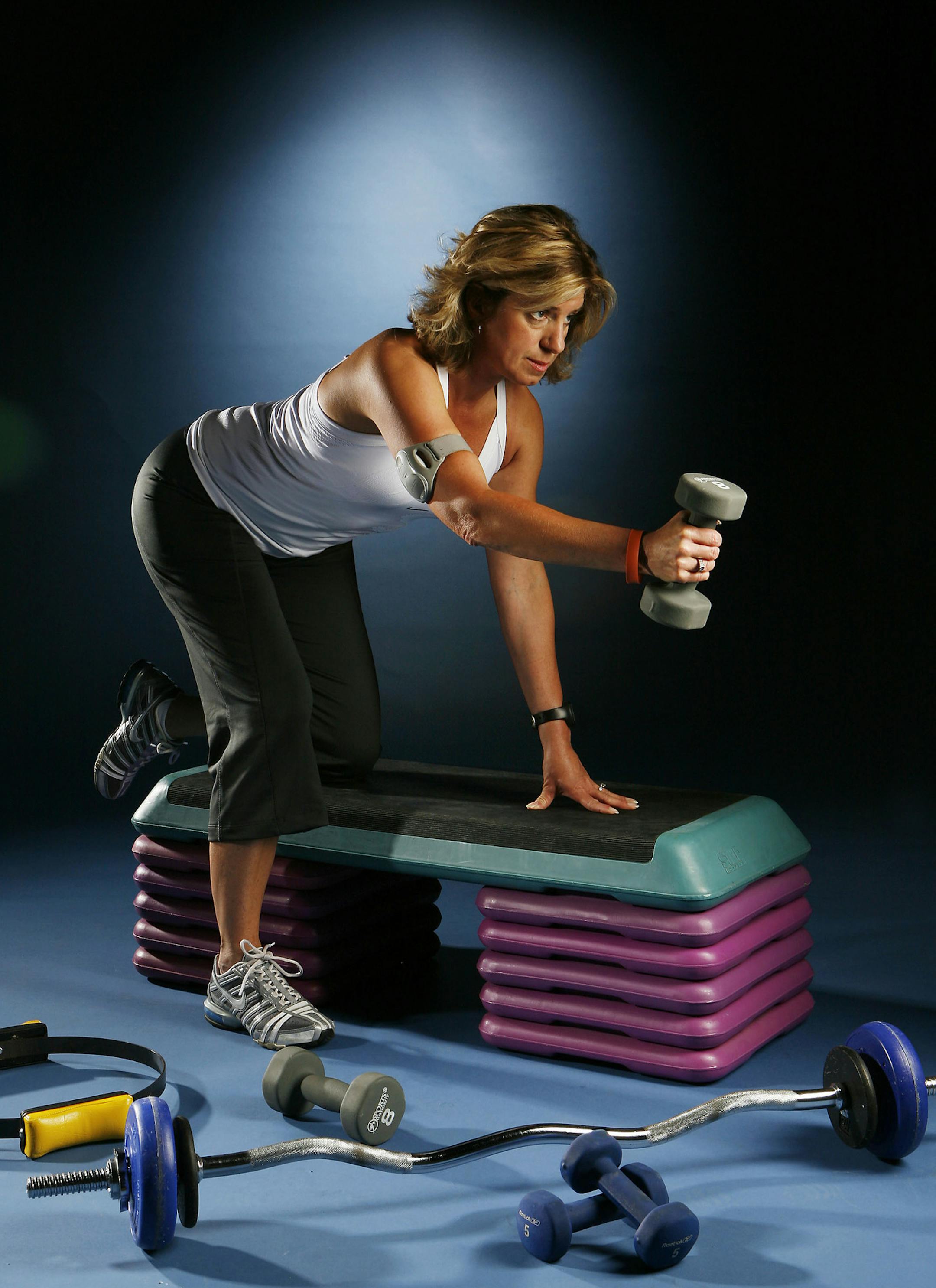
Workout programs are like 401(k)s — they need to be re-balanced over the decades.
"As we age, we need to gradually take out the risk and put in more 'blue chip' elements," said fitness expert Tom Holland.
These four basic-yet-effective exercises — a squat, pushup, bicep curl and abdominal crunch — should remain in your program as long as you can perform them correctly, Holland said.
"When you're young, blue chips are often perceived as being too easy, yet they are the key to creating and maintaining a strong foundation," he said. "You may have to modify them slightly as you age — not going down as far on a squat, for example — but you keep them in as long as possible."
As the body ages, it naturally begins to fall apart, with some functions breaking down faster than others. After age 20, the maximal amount of oxygen your body can use falls by 1 percent a year.
By the time you've hit 30, muscular strength begins to head south. But most of the decrease occurs after age 50, when it drops at the rate of 15 percent per decade. Bone mineral density also decreases with age; in women the rate accelerates after menopause.
What to do? Experts say the ideal combination of exercise for healthy aging should include aerobic, strengthening and flexibility exercises.
Balance exercises are also vital in helping prevent falls, which can lead to fractures. And though higher-intensity training programs are effective, less rigorous workouts can be just as effective, as long as they are done consistently.


