

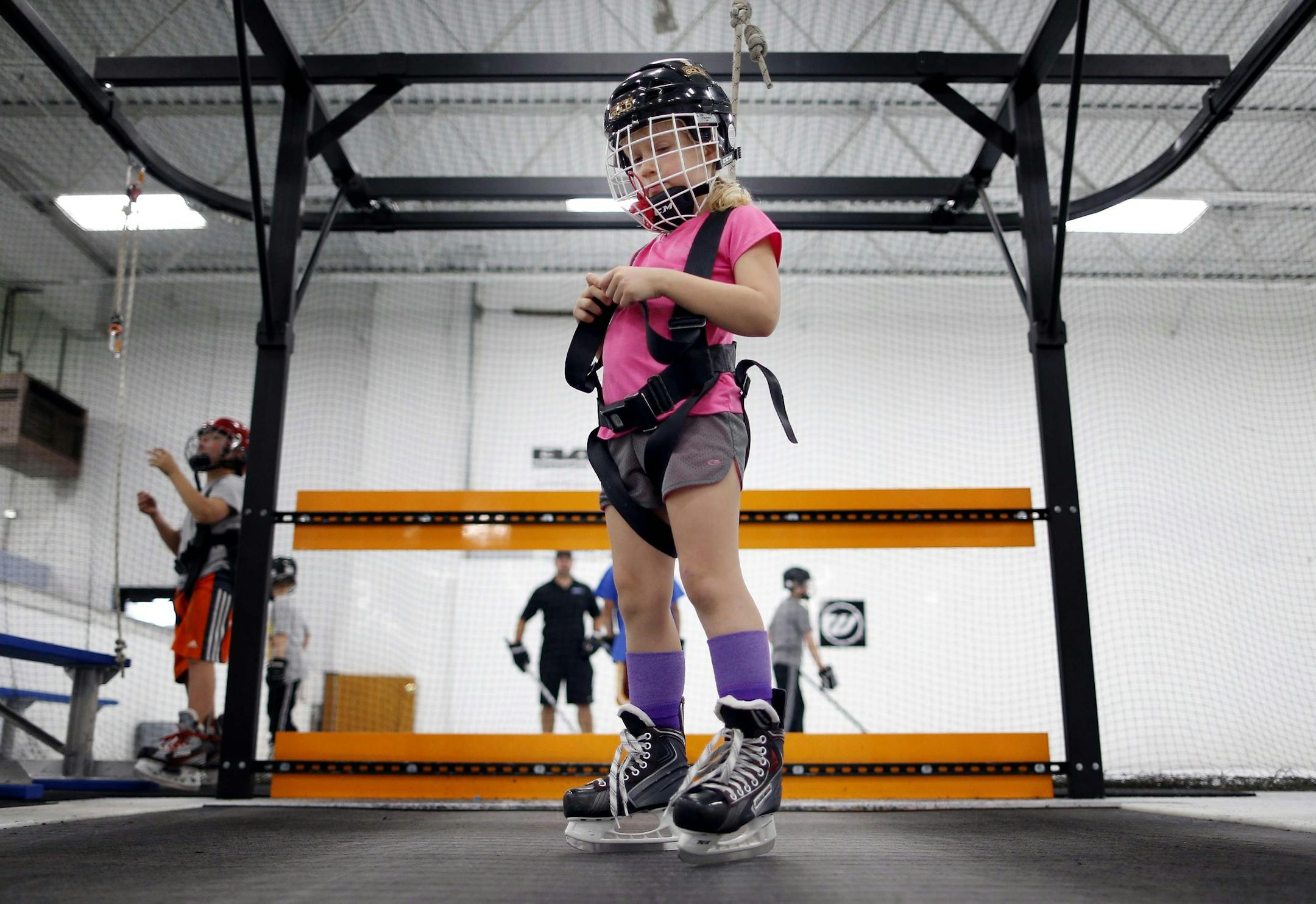
Sara is 7 years old, and goes to sleep with the NHL Network playing reruns of games in the background.
Her parents, Jon and Molly Woll, have her playing on two hockey teams this fall — and attending two ongoing clinics. After school, at a hockey training center in Edina, she did her second-grade phonics homework before starting wind sprints and sit-ups. Often, she is surrounded by hockey players more than twice her age.
Her family, meanwhile, forfeited a mini vacation to Duluth and applied the $500 to hockey fees.
And through it all Sara — with an impish smile and weighing only 58 pounds — says she loves her blossoming life of hockey. In her bedroom, a hockey trophy sits on a desk in front of Snow White, one of her Disney princess dolls.
As in many households throughout Minnesota, the debate over how-much-is-too-much with youth sports goes on almost daily in the Woll home, a modest, two-story in south Minneapolis with an aging Ford Taurus parked out front. Every clinic, practice and early evening ride to a training session becomes another extraordinary commitment from an ordinary family.
For three months, the Wolls gave the Star Tribune wide-ranging access to their decisionmaking, finances and Sara's schedule for an in-depth look at one family's commitment to youth athletics.
The Wolls are moving ahead, wary that there is plenty of cautionary evidence about harm that might be caused by children overtraining.
An American Academy of Pediatrics study, updated in 2011, said incidents of overuse injuries were increasing among children and that overtraining can lead to burnout. An estimated 30 to 45 million children between the ages of 6 and 18 participate in youth sports in the U.S., the study said. It recommended that children take one to two days off per week from organized sports, and take longer breaks from training every two to three months while finding other activities to keep up their conditioning and skills.


