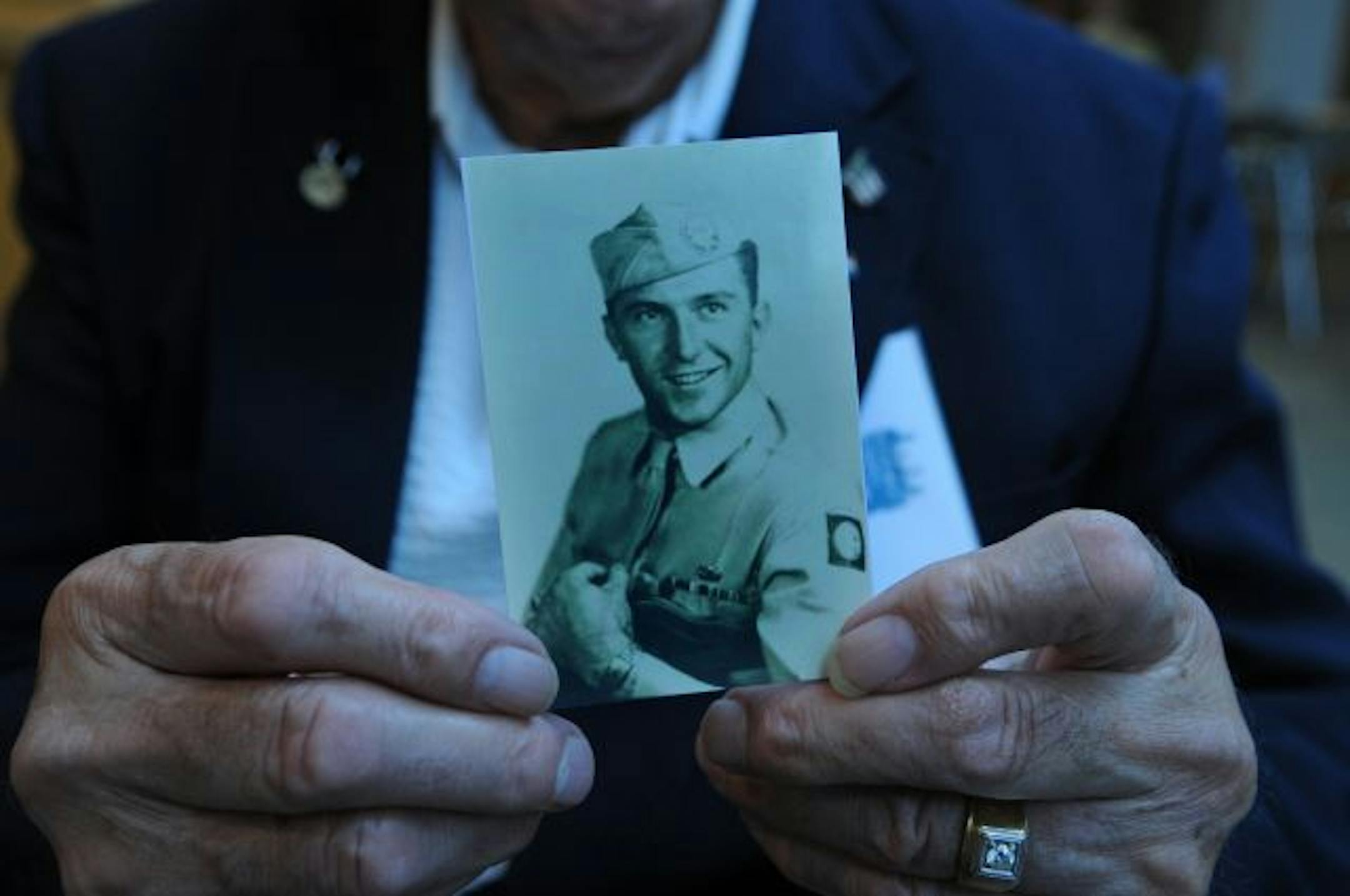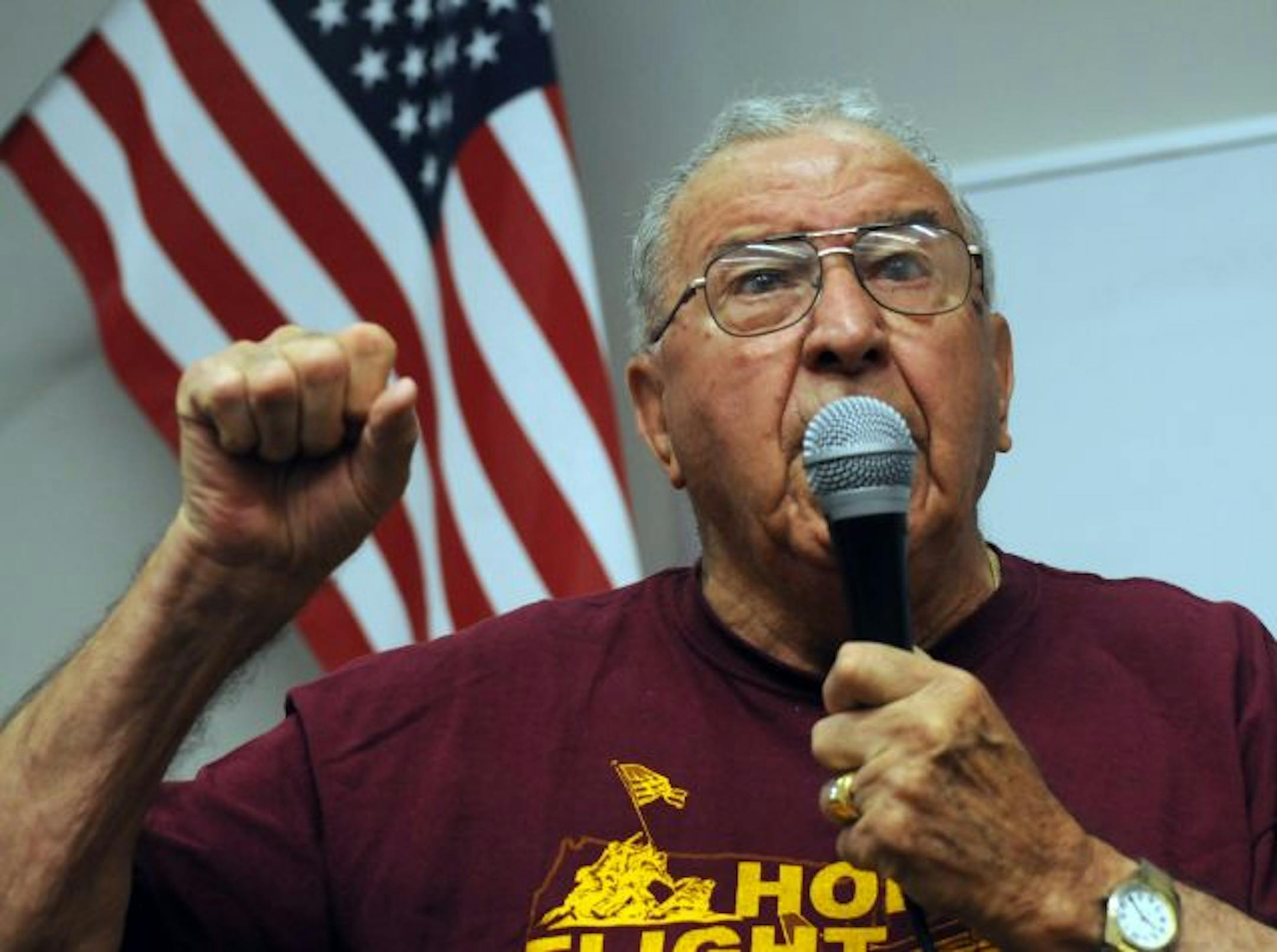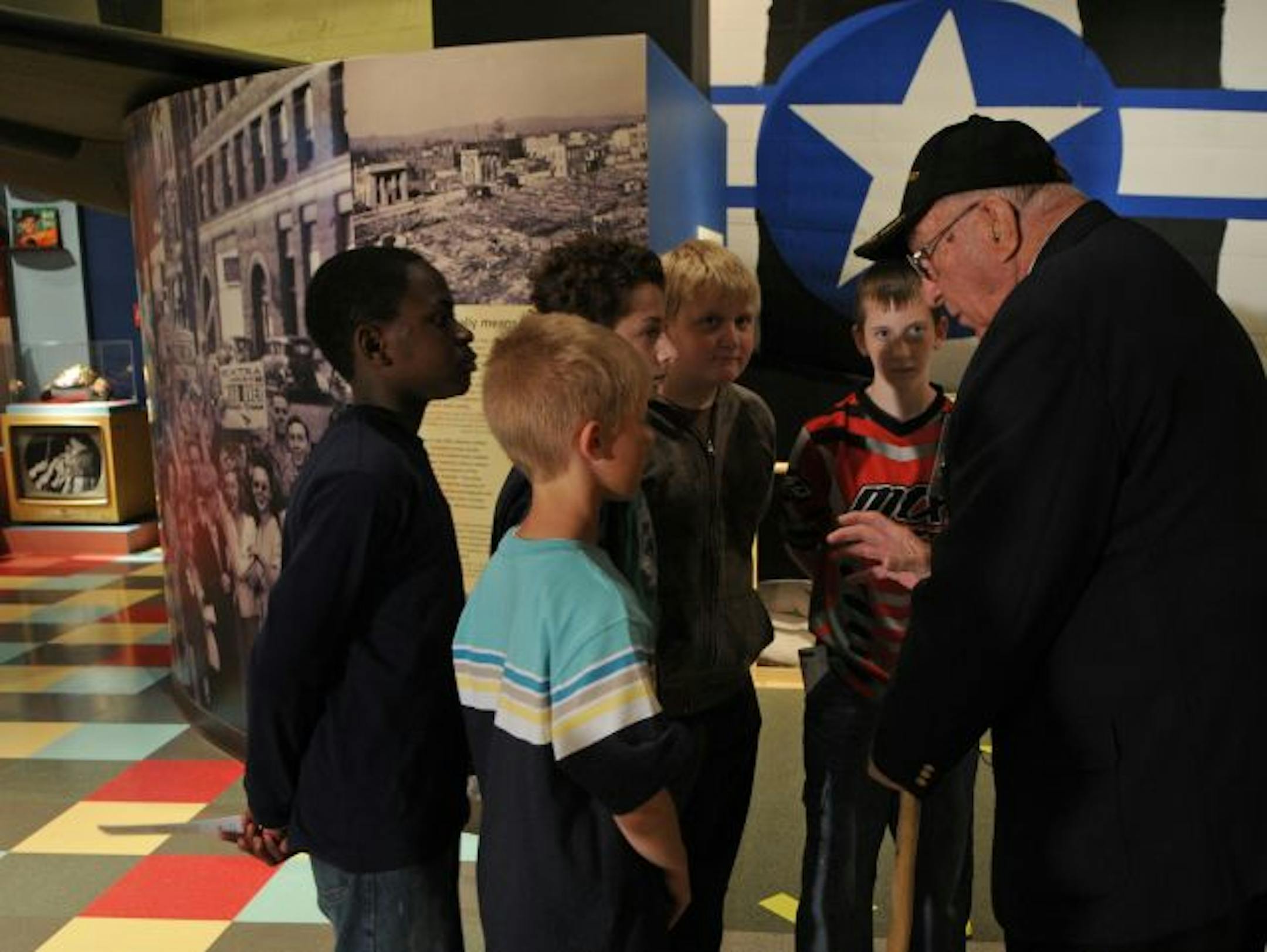
Sixteen-year-old Sam Aschenbrener admits she sometimes dozes off in history class. But she sat wide-eyed in an auditorium one recent morning. Along with a few dozen other Eagan High School sophomores, she listened as 88-year-old Ed Haider wound the clock back 65 years to the first week of May 1945.
After nearly two years in Nazi prison camps, Haider awoke in his bunk to the sound of muffled explosions and flashes of light through his barred window. Iron bars creaked and doors opened. Nazi guards threw Haider his pants and boots, which they'd lock up every night to prevent escapes. At 3 a.m., Haider and 27 other prisoners of war were ordered to march, just as they had for 1,000 miles that winter, in bloody boots, toward the Baltic Sea.
At noon on May 5, 1945, they reached a sand-pit ravine near Rostock in northern Germany. Russian tanks roared in the distance, firing artillery shells.
"The Germans took off running and left us right there in this gully," Haider told the teenagers. "We were free."
Not quite. Waving a white flag, a Polish-speaking prisoner from Milwaukee and a Russian speaker from Yonkers, N.Y., tiptoed up to talk to a Russian tank commander with white hair and a trimmed mustache. Bring your comrades up here, he said, and we will feed them.
"As we walked across the field about four blocks long, out of the clear blue sky came 25 beautiful American fighter planes," Haider said. "They thought we were a bunch of Germans."
He watched as two men he knew only as Big George and Little George from Ohio had their legs blown off. A Russian in the bushes shot a guy named Al through the neck. Haider painted a picture of war's chaos in sharp detail. And the kids didn't flinch.
"It's really a cool thing to learn from someone who went through it, not just from textbooks," said Nick Goodsell, 16. "To have someone really close to you dying right in front of their eyes, I don't think I'd be able to handle it. But these guys kept fighting for us."