
50 years of KQRS: Reeling in the years

How KQRS emerged 50 years ago to become Minnesota's most loved/hated station.

December 7, 2018 at 3:38PM
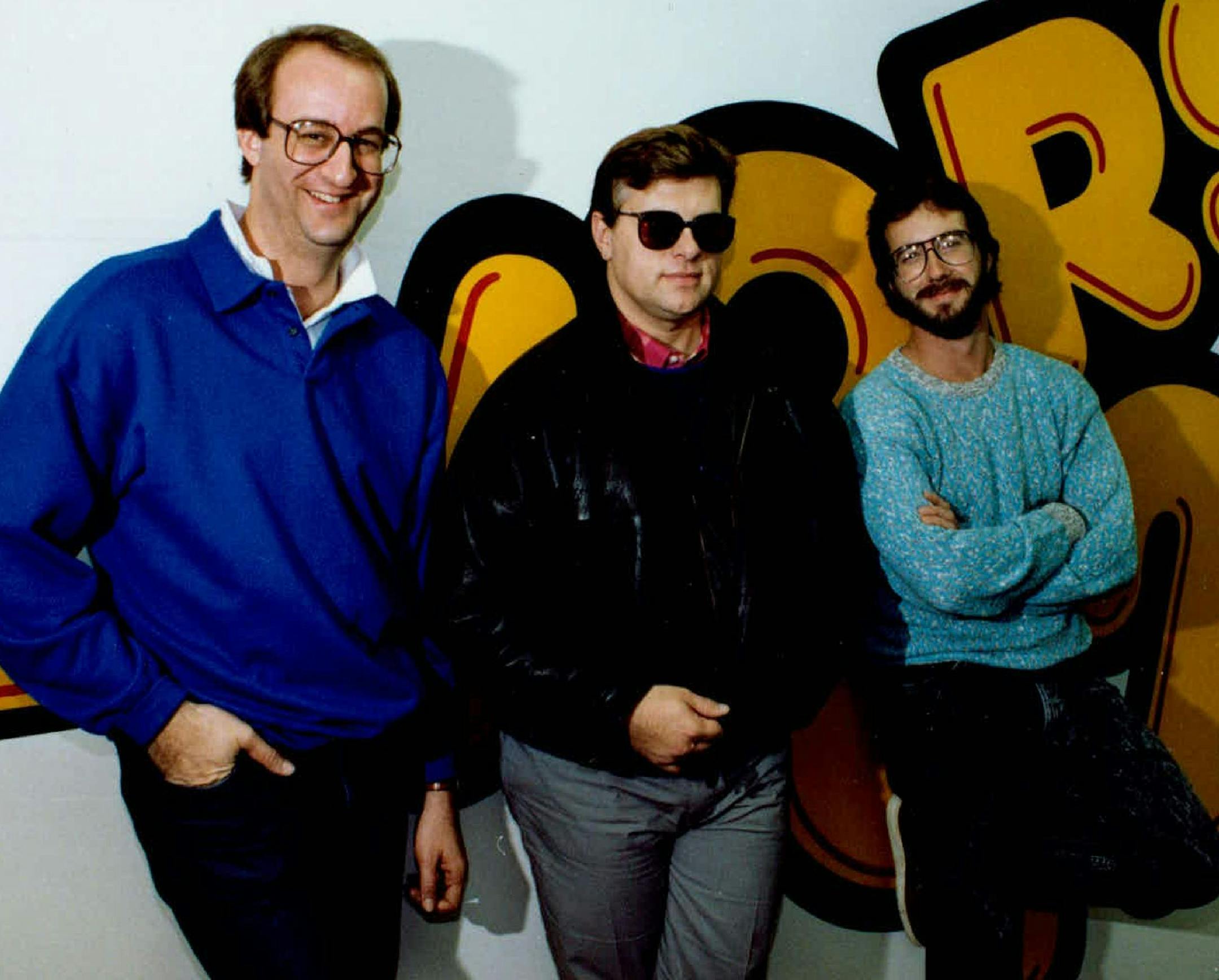
Tom Barnard, center, with morning show sidekicks Mark Rosen and Dan Culhane in 1987. "It was the perfect mix" of personalities, Rosen said of their rapport.
Tom Barnard, center, with morning show sidekicks Mark Rosen and Dan Culhane in 1987. “It was the perfect mix” of personalities, Rosen said of their rapport. (The Minnesota Star Tribune)

When Steve Perry decided to do his first extensive interview in more than 25 years, he flew to Minnesota to break radio silence with KQRS morning host Tom Barnard.

The former Journey-man's choice may have startled those who have come to take the station and its megastar for granted. We forget that KQ helped revolutionize the airwaves, first by championing the rock format and, later, by turning Barnard into one of the most successful morning-drive personalities in FM history.

As the station celebrates its golden anniversary, we reached out to the DJs, programmers and musicians who led the charge. This is their story, in their own words.

Born to be wild

KQRS got its current call letters in 1964 and spent the next four years spinning mainly light pop.

George Donaldson Fisher (DJ, 1966-72): When I started, it was a lot of "beautiful music" — Tony Bennett, Frank Sinatra. We got sponsorship from Musicland [record stores], which gave me like 300 albums, a lot of them from West Coast artists like the Grateful Dead and Jefferson Airplane. Early in the broadcast, I had to play music that wasn't too jarring, as we were segueing from big band and crooner stuff. After a while I could play whatever I wanted, even stuff with swear words in it.

Wayne Selly (DJ, 1969-73): I took out Dionne Warwick and Glen Campbell and put on Joe Cocker and Grand Funk Railroad.

Alan Stone (DJ, 1968-80; real name: Shel Danielson): We started getting letters from guys in prison. They weren't asking for money. They just wanted us to play more B.B. King.

Fisher: Shel and I would counterprogram against the more traditional advertisers. When a jewelry ad ran, we would play a Grateful Dead song about sticking up a jewelry store ["Dupree's Diamond Blues"]. The people who really wanted to advertise were head shops and record shops.

Stone: A couple of years after I went on the air, I was driving the length of Lake Street on a hot summer night with the windows down. I could hear the radio station all across town from boomboxes and other cars. That was a really great feeling.

Come together

During the days of Vietnam War protests, KQ was just as committed to spinning a socially conscious message as it was to music.

Selly: Alan and I would read draft numbers over the air [from the lottery to determine who got called up for military service]. We found out that kids over on campus were glued to the radio, waiting to hear the numbers announced. It was a pretty scary time.

Fisher: I don't think we had anyone listening that was pro-war. There was one incident when [President Richard] Nixon authorized a nuclear test. On a whim, we called the winter White House in Florida and asked if they had a [phone] listing for Nixon. They actually did and we gave it out on the air a few times. A couple hours later, the power was cut to the station. Someone had rammed a power pole with their car. We never knew if it was an accident or a reaction to our stunt.

Randi Kirshbaum (DJ, 1970-75): Alan Stone was the program director and I went to his office saying I thought a progressive station should have a woman on. I think I just wore him down until he gave me a show. I was 16 at the time. First day on air, I read a story about Henry Kissinger being voted the sexiest man alive by Playboy bunnies. I said, "Oh, that makes me want to puke." Most of the people listening probably agreed with me.

Bill Tilton (host of the mid-'70s show "KQ Scope"): There was a minute in time when stations had public-affairs program requirements. I had just gotten out of jail [for destroying draft records] and was basically hired to be the news department. The programs we did on the legalization of marijuana were always popular ones; the lines were always full.

I want you to want me

KQ became an essential destination for musicians — and other entertainers — who wanted to make a mark in the Midwest.

James Young (founding member of Styx): When we started off, Top 40 radio was very narrowly formatted. Stations like KQ embraced album rock as opposed to hit singles, and that really opened the door for us to create ourselves. KQ was a slam dunk for us, in a way. My wife's family was scattered throughout Minnesota, and we always heard so much about the station from them and how much they were playing us.

Bob Seger (who'll play a KQ-sponsored 50th anniversary concert Thursday at Xcel Energy Center): From "Ramblin' Gamblin' Man" to "Live Bullet" to today, KQRS has been there from day one.

Stone: One afternoon, I did an interview with Big Mama Thornton, followed by Doc Watson, followed by Leo Kottke. I think John Mayall was waiting outside, very unhappy. It was like a meat market: Take a number for better service.

Fisher: People would bang on the door in the middle of the night. One time, at about 2 a.m., Mike Love from the Beach Boys showed up. He picked out music and took calls. He was terrific.

Stone: Carlos Santana had finished a sound check and was bored, so his record guy called up and asked if he could come over. We let him pick the music for two or three hours. He had pretty good taste.

Kirshbaum: First interview I ever did was with Bob Weir of the Grateful Dead. I think I said something really dumb like, "What's it like being a rock star?"

John Lassman (DJ, 1983-94, and morning show producer since 2015): We had just passed a no-smoking ordinance after 30 years of smoking in the Golden Valley location. John Mellencamp came into the studio and lit up a Marlboro. I said, "Sorry, John. You're going to have to put that out." He put it out and then said, "Can you get a soda?" I go down the hall and when I come back he's smoking again. He said, "Listen, I can keep smoking and stay or I can put it out and leave." I told him to keep smoking.

Wally Walker (DJ, 1979-present): I was working on a Sunday afternoon and Eddie Van Halen and David Lee Roth dropped by to chat. I don't know what David was on that day, but Eddie kept him under control to some degree. Must have been their first or second album. At the time we had a nice little front lawn outside the studio, and by the time they were done, a mini-Woodstock had formed out there. That spur-of-the-moment thing happened all the time back then.

Lassman: Chuck Berry was at the Carlton Celebrity Room [in Bloomington] in 1987 and I was running around with a cassette deck backstage. I said, "Excuse me, Mr. Berry. Can we get a station ID?" He said, "You ready? This is Chuck Berry and you're listening to KQ 99." I went, "That's great, but let's try again. It's KQ 92." He said, "You get one, son." And he walked away.

Ray Erick (DJ, 1989-): I was set to interview Paul McCartney and was told someone would call me ahead of time with some rules. I was home making lunch and the phone rang. It was Paul. He said, "You can have me on as long as you want. Just make sure to cut me off first so it doesn't look like I'm a snob and I'm too busy for you."

When the whip comes down

In 1977, Abrams Media was hired as a consulting firm; DJs were quickly limited on what they could play.

Stone: It was like going from a chef-driven restaurant to a franchise operation. Where we were previously choosing from 1,000 albums, we now had to choose from 800 songs. My guess is that Abrams told management that they would find another station that would carry their format and they would beat us.

Benjamin Mchie (DJ and public affairs director, 1974-81): I wasn't a big fan of the format coming in, and eventually my interest in radio dwindled. You couldn't break new music. You had to play what was on the Billboard charts.

Dave Hamilton (program director, 1985-2012): Between 1985 and 2011, we spent around $100,000 per year in an effort to find the songs and artists our audience most wanted to hear and to mine for those "nugget" songs you wouldn't hear anywhere else. We had a bank of callers who would play short "hooks" of songs over the phone to 75 to 100 KQ listeners each week.

Craig Finn (Edina-bred frontman for the Hold Steady): When you're 16 or 17, you want to spend as little time at home as possible, so you spend it driving around listening to the radio. Back then, there weren't any alt-rock stations. So it was classic rock, 92 KQRS. To this day, I can sing every song on classic-rock radio, and I never liked a lot of it.

Mei Young (overnight host, 1986-2006): I hosted a program called "Homegrown" for almost 10 years. On Sundays around midnight local bands would come in and play live. It would have been tough to get it on any earlier in the day. It was very corporate. But it was a way to give back to locals. I think it was good karma for the station. We had everyone on: the Suburbs, Trampled by Turtles, Haley Bonar. One night in 2000, Happy Apple joined Slug [of Atmosphere] on his song "In My Continental." A jazz band with rap.

We are the champions

In 1986, KQ signed a new consultant, Jacobs Media, which pushed for the classic-rock format that still exists. But it was the hiring of Tom Barnard that same year that would trigger the station's rise to the top. By 1994, it had toppled WCCO-AM from its perch as the Twin Cities' most popular station and Barnard was the nation's highest rated morning radio host.

Hamilton: Ratings-wise, the station was in the middle of the pack. Half our audience was between 12 and 24, not a really desirable demographic. I realized I needed to boost the morning numbers if I wanted to stay employed.

Tom Barnard: I was doing voice-over work in New York and my wife called, told me she was going to have a baby. I thought, "We can't raise a baby in Manhattan." I put the phone down and Dave literally called moments later and asked if I had any interest in hosting a morning show. I said, "Yeah." I didn't even think about it much.

Mark Rosen (WCCO sports anchor): I got to KQ before Barnard did. They put a line in my townhouse and I'd put my headset on and talk to some jock for these two- or three-minute sports updates. In March 1986, I got a call: "You ever heard of this guy named Tom Barnard? He starts tomorrow morning." When I got on the air, something happened. I hadn't even met him yet and he started ripping on me. That little sports update turned into 20- or 30-minute free-for-alls.

Scott Jameson (operations manager, 2012-present): Tom embracing the '87 Twins — that's when Tom exploded, that's when the station exploded.

Hamilton: Tom was polarizing right out of the chute, but he connected with a large portion of our listeners. We were getting complaints, but more than anything they were about too much talking and not enough playing music.

Barnard: Michael Jackson had called the station and said he wanted to be interviewed on the KQ morning show. Well, he canceled at the last minute. So, in that instant, John Lassman created "The Chucker." He pulled out a Chicago phone book, found a guy named Michael Jackson and called him in this voice he just made up. That's how the whole prank thing started.

Ridin' the storm out

At times, the jokes and commentary crossed the line, at least to the ears of some community members. American Indians, the Hmong community and Somali cabdrivers would stage protests demanding apologies and even Barnard's resignation.

Erick: About 4 p.m. I was on the air and I was told about a hundred cabdrivers were heading my way. They surrounded the building. They had to close off a whole section of Golden Valley. Nobody could leave.

Noel Holston (Star Tribune TV/radio critic, 1986-2000): At some point, the jokes and sketches got meaner and more sexist and homophobic and racist. It seemed as though Barnard had started to see himself as the voice of the threatened white male. I think the bit that made me speak up in the paper was the riffing they did one morning about a rape case that involved Hmong immigrants, both underage. I got a lot of cheers from readers who considered Barnard a jerk. I also got some hate letters and a ton of hostile voice mails. I sawed off one of my old baseball bats and carried it in my backpack for several weeks.

Barnard: Why people get so emotional about a radio show is amazing to me. You guys think I'm mad at everybody. I'm not.

An even bigger threat came in 1997 when rival station Rock 100 (now KFAN) decided to bring Howard Stern's syndicated morning show to the Twin Cities. The so-called King of All Media gave up after two years.

Hamilton: We realized Howard was starting to spread himself very thin and that the magic was starting to wear off. We saw how other stations dealt with him coming into their market and had a blueprint on how to win: Ignore him and be edgier. During his first days in the market, we had a live event called Flogapalooza, an S&M deal with the most notorious dominatrix in the Midwest. Who's edgy now?

Barnard: I don't have anything against Howard. I've never even met Howard. He's just not very good on the air.

Hamilton: Andy Bloom, the program director at Rock 100, was beginning to realize he was losing the war. In desperation, he called Stern and asked to be put on the air live. I happened to punch over to 100.3 that morning and heard Bloom pleading with Stern: "Howard, we're getting outmaneuvered here. Please get me a protest in Minnesota." Stern replied, "Why should I care what happens in Minnesota? Gary, get this guy off the phone!"

Runnin' with the devil

KQ became known for its wacky promotions.

Selly: There was this Let's Go Fly a Kite thing at Lake Nokomis. Ten thousand people showed up to fly a kite. What the hell were all those people doing there?

Lassman: There was a Twins pitcher holding out for more dough. Everybody hated this guy. We got a big hopper and invited listeners to come down to Golden Valley to throw pennies in this big hopper. Well, the hopper started filling up. People were lined up down the street.

Walker: After I had had a couple kids, Dave Hamilton asked if I was thinking about having a vasectomy. He said he could get me a free one if I had it on Tom's show. Mike Gelfand provided play-by-play. Dave got the idea from a station in Chicago, but I think I was the second person to ever have a live vasectomy on the air.

Erick: In 1994, we officiated the marriage of 92 couples in the rotunda in the Mall of America, live on the air. I still run into people from that event. Still married.

Old time rock and roll

While ratings for Barnard remain strong, the rest of the lineup has taken a hit in recent years. According to the latest Nielsen ratings, KQ is eighth in the market.

Jameson: I believe the future of KQ is based on how media consumption is valued by advertisers. In 2019, the youngest baby boomer will turn 55. Why is that significant? Because the demographic that Nielsen sees as valuable consumers is 25-54. That's extraordinarily crazy. Advertisers have to recognize the robust spending power and household wealth of the alpha-boomer generation.

Fisher: It was sad to see it become a corporate station. These days, the only station I'll listen to is the Current. They're doing something similar to what we did.

Walker: I think you'll start to hear less things from the late '60s and more songs from the '80s. We've been playing more Guns N' Roses and Motley Crue.

Lisa Miller (DJ, 1993-present): I'm no Obi Wan Music Kenobi. If people want to hear "Gimme Shelter" again, who am I to judge? KQ is synonymous with Minnesota and synonymous with home. We're familiar. We're your friends on the radio.

612-673-7431 • Twitter: @nealjustin


about the writer

about the writer

Neal Justin

Critic / Reporter

Neal Justin is the pop-culture critic, covering how Minnesotans spend their entertainment time. He also reviews stand-up comedy. Justin previously served as TV and music critic for the paper. He is the co-founder of JCamp, a non-profit program for high-school journalists, and works on many fronts to further diversity in newsrooms.

See Moreicon

More from Minnesota Star Tribune

See More
card image
J. SCOTT APPLEWHITE, ASSOCIATED PRESS/The Minnesota Star Tribune

The "winners" have all been Turkeys, no matter the honor's name.

In this photo taken Monday, March 6, 2017, in San Francisco, released confidential files by The University of California of a sexual misconduct case, like this one against UC Santa Cruz Latin Studies professor Hector Perla is shown. Perla was accused of raping a student during a wine-tasting outing in June 2015. Some of the files are so heavily redacted that on many pages no words are visible. Perla is one of 113 UC employees found to have violated the system's sexual misconduct policies in rece