3 recipes that will change the way you make meatballs

Perfect your meatball technique with these recipes that are all very different but teach important lessons.

The New York Times
October 29, 2025 at 3:00PM
Many people have a tried-and-true recipe for classic Italian American meatballs but leave room for one more. Food styled by Sue Li. (Linda Xiao/The New York Times)

There are no strict rules for meatballs, as my 15 years of professional cooking experience have shown me.

Meatballs, in essence, are just meat, seasonings and a binder. They can be mixed delicately or vigorously, made from a meat substitute, flavored with a variety of ingredients and cooked any number of ways.

But while there’s no single formula, there are a few principles for ingredients and techniques that will help you make better meatballs every time.

These three recipes yield meatballs that are all quite different from one another, but each one holds important lessons. Make them all, and you may very well end up a meatball master.

I was taught that a classic Italian American meatball should be a delicate one. So my recipe is a mix of fattier ground pork and beef, lightened with Pecorino Romano and ricotta, which adds milkiness without milk. If that sounds pretty rich, that’s the point: Fat creates tenderness.

Look for a ground beef that’s has a high ratio of fat: 80% lean to 20% fat is good, but if you can find 70% meat to 30% fat, you should get it. And it should go without saying that whole-milk ricotta is preferred.

How you handle the mixture matters, too, and for a classic Italian American meatball, avoid overmixing. The more you mix meat, the more its proteins tend to bond, which can cause the meat to be chewy and dense. (That can be a good or a bad thing, depending on what you want to achieve.) Here we want a loose, tender meatball.

For that reason, you’ll mix together the seasonings, cheeses and eggs separately from the meat. Not only does it help prevent overmixing, it also helps ensure flavors and fats are evenly distributed. When you finally mix in the meat, remember that you want the insides to stay as loose as possible. Gently incorporate the two sets of ingredients as if you were folding egg whites into a batter, working as though it could deflate at any moment. Once it’s all incorporated, use a spoon to scoop out pingpong-ball-sized meatballs. It’s just another way of reducing how much you handle the meatball.
When you’re ready to cook, searing the meatballs creates a seal and also flavor in the now-burnished crust. That good flavor ends up in the sauce when they all cook together.

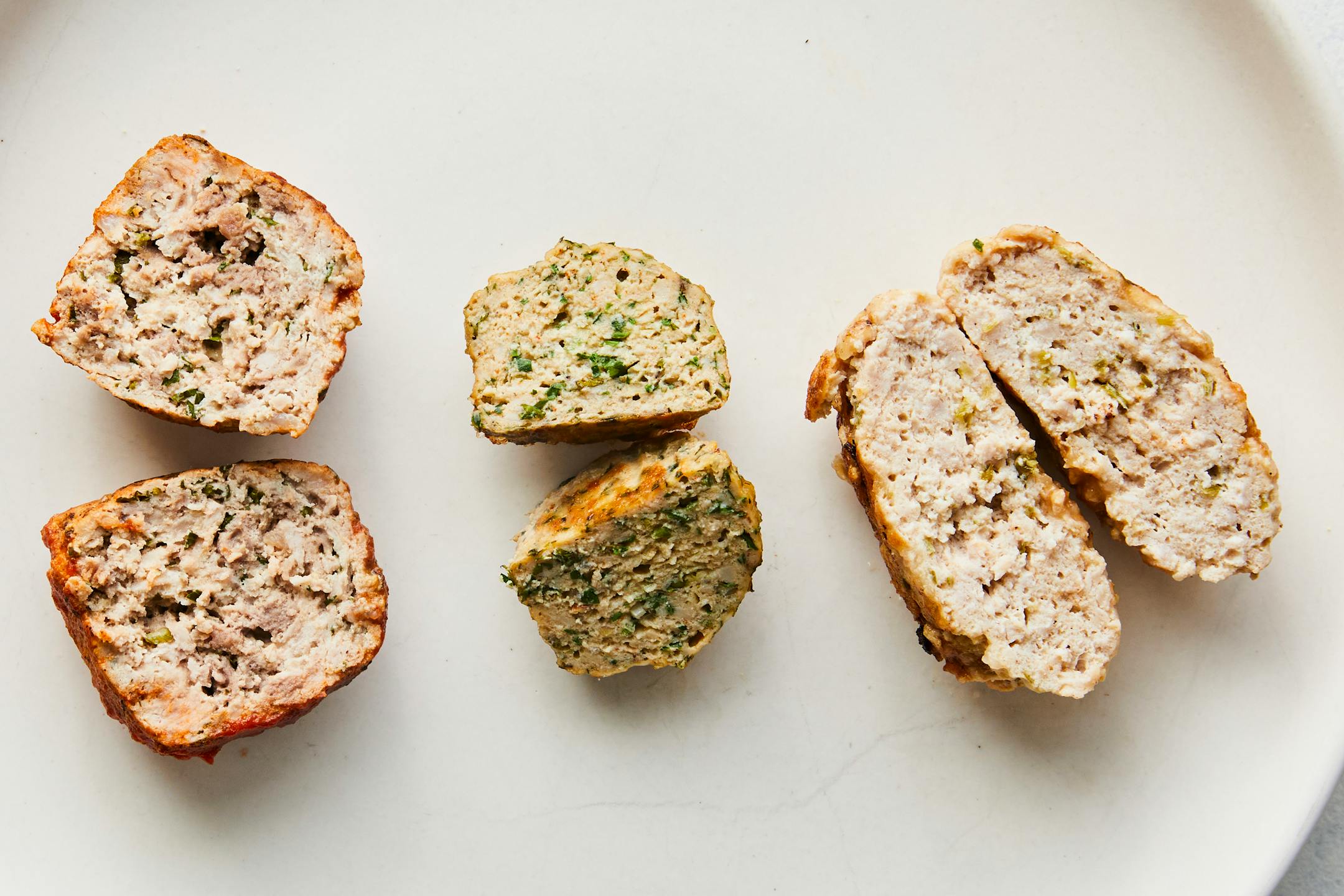
Three recipes yield meatballs that are all quite different from one another, but each one holds important lessons: from left, Italian, chicken and lion's head. Food styled by Sue Li. (Linda Xiao/The New York Times)

Just like gentle mixing, vigorous mixing has its place. You want it when handling lean meats and for dishes that actually benefit from a dense texture. Both are true in my chicken meatball recipe.

The reasoning is this: Since there’s less fat, the proteins need to be developed. When you knead the meatballs, those proteins start to stick to one another, which helps prevent crumbling. Vigorous mixing also pulls out whatever fat is in the chicken as well as the water, which can help bind, but I also have a little insurance.

I add an egg, a classic binder, and cook the meatballs in the oven, a less intrusive method of cooking that helps keep them from breaking. (Like in the Italian American meatballs, I use a spoon to shape the meatballs — but not to avoid overmixing. Instead, the spoon helps more easily form a shape from a sticky mixture.)

In short, loosely mixed meatballs end up delicate and crumbly, good for absorbing sauces. But meatballs that are mixed more? They end up springy, and hold their shape better, making them good for frying and dipping (or if you just like a dense meatball).

In the end, my recipe transforms ground chicken, which can run the risk of being a little bland, into something gorgeously flavorful, full of warm spices, like paprika, cumin and coriander, and fresh herbs, like parsley, mint and cilantro.

Various ingredients can bind and add texture. Understanding what certain binders do can help you manifest the kind of meatball you want to eat.

Notice there’s an egg in all of the recipes. That’s because it acts like a glue in how it binds, but it also adds fat. You could also use fresh or dried breadcrumbs, which lend structure and absorb moisture, or cooked grains like rice or quinoa, which can bind and add a little bite. In the lion’s head meatballs, silken tofu helps out the egg as a binder, which makes them light and bouncy, much like the tofu itself.

The meatballs are dipped into a slurry made from water, soy sauce and cornstarch, which helps create a crisp, flavorful crust when they are seared.

Then they’re steamed until springy, or QQ, a Taiwanese term for a bouncy, pleasingly chewy texture. It’s the best kind of meatball: one that warms from the inside and tastes like home cooking.

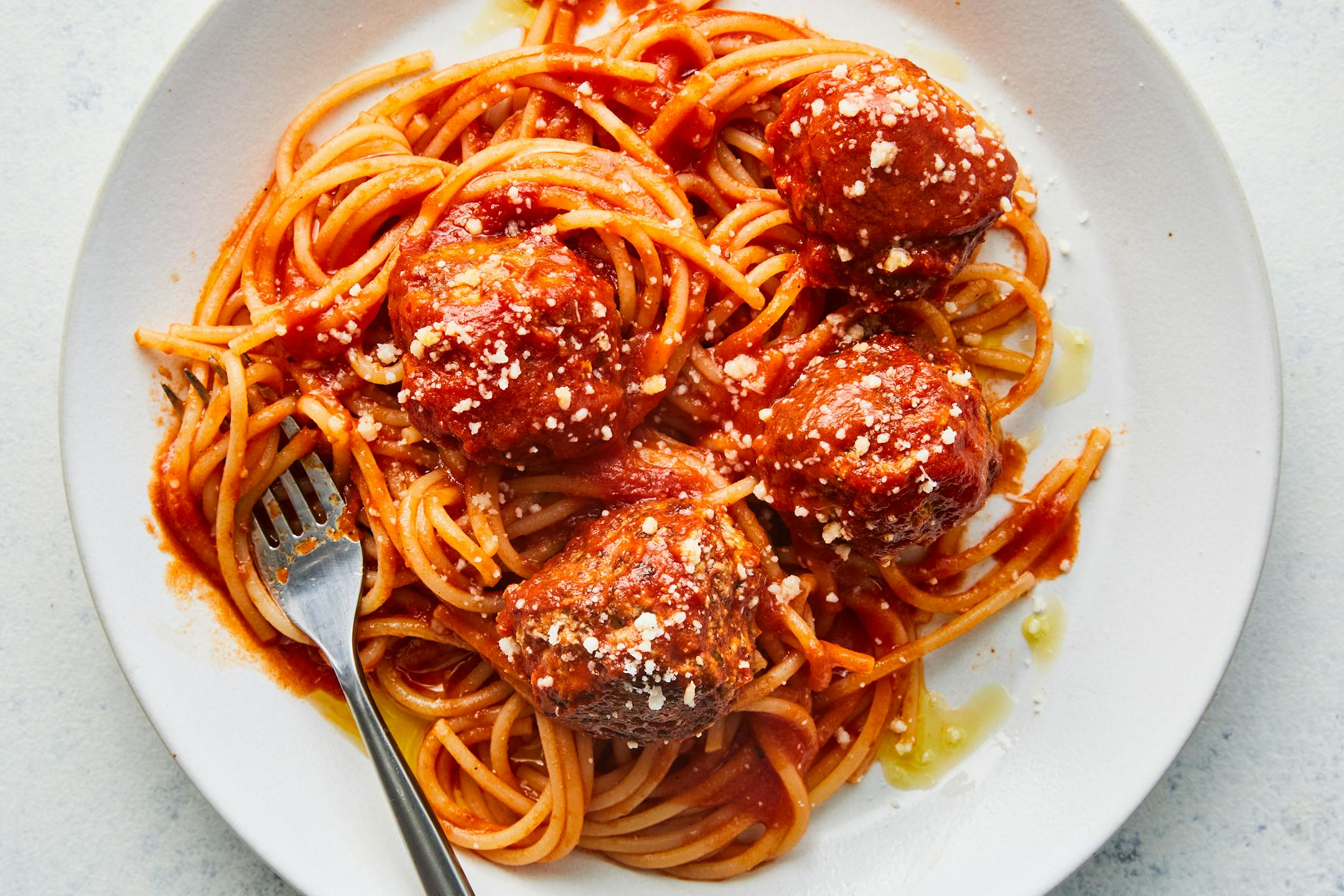
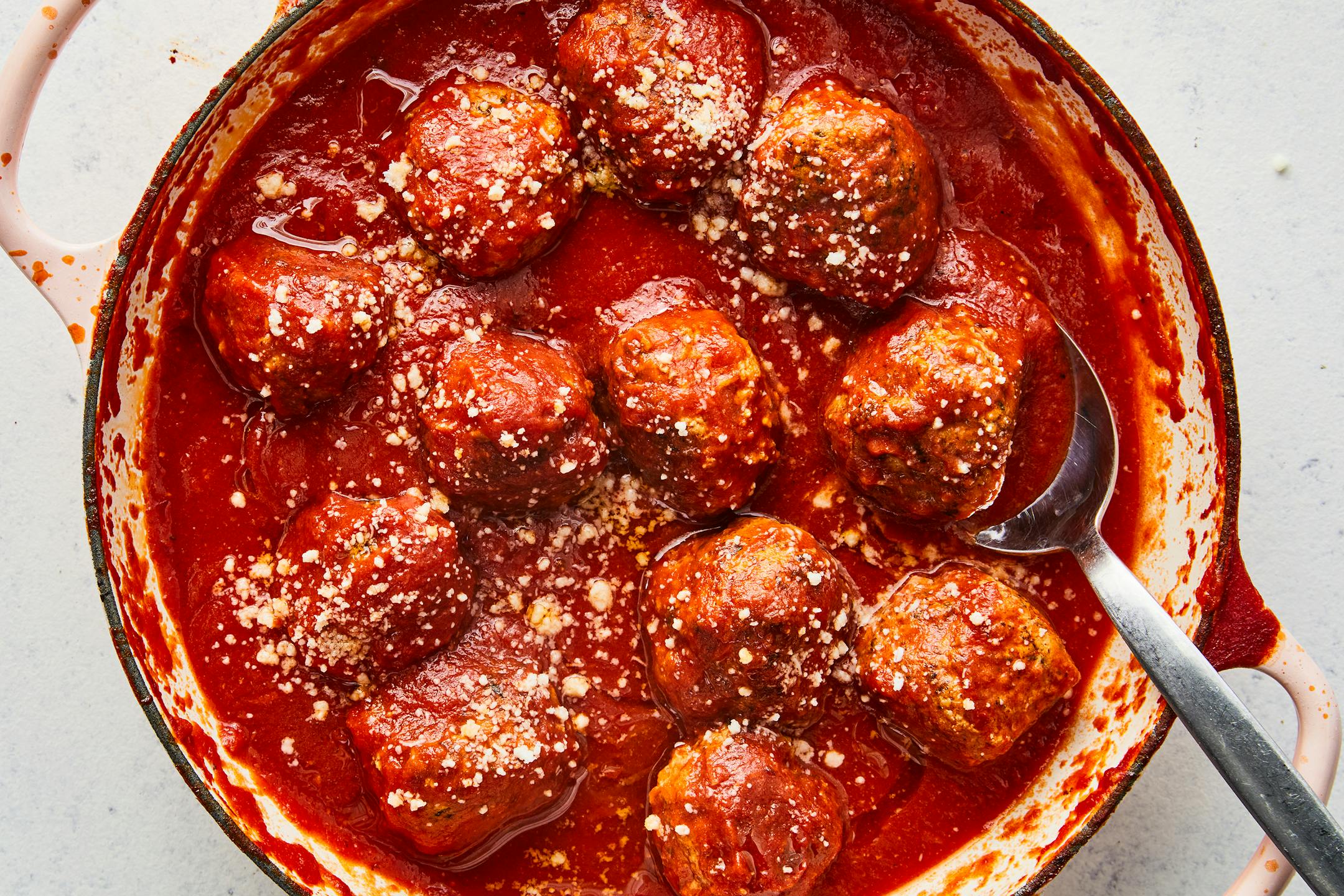
Classic Italian American meatballs get better as they simmer in a simple tomato sauce. Food styled by Sue Li. (Linda Xiao/The New York Times)

Classic Italian American Meatballs

Serves 4 (12 meatballs).

The world may not need another classic Italian American meatball recipe, but this one is truly delicious and simple to prepare. The Pecorino Romano adds a subtle sharpness and funk that elevates the flavor. As for the sauce, passata, an often-overlooked tomato purée, creates a simple yet incredibly fresh tomato sauce that allows the meatballs to be the star. The best part? The sauce only gets better as the meatballs simmer in it. From Sue Li, the New York Times.

For the meatballs:

  • 1 large egg
    • ½ c. whole-milk ricotta
      • ¼ c. finely grated Pecorino Romano, plus extra for serving
        • ¼ c. finely chopped fresh flat-leaf parsley
          • 1 clove garlic, finely chopped
            • Kosher salt, such as Diamond Crystal, and freshly ground black pepper
              • ½ lb. ground beef
                • ½ lb. ground pork
                  • ¼ c. olive oil, plus more for drizzling

                    For the sauce:

                    • 1 tbsp. olive oil
                      • 1 clove garlic, finely grated
                        • 1 (24-oz.) jar passata or 1 (28-oz.) can crushed tomatoes

                          Directions

                          Prepare the meatballs: In a large bowl, whisk to combine the egg, ricotta, Pecorino Romano, parsley, garlic, 2 teaspoons salt and 1½ teaspoons pepper. With your hands or a spatula, mix in the ground beef and pork until the ingredients are evenly distributed.

                          Form the meatballs: Using a standard soup spoon, scoop a scant ¼ cup of the meatball mixture into the palm of your hand, and use the spoon to scrape the mixture against your palm and shape it into a ball. Repeat with the remaining mixture to form 12 meatballs.

                          Make the sauce: In a medium saucepan, heat the 1 tablespoon olive oil over medium. Add the garlic and stir until fragrant, about 1 minute. Add the passata and simmer on low until bubbling, 4 to 5 minutes, season with salt and pepper.

                          Cook the meatballs: Heat the ¼ cup olive oil in a medium skillet over medium heat. Once the oil is hot and shimmery, add half the meatballs and sear until golden brown on all sides, 4 to 5 minutes. Transfer the browned meatballs to the prepared sauce and repeat with the remaining meatballs.

                          Simmer the seared meatballs in the tomato sauce until they are cooked through and tender, 20 to 25 minutes.

                          Serve the meatballs with the tomato sauce, more Pecorino and a drizzle of olive oil.

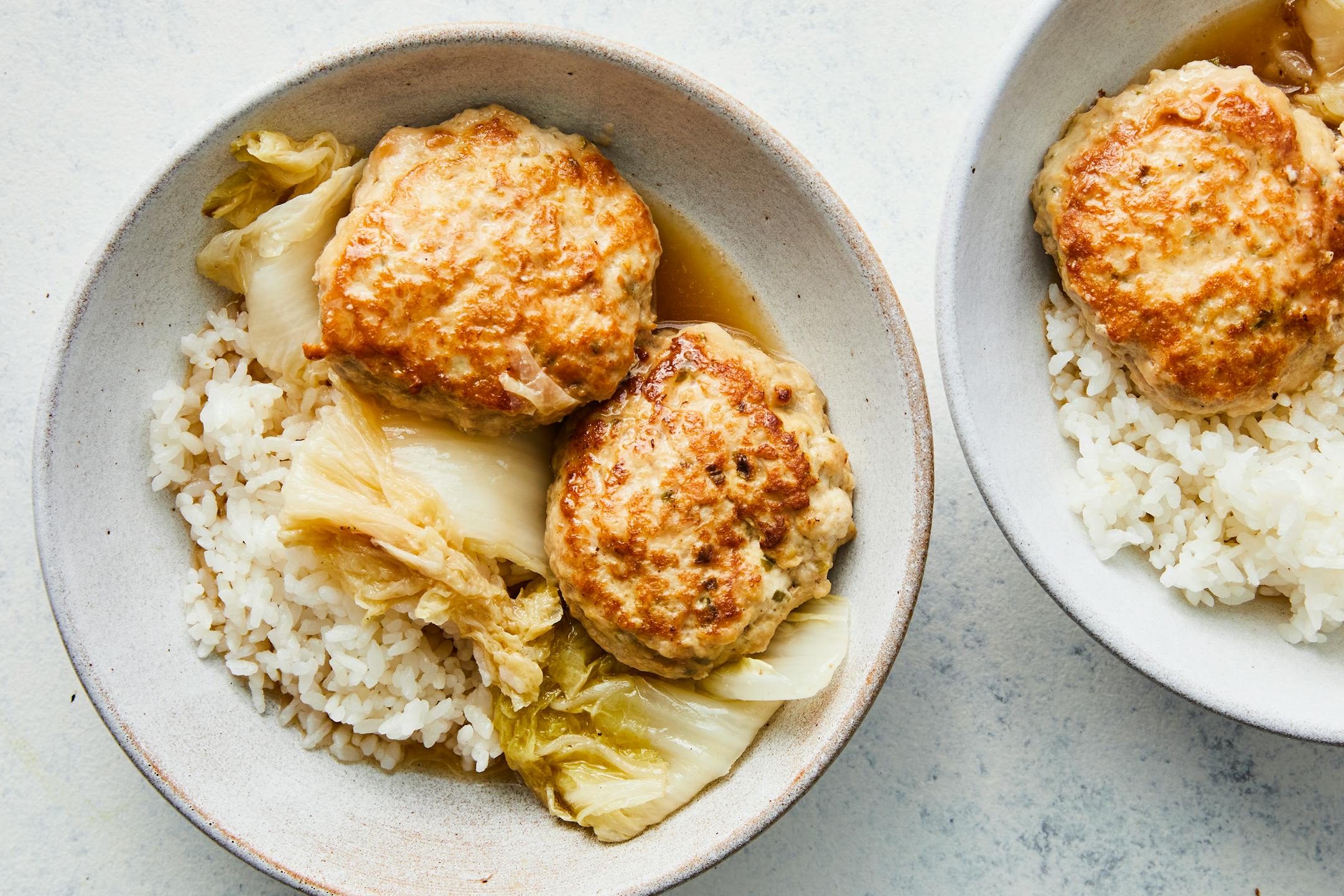
                          Lion’s head meatballs, a mix of ground pork and tofu, is a traditional Chinese stew with napa cabbage and broth. Food styled by Sue Li. (Linda Xiao/The New York Times)

                          Lion’s Head Meatballs

                          Serves 4 (8 meatballs).

                          Lion’s head is a traditional Chinese stew, a comforting staple in many Chinese households. The dish features tender meatballs, made even more delicate by the inclusion of silken tofu. The meat mixture is vigorously worked to ensure the meatballs hold their shape and achieve a slightly springy texture. These meatballs are seared then stewed while nestled in napa cabbage leaves. As the cabbage softens, its juices infuse the broth, creating a delicate and delicious flavor profile. Steamed rice is the perfect accompaniment. From Sue Li, the New York Times.

                          • 1 lb. ground pork
                            • 8 oz. silken tofu
                              • 1 large egg
                                • 2 scallions, finely chopped (about ¼ cup)
                                  • 1 (1-in.) piece fresh ginger, peeled and finely chopped
                                    • 1 tsp. sesame oil
                                      • ¼ tsp. ground white pepper
                                        • Kosher salt, such as Diamond Crystal
                                          • 3 tbsp. vegetable oil
                                            • 1 tbsp. cornstarch
                                              • 2 tbsp. soy sauce, divided
                                                • 1 small head napa cabbage, trimmed

                                                  Directions

                                                  Form the meatballs: In a large bowl, mix the pork, tofu, egg, scallions, ginger, sesame oil, white pepper and 2 teaspoons salt. With a wooden spoon or rubber spatula, vigorously stir the mixture until combined and the tofu and meat are not distinguishable.

                                                  Divide the mixture into 8 portions, about ⅓ cup each. Using a standard soup spoon, scoop one ball and scrape it against the palm of your hand to shape it into a ball. Repeat with the remaining mixture to form 8 meatballs.

                                                  In a medium Dutch oven or heavy pot, heat the vegetable oil over medium. In a medium bowl, whisk together the cornstarch with 1 tablespoon soy sauce and 1 tablespoon water. Working with one meatball at a time, coat it in the soy sauce mixture and immediately transfer the coated meatball into the pot; repeat with 3 more meatballs.

                                                  Sear the meatballs, flipping once, until two sides are golden brown, 3 to 4 minutes. With a spatula, gently transfer the seared meatballs onto a plate and repeat to coat and sear the remaining 4 meatballs. (The meatballs will flatten slightly and will be imperfect.)

                                                  Separate the cabbage leaves, set aside 4 large outer leaves for the top of the meatballs, and layer the remaining leaves in the bottom of the pot. Transfer the meatballs on top of the cabbage leaves and try to spread them out in a single layer. Cover the meatballs with the reserved cabbage leaves and add 1 cup water and the remaining 1 tablespoon soy sauce. Set the pot over medium heat and bring the mixture to a simmer. Once the liquid comes to a simmer, lower the heat to medium-low, cover, and simmer the meatballs and cabbage until the cabbage leaves are very tender and meatballs are cooked through, 30 to 35 minutes.

                                                  Serve the meatballs with the cabbage and broth.

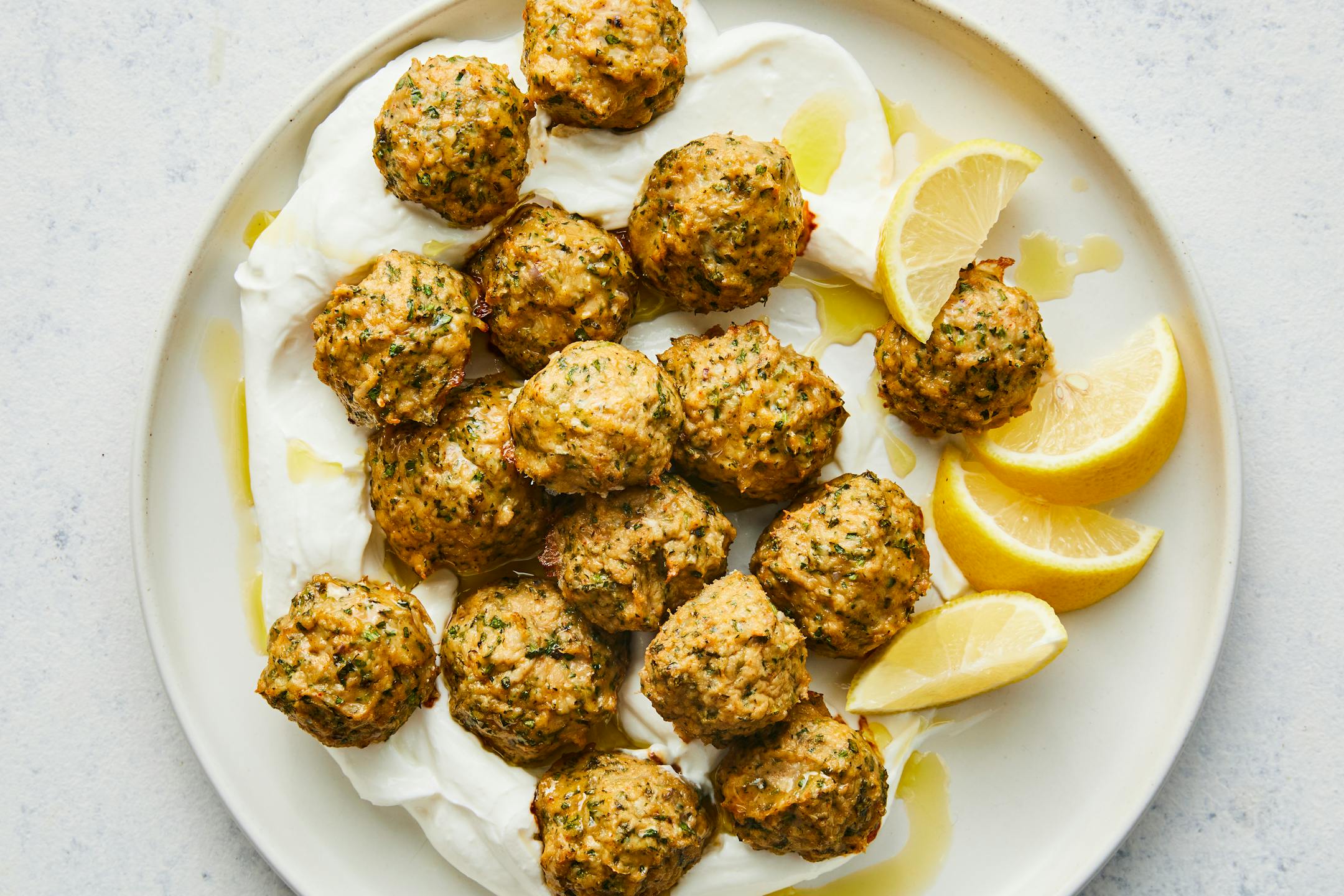
                                                  Chicken Meatballs With Yogurt Sauce brings paprika, cumin and coriander into the meatball mix, along with a good amount of fresh herbs. Food styled by Sue Li. (Linda Xiao/The New York Times)

                                                  Chicken Meatballs With Yogurt Sauce

                                                  Serves 4 (about 20 meatballs).

                                                  This recipe transforms ground chicken into flavorful meatballs using warm spices, like paprika, cumin and coriander, and fresh herbs, like parsley, mint and cilantro, for binding instead of breadcrumbs. Like Turkish kofte, these tender meatballs pair perfectly with a simple, lemony yogurt sauce. Serve them with salad, rice pilaf or on toasted bread for a balanced and satisfying meal. From Sue Li, the New York Times.

                                                  • 1 tbsp. olive oil
                                                    • 1 lb. ground chicken
                                                      • 1 large egg
                                                        • 1 small shallot, finely chopped
                                                          • 1 clove garlic, finely grated
                                                            • ¼ c. finely chopped parsley leaves and tender stems
                                                              • ¼ c. finely chopped mint leaves
                                                                • ¼ c. finely chopped cilantro leaves and tender stems
                                                                  • ½ tsp. sweet paprika
                                                                    • ¼ tsp. ground cumin
                                                                      • ¼ tsp. ground coriander
                                                                        • Kosher salt, such as Diamond Crystal, and freshly ground black pepper
                                                                          • 1 c. whole-milk Greek yogurt
                                                                            • 2 tbsp. fresh lemon juice, plus lemon wedges for serving

                                                                              Directions

                                                                              Preheat the oven to 400 degrees. Line a baking sheet with parchment paper, drizzle with the olive oil and set aside.

                                                                              In a large bowl, combine chicken, egg, shallot, garlic, parsley, mint, cilantro, paprika, cumin, coriander, 2 teaspoons salt and 1 teaspoon pepper. With a wooden spoon or rubber spatula, vigorously stir the mixture until well combined. With a standard soup spoon, scoop about 2 tablespoons of the mixture and scrape it against the palm of your other hand to shape it into a meatball. Drop the meatball onto the prepared baking sheet and repeat to form the remaining meatballs. (You should wind up with about 20 meatballs.)

                                                                              Bake until the meatballs are cooked through, 14 to 15 minutes.

                                                                              In a small serving bowl, whisk together the yogurt and lemon juice, and season with salt and pepper.

                                                                              Serve the meatballs hot, with the yogurt sauce and lemon wedges.

                                                                              about the writer

                                                                              about the writer

                                                                              Sue Li

                                                                              More from Recipes

                                                                              See More
                                                                              card image
                                                                              Gretchen McKay/Pittsburgh Post-Gazette

                                                                              The recipe for has all the coziness but in pint-sized portions. Plus, you can freeze them for comfort food on demand.

                                                                              card image
                                                                              card image