
20 years after its debut, why is the Honeycrisp apple still so expensive?

September 28, 2019 at 9:38PM
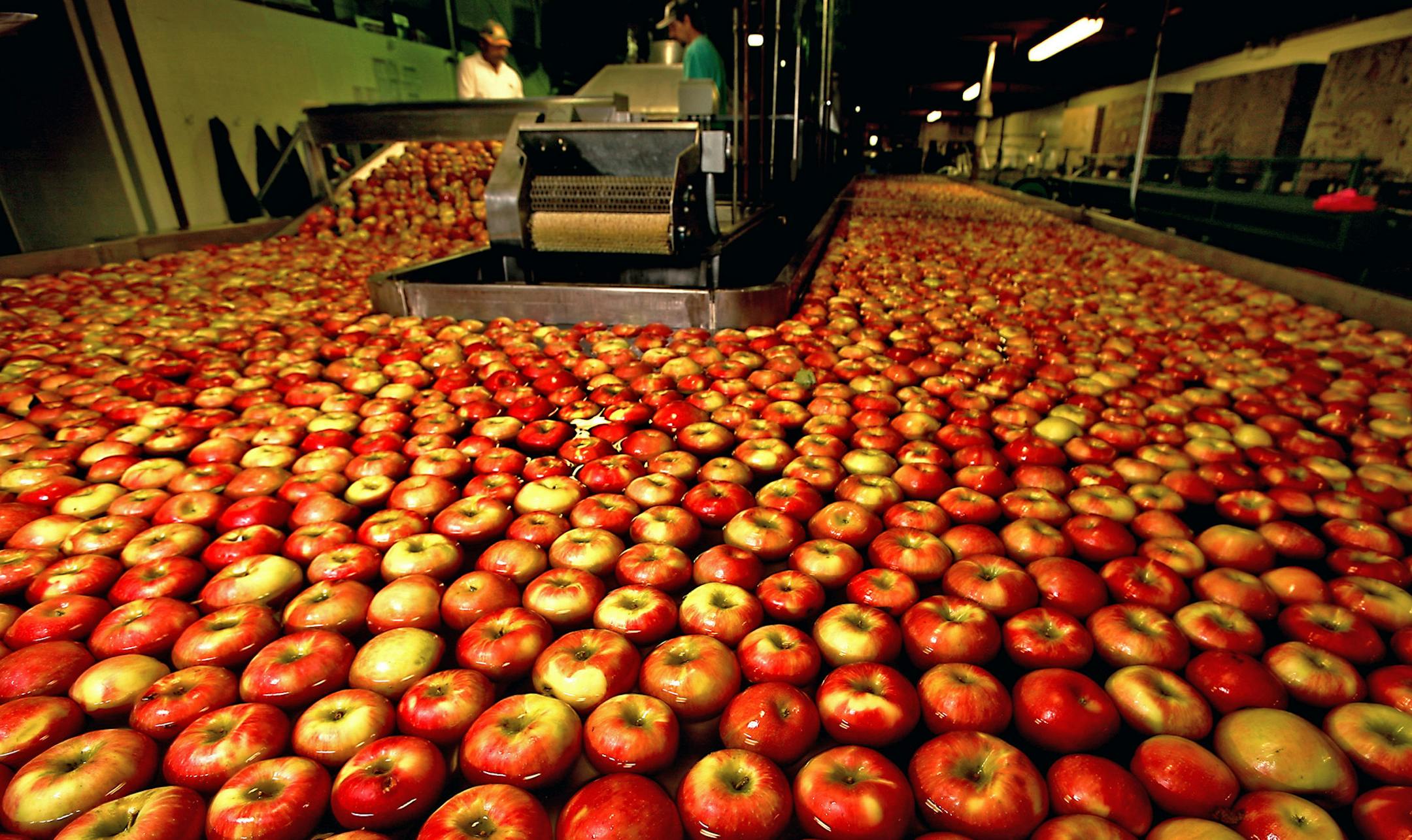
Honeycrisp apples begin the process of being cleaned, sorted and boxed for shipment to high-end retailers at the Pepin Heights facility in Lake City, Minnesota, September 11, 2006. (Steve Rice/Minneapolis Star Tribune/MCT)
Honeycrisp apples have higher labor costs and a lower final yield, with as many as 35% going to juice production. (The Minnesota Star Tribune)

John Welsh of St. Paul was an immediate convert to the explosive, sweet and juicy crunch of Honeycrisp apples when they were first introduced in the late 1990s.

"My generation was raised on Red Delicious and those are less than good apples," he said after originally calling them a word not fit for print. "Honeycrisp reintroduced me to eating good apples."

In Welsh's mind, Honeycrisps possess only one sour note — their high price. He remembers being told that prices would decline as plantings and harvests increased. But that hasn't really happened.

"Why are Honeycrisp apples still so expensive?" he asked, submitting the question to our Curious Minnesota project, a community-driven reporting series fueled by inquiring readers. Welsh's question won a vote conducted live at the Minnesota State Fair.

David Bedford, who developed the Honeycrisp at the University of Minnesota and released it to growers in 1991, quashed speculation that royalties paid to the U keep the price high. While it is true that farmers had to pay a royalty of up to $1.25 per tree while under patent, it expired in the U.S. in 2008 and in Canada last month. "We don't set retail prices," he said.

So far, the U has collected $16.5 million in Honeycrisp royalties, making it the U's third most profitable invention after Ziagen, an HIV medication, and a vaccine to protect against PRRS, a pig virus.

The simple answer to the apple's high price lies in its finicky nature. "It's one of the most difficult apples to grow," said Mark Seetin, director of Regulatory and Industry Affairs at the U.S. Apple Association in Virginia.

Most apples produce a "pack-out" rate of 80 to 90%, indicating that nearly 90% of the harvested crop can be sold as fresh. But Honeycrisp's pack-out rate is about 65%. "That means that 35% of your crop is going as juice," Bedford said. "Juice only captures one-tenth the value of a fresh apple."

Labor costs for Honeycrisp are higher because it's one of the only apples that has to have its stem clipped so it doesn't puncture the skin of others when packed.

Many consumers assumed that the price would decline with more trees. Supplies have greatly expanded, nearly doubling production in the past four years. Honeycrisp is estimated to become the fourth-best-selling apple this year.

How expensive is Honeycrisp? Recent price checks found it as high as $3.99 per pound in stores but frequently on sale during peak season. "In general, the everyday price of Honeycrisp has come down about 30% since it was introduced," said Don Roper, vice president of sales and marketing at Honeybear, a Minnesota-based grower and supplier of apples nationwide. "It's about $2.49 on average today compared to $3.99 at its heyday."

Welsh gets his fill of Honeycrisp during the sale season, but when prices revert to more than $3 per pound, he switches. Many consumers don't make that switch, however — and since they're willing to pay more, suppliers don't feel as much pressure to lower prices.

It could be worse — devotees of the U's posh First Kiss apple released last year have yet to see a good sale.

John Ewoldt • 612-673-7633

about the writer

about the writer

John Ewoldt

Reporter

John Ewoldt is a business reporter for the Star Tribune. He writes about small and large retailers including supermarkets, restaurants, consumer issues and trends, and personal finance.  

See Moreicon

More from Minnesota Star Tribune

See More
card image
J. SCOTT APPLEWHITE, ASSOCIATED PRESS/The Minnesota Star Tribune

The "winners" have all been Turkeys, no matter the honor's name.

In this photo taken Monday, March 6, 2017, in San Francisco, released confidential files by The University of California of a sexual misconduct case, like this one against UC Santa Cruz Latin Studies professor Hector Perla is shown. Perla was accused of raping a student during a wine-tasting outing in June 2015. Some of the files are so heavily redacted that on many pages no words are visible. Perla is one of 113 UC employees found to have violated the system's sexual misconduct policies in rece