

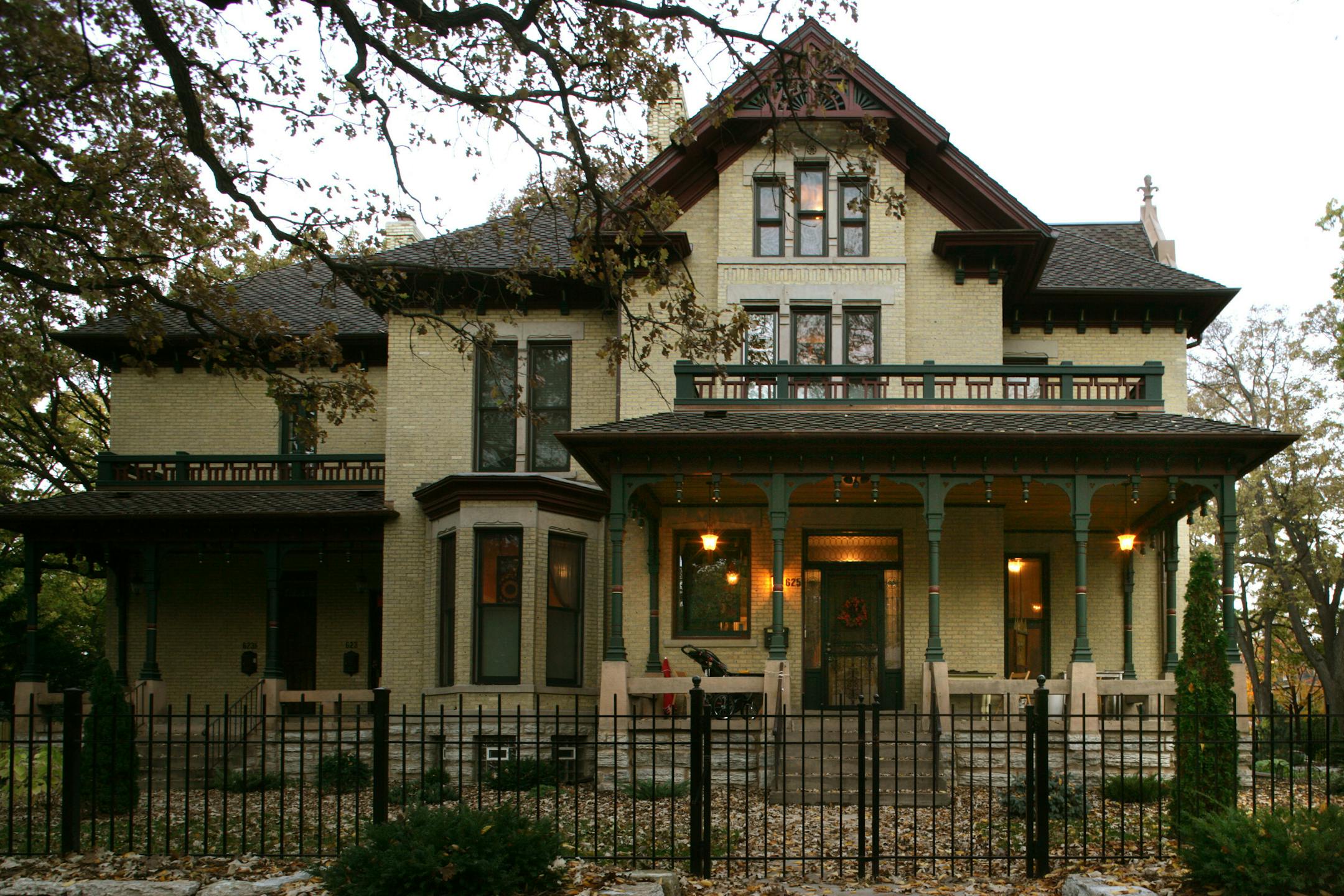
When Paul White was growing up, the big Queen Anne on the corner was known as "the witch's house," the one kids avoided on Halloween night. "We were all afraid to trick-or-treat [there]," White recalled. "It looked dark and scary, the bricks were crumbling, and there were vines growing on the side." ¶ Now that once-creepy Victorian is his home. And after nearly a decade of restoration, it's no longer a forbidding presence but a jewel of the neighborhood. "We've all watched the trans- formation," said Arvonne Fraser, a longtime resident of Minneapolis' Marcy-Holmes neighborhood. Before White moved in, the house had "lots of potential, but was sad and dingy," she said. "The whole neighborhood is delighted." Back in its heyday, the yellow-brick mansion was a showplace, with decorative gables, carved stone lintels and a cupola. Built in 1881 for lumber baron James Lane, the "large and handsome dwelling" was proclaimed by the Minneapolis Tribune as "one of the finest residences constructed this season." At 7,000 square feet, the house was big enough to accommodate Lane's large family, yet he was also wealthy enough to build nearby houses for two of his daughters.
But Lane's fortunes declined, according to "Hiding in Plain Sight: Minneapolis' First Neighborhood" by Penny Petersen. The lumber business changed, and most of the sawmills moved upriver. In 1905 Lane turned his mansion into a duplex to create a home for his married son; there was no money for a new house as there had been for his older sisters. When Lane died the following year, his entire estate, including the house, was worth less than the $12,000 he'd spent to build it. Meanwhile, the southeast neighborhood now known as Marcy-Holmes also was beginning to change. Once home to the city's wealthiest movers and shakers, it was becoming more defined by its proximity to the University of Minnesota. Many of its grand Victorian houses were demolished or carved into apartments or roominghouses for students.
By the time White rediscovered the Lane mansion in 1998, it had been turned into a triplex and its cupola was gone. Still he was fascinated with the spooky Victorian he remembered from childhood.
At the time, White, a wind-energy entrepreneur, had just moved back from California and was looking for a house to renovate. He got to know the elderly woman then living in the house and told her he'd like to buy it eventually, offering to move in as a tenant and help her take care of the place in the meantime.
One of White's first self-appointed duties was getting rid of the squirrels in the attic. "I couldn't sleep; they were having parties all night," he recalled. "I finally said, 'Do you mind if I trap some of these squirrels?'" The owner was reluctant, but White snuck in a live trap, caught almost two dozen and relocated them.
After the owner died in 2000, White bought the house from her children, and began an overhaul. He's had "a ton of help from family and friends," he said, including Munce Tronsgard-White, now his wife. When they married in June 2005, they held their reception at the house, even though the renovation wasn't completely finished.
"It was a lot of work to get the house ready for that party but we were inspired by the wedding-party wishes from 1881 penciled on the attic chimney," White said.
Tronsgard-White was already an active partner in the renovation project. "Paul had the vision," she said, but she collaborated with him on many of the details, such as designing decorative molding to restore the home's Victorian character. "Most of the original architectural stuff was ripped out."


