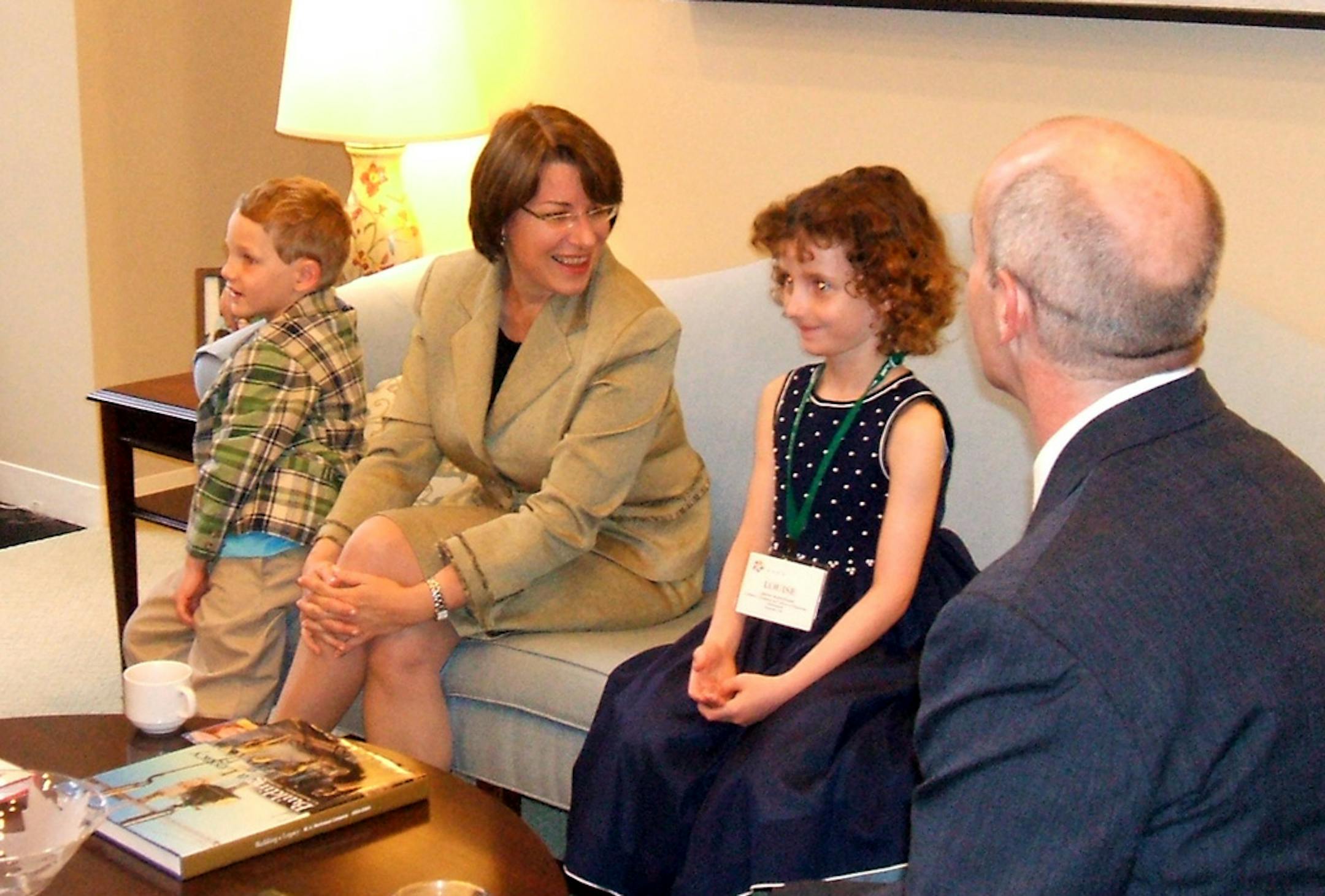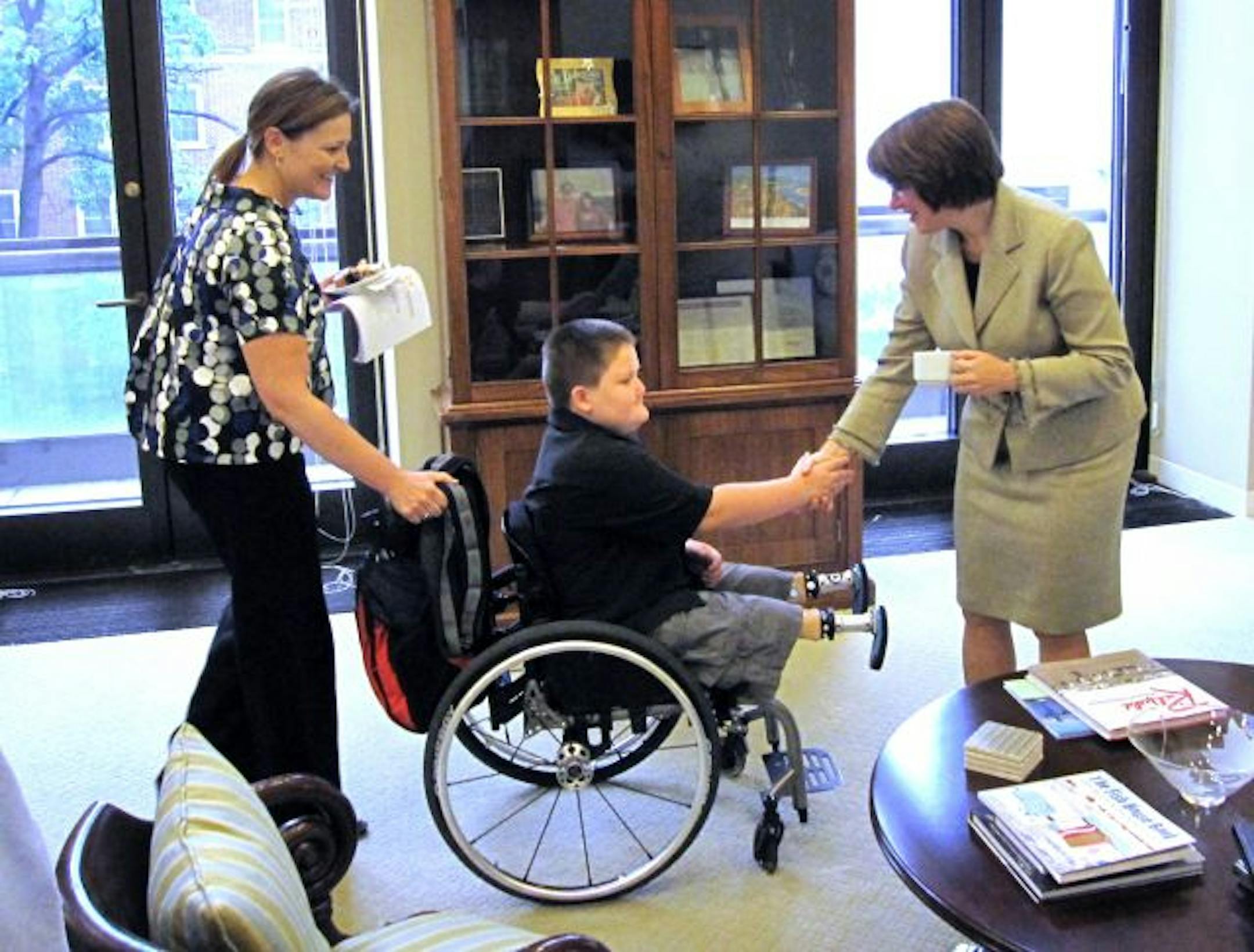
Just two days into "official" summer, and Nicklas Nelson, of Rosemount, already has an impressive topic for his what-I-did-on-my-summer-vacation essay. The charismatic 10-year-old was in Washington last week, enjoying the sites but, more importantly, reminding members of Congress that children wield influence even if they can't vote.
He was among about 40 children and their families from across the country taking part in the National Association of Children's Hospitals Family Advocacy Day, an effort to keep unique pediatric health care needs front and center at a time when the buzz phrase is Get In Line.
"It was amazing. I loved it, and I know they're listening to me," said Nicklas, who uses phrases such as "parity bill." He was born with a rare syndrome called popliteal pterygium that led to the amputation of both of his legs.
No pity necessary. He says getting his math homework done is more of a challenge -- especially if that math involves trying to figure out how to reform this country's health care monster.
Some scary numbers: Nearly 9 million children in the United States have no health care coverage. Of those who do, about 29 percent nationwide (20 percent in Minnesota) are covered through Medicaid or a state Children's Health Insurance Program (CHIP). This comes as the pool of doctors willing to take Medicaid patients is shrinking and as Minnesota Gov. Tim Pawlenty puts the squeeze on MinnesotaCare, a program offering subsidized health insurance to 86,000 adults and 26,000 children.
Expect more sick children turned away in the doctor's office, or made to wait weeks or months to see a specialist. Other families are turning to already overwhelmed emergency rooms.
Even those lucky enough to have private insurance, such as Nicklas' family, are trying to stay out of the panic room. "I'm scared to death," said Nicklas' mom, Greta, a neonatal nurse. Since birth, Nicklas has had 33 procedures at Gillette Children's Specialty Healthcare and Children Hospitals and Clinics of Minnesota, and he wears prostheses on both legs which must be refitted frequently. Mom remembers one hospital bill, in particular, for $144,000.
"Nicklas said, 'I can have a better life if I get my legs amputated because I can get prosthetics,' but the scary thing is that my husband's employer could switch insurance and they could say, 'No, we don't have prosthetic coverage.' Here he is making the biggest decision of his life, and he needs new legs or he can't function."