Little Crow sat for many photos, including this one taken by Joel Emmons Whitney in about 1860. (Photo courtesy of mnhs.org) Last year, our Great Father made a great fuss about the treaties. He asked us to hitch along and let him sit down on our grounds, while we could have a talk together, about his buying our land. Our Father sat down with us and began to talk with us and whittle a stick and then whistle and he kept us in that way for almost two moons – kept us waiting there, many bands having come from away up the Missouri river. We got very tired. We danced attendance on our Father so long we raised no corn. Our Father is a devil of an old fellow to hunt, if he can only corner a drove of cattle. Our Father is a great glutton; he would shoot a cow or an ox every morning; and give us the choice pieces of it, such as the head and the paunch; and there he kept us waiting for six weeks; and when the cattle were nearly all gone, and he had whittled all the sticks he could find, he got up and shut his jack-knife, and belched up some wind from his great belly, and poked his treaty at us, saying, I will give you so much for your land. It is true he said that the Senate at Washington would have to ratify the treaties. Well, we signed the treaties. We could not help ourselves. We went home. We had no crops and could find no game to speak of, well, the White settlers came in and showered down their houses all over our country. We did not really know whether this country any longer belonged to us or not. The settlers did give us something to eat, that is certain. They have generally been very kind to us. But this is what we are waiting to know, whether our Father means to take our lands for nothing, or whether he means to pay us the money and the annuities he promised us in the treaties? We do not want to be humbugged out of our lands. We owe debts and we want to pay them. If our Father had said, "move along; you must move along; you shall move along," it is likely we should have had to go; but that was not the way our Father talked to us. He said "you have no game here, our people are hemming you in, you can have no schools nor farming, while you live scattered, you owe debts, you need annuities; will you go, my Red Children, if we give you so much?" We thought this was very kind and we said yes. Now what have we? Why, we have neither our lands, where our fathers' bones are bleaching, nor have we anything. What shall we do?
This 1854 lithograph of "Little Crow's Village" -- presumably Kaposia -- appeared in Henry Lewis' Das illustrirte Mississippithal. (Image courtesy of mnhs.org)

In heated western Minn. GOP congressional primary, outsiders challenging incumbent

Minnesota Sports Hall of Fame: A class-by-class list of all members
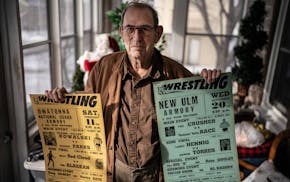
This retired journalist changed professional wrestling from Mankato