Video (04:39) : Orion Setchell has multiple disabilities including autism and cerebral palsy. His mother had gone through five school districts to find the right fit for his needs.
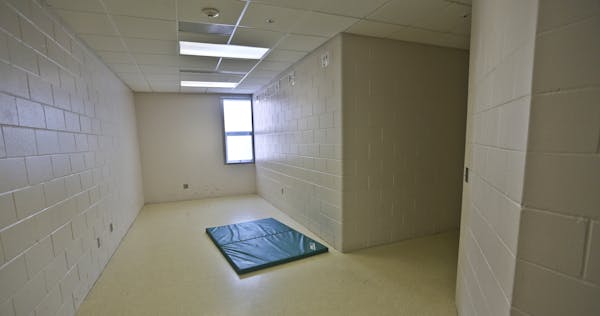
Room 112 is walled off from the rest of a Maplewood public school by an ugly row of concrete blocks.
Its wooden entrance was replaced with a steel door, and the carpet and plumbing fixtures removed, all so its sole occupant — an 8-year-old boy prone to attacking teachers and classmates — would have nothing to destroy during his daily outbursts. Even his books and toys were kept on a cart that could be wheeled away at a moment's notice.
Every school day, the boy, who has autism and doesn't speak, came to the barren cell built only for him. Two adults spent all their time teaching him to communicate.
The price? $153,000 for a year of instruction, nearly 20 times what's spent on a student without special needs. "The costs are staggering," said Connie Hayes, superintendent of the public school district that built the classroom.
A decade ago, the boy would have been institutionalized. Today, he's sent to public school. His education in Room 112 tells a larger story of a growing predicament confronting schools across Minnesota.
A sharp rise in students diagnosed with major disabilities is forcing many schools to take difficult and at times divisive new steps to tailor classrooms to the disabled students' needs, no matter how expensive that gets.
Even as overall school enrollment declined over the past decade, the number of disabled students rose 14 percent, reaching 128,000. That includes a fivefold increase in students with autism.
Many of the state's most psychologically troubled students also are being sent to school settings for the first time as mental health programs that once served them have been cut back or eliminated.
By law, state and federal budgets are supposed to cover about 90 percent of the cost of educating students with special needs.
But they are falling short, shifting much of the cost to local school districts. Spending on special education is soaring — it has risen 70 percent in Minnesota over the past decade to $1.8 billion this school year.
Reeling from that pressure, some schools say they have no choice but to curtail other classroom programs, such as art and music. Others are turning desperately to voters for money.
To some educators, the costs, while tough to bear, are both necessary and right.
"It's a good investment," Hayes said. "Think about the cost to our community if we didn't make an investment like that. That's really the essence of why we moved handicapped individuals out of institutions back in the '70s."
But other school officials say the special education system is broken, saddling schools with chronic money shortages and at times dangerous threats to teachers being asked to help students whose disabilities can lead to violent outbursts.
"We are working with a system that is totally irrational," said attorney Jerry Von Korff, a longtime member of the St. Cloud school board.
Matt Mohs, interim chief academic officer in St. Paul, which has the largest special education population of any school district in the state, said spending is out of control.
"You start to wonder: What's the limit?" he asked. "Could certain districts face bankruptcy over the needs of a small number of students?"
180-degree turn
To understand the complexities of special education, consider Orion Setchell.
At 17, Orion — whose handicaps include autism and cerebral palsy — has attended schools in five districts in Minnesota and Wisconsin. His mother, Shelbi Setchell, battled administrators at almost every stop, starting when he was stuck with a "washroom" for a classroom in first grade.
She said the disputes had one thing in common: the amount of money spent on her son.
"In all of his other school districts, that is all they ever complained about," Setchell said. " 'We spend too much money, we spend too much money.' "
She knows her son, who weighs 185 pounds and often slurs his words, can be difficult. His hearing is hypersensitive, and he can turn violent when surprised by loud noises or if he feels threatened. He has no school-age friends. He's been invited to just one birthday party in his entire life, and it was a disaster.
Orion started pulling hair and pinching other students in third grade, after he was repeatedly bullied by another student in his special education classroom.
His problems multiplied when he made the switch to a Shakopee junior high school in the fall of 2010.
is new teachers, unfamiliar with tactics that had worked to calm him in the past, tried a different approach, according to a state report. If he was late for class or fell behind on his schedule, which happened frequently, he was denied privileges. The use of sound-blocking headphones, which Orion wears constantly, was sharply restricted.
Orion retaliated with aggressive behavior that included screaming, pulling hair, hitting and kicking. He was suspended for five days after slapping staff members nine times. The assaults and suspensions continued for months, then Shakopee officials banned him from the school and recommended he be moved to a more restrictive educational environment.
His mother responded by filing a formal complaint with the state, which typically investigates about 80 alleged infractions of a disabled student's rights each year. The state education department determined Shakopee officials committed multiple violations of state and federal laws by not responding properly to Orion's escalating aggressiveness, according to the 2012 investigation.
"If my son had stayed at Shakopee, I'm afraid he would have ended up in jail or dead because of the way they were treating him, and the way he felt about himself," Setchell said.
Shakopee officials declined to comment.
Despite her victory, Setchell reluctantly came to the same conclusion that Shakopee did: Her son needed a school that specialized in educating the most disabled children. So she moved to Robbinsdale, believing her son's behavior would eventually trigger a referral to Intermediate District 287, one of three regional school districts that focus on the needs of the disabled in the Twin Cities.
"I've seen the same thing at every public school," Setchell said. "They lack education. They lack patience. They lack a desire to learn about their students. That's why my son can't be at a regular school."
Orion now attends the North Education Center, a $35 million facility that opened last fall. It is the envy of special education directors around the state.
Compared to noisy, makeshift classrooms used by special ed students in many parts of the state, Orion's new classroom is state of the art. He has his own timeout room where he can relax under a revolving mood light. He keeps the light green, his favorite color.
His carpeted classroom contains a swing and a rocking chair for working off excess energy. The smartboard includes a video game Orion designed with his teacher — a variation on Concentration using corporate logos, one of his obsessions.
For occupational therapy, Orion rides a customized tricycle (starting price: $1,980) down the hall built extra wide so two trikes can easily pass. Staffers keep tabs on him by checking any of the 131 camera lenses mounted in 41 locations throughout the building.
And making it anywhere on time is never an issue.
"There is no such thing as being late here," said Jayme Bennett, Orion's teacher.
Since starting this fall, Orion's outbursts have shrunk to one minor incident per week, Bennett said.
"It's almost a 180-degee turn," said Setchell, whose arms are no longer covered with bruises, and her face is clear of the scratches she used to frequently receive from her son. "He likes to go to school again."
Building silos
Orion's education isn't cheap. Each of the 40 students in his program costs about $70,000 per year, more than three times the average special ed student in the state. Altogether 250 staff members, including teachers, therapists and social workers, work with the school's 450 students. It's a similar story at the other special districts serving the Twin Cities. These so-called intermediate districts have some of the highest average student costs in the state.
Together, the three districts served more than 3,600 students with special needs last year, including nearly 2,000 students sent there because their disabilities were causing disruptive or unsafe behavior in traditional districts. Their home districts foot the bill.
The three intermediate districts have been on a building boom, spending about $90 million on new facilities in the past five years.
Orion's school is one of four new centers in the metro area designed for special education students. District 287 also opened the South Education Center in Richfield, while Intermediate District 916 is building a school in Blaine.
To win public support for these new schools, administrators have stressed the dangers of remaining in aging schools designed for traditional instruction. They say older facilities have contributed to a rise in staff injuries and assaults because it's harder to find the right space to calm agitated students who may be suffering from severe mental problems, including schizophrenia and paranoia.
"It's not uncommon for us to have a student in a full-blown mental health crisis, where an ambulance needs to be called," said Sandy Lewandowski, superintendent of District 287. "That student may be taken to a hospital and be back in school the next day."
The new schools offer few if any mainstreaming opportunities. Most students typically spend their entire day with other disabled children.
Dan Naidicz, special education director for District 916, predicted that half the elementary students in the district's most intensive programs will never make it back to a regular classroom.
"We're getting many kids now who in the past were in restrictive residential treatment center programs or even hospital programs," Naidicz said. "They're in our schools now."
A different approach
Building elaborate centers exclusively for disabled students is a source of controversy among parents and educators, who worry about the long-term effects of segregating students with special needs.
"We'd be very concerned about building a brand-new facility with super-specialized classrooms and materials and everything," said Matt Mohs, the St. Paul school official. "That may be going too far."
As Mohs sees it, too many school districts have begun treating special education students as potential troublemakers who must be isolated for the safety of themselves and their teachers. He calls it the "criminal justice" approach to special education. He said St. Paul was guilty of it, too.
About 18 months ago, Mohs found out that just 30 percent of the district's 240 students with severe emotional and behavioral disorders were spending any part of their day in a regular classroom. He was disturbed, especially when he noticed that the group was largely made up of African-American boys who were often suspended for misbehaving.
"We realized we had to do a better job as a school district," Mohs said. "We have to ensure that our system doesn't contribute to the long-term racial achievement gap."
Last fall, Mohs set a new goal, asking schools to include at least 75 percent of these troubled students in mainstream settings. One of the first schools to embrace the concept was Frost Lake Elementary, where second-grader Dominic Caliguire had been struggling with behavior issues since kindergarten. Last year, Dominic was allowed to mingle with regular students only during gym. This year, he is spending the majority of his day in a regular classroom.
It took some patience. At the beginning of the year, he was allowed two incidents per day before being hustled back to the room for disabled students. Then his teacher reduced it to one. Each time, he adjusted his behavior. Since his limit was reduced to zero, he has gone five weeks without a single meltdown.
"He is very proud of himself," said his teacher, Amy Eelkema.
On a recent visit, Dominic kept up with 25 other students as they jogged around the gym, but he struggled with the jump rope. "Keep working on it, Dominic!" his teacher shouted.
Being called out for failure would have prompted him to shut down a year ago, Eelkema said. But he kept trying until he completed three revolutions. He grinned with delight at the accomplishment.
After Frost Lake moved most disabled children into regular classrooms, the number of behavior problems dropped by as much as 50 percent. That improvement is mirrored across the district, said special education director Liz Keenan, pointing to a 70 percent drop in suspensions.
By creating programs that target the district's most challenging students, Mohs believes he can avoid sending large numbers of high-needs kids to the intermediate districts, where expenses are typically two to three times higher.
"It's a significant challenge," Mohs said. "We don't have an endless pot of money."
'The one place you can't cut'
Like most school districts in Minnesota, St. Paul doesn't receive enough money from the state and federal government to pay for its special education costs.
In its case, the funding gap is about $36 million, or 37 percent of the $98 million it spent on special education last year.
In the past 10 years, district officials have gone to voters twice for help in dealing with that shortfall and other expenses. Both measures passed. Last year, voters approved $39 million for all-day kindergarten, smaller class sizes and new technology.
But directly or indirectly, almost all of that money will be used to offset the district's special ed deficit, Mohs said.
Other districts have been less successful: School spending measures failed 44 percent of the time in the past decade, according to the state.
"I would say the funding gap for special education is a major cost pressure on school districts," said Tom Melcher, director of school finance for the state education department. "They do their best to contain costs, but there are limits on what they can do."
In Minneapolis, which is facing a $34 million funding gap for special education, administrators are considering $25 million in budget cuts.
"It isn't just because of special education, but that is certainly contributing to the problem,'' said Ann Casey, the district's executive director of special ed. "Every year, the district has to do more with less."
Still, Minneapolis paid $14.7 million to other districts for special education services last year, including $3.9 million to District 287 to cover the costs of 168 disabled students. Casey said Minneapolis made just 10 of those referrals to District 287.
"We don't even have an opportunity to weigh in on whether we could serve these students," Casey said.
Earlier this year, Gov. Mark Dayton proposed increasing special education funding by $62.4 million per year, or enough to cut the annual deficit by about 10 percent.
For many superintendents, the most frustrating federal rule is one that prohibits schools from reducing special education costs unless they can document enrollment declines or other special factors.
Ed Saxton, superintendent of the St. Francis school district in the north metro, estimated his district could save as much as $500,000 by replacing an older communications device with iPads. But he said the rules make it almost impossible to switch.
"Over the past 10 years, we've cut art and music in elementary. We've cut activity buses. Our class sizes are higher than they used to be. … The one place you can't cut is special education," Saxton said. "Why aren't we looking at the most efficient ways of servicing our kids with the highest needs? It doesn't make any sense the way we do it."
No guarantees
One of the most expensive students in Minnesota landed in the special education wing of John Glenn Middle School when he was 8 years old.
The boy, who was diagnosed with autism and attention deficit hyperactivity disorder, could not speak or communicate with even the most rudimentary symbols, according to District 916 principal Mollie Wise, who helped design the boy's instructional program.
At his previous school, he had been disrobing every day and urinating or defecating in class. When staff members tried to remove him, he would become violent, hitting or biting anyone who got too close.
"Everyone said this might be the hardest student you'll ever work with," Wise said.
District 916 decided to build him his own classroom, one in which his aggression could be contained. It cost $88,000, and is the most expensive of the eight rooms the district has built for individual students in the past five years. The district declined to identify the boy for privacy reasons.
"It's a safe, simplified environment," said Naidicz, 916's special ed director.
At first, the boy spent about three hours per day in the room with his teacher and an assistant. His main task was to identify simple icons and photos in a red plastic book, such as cookies, pizza and Clifford the Big Red Dog. He would study for 15 minutes at a time and then take a break. Eventually, he learned more than 50 symbols. Two of the most important: "I want" and "I don't want."
By the fall of 2011, the boy had learned how to communicate and was transferred to another District 916 school, where he eventually shared a classroom with five other students. The boy managed to avoid a major incident until the end of the year, when he got upset because someone wouldn't share food with him on the playground, said his teacher, Kayna Plaisted. The boy injured a staff member's hand, requiring a cast.
To Plaisted, however, even the smallest step is a victory, such as the day she saw him crying during a chaotic day in her classroom.
"It's kind of a weird situation, to see him cry instead of act out for attention," Plaisted said. "It's a different world. It shows he cares. He feels so much inside. He just has not had a way to say it."
This year, the boy is back in a quieter class with four other students. He still has his own full-time assistant. District officials are not sure if he will ever be able to function in a regular classroom.
jeff.meitrodt@startribune.com • 612-673-4132
kim.mcguire@startribune.com

Legendary record store site in Minneapolis will soon house a new shop for musicheads

Former Gov. Jesse Ventura boasts he could beat unpopular Trump or Biden if he ran for president

Dave Kleis says he won't run for sixth term as St. Cloud mayor
Newspaper boxes repurposed as 'Save a Life' naloxone dispensaries